





At the close of the American Society of Clinical Oncology (ASCO) Annual Meeting on May 31, 2026, newly presented clinical data on liquid biopsy–based minimal residual disease (MRD) monitoring triggered a marked increase in global demand for next-generation sequencing (NGS) library preparation workstations. This development is particularly relevant for life science instrumentation suppliers, contract research and development organizations (CROs/CDMOs), academic core facilities, and diagnostic service providers operating in high-complexity molecular testing environments.
Event Overview
The 2026 ASCO Annual Meeting concluded on May 31, 2026. During the meeting, 17 clinical studies leveraging liquid biopsy for MRD detection were disclosed. According to a May 2026 survey by BioPlan Associates, global orders for NGS library prep stations rose 102% year-on-year in May 2026. Academic centers in Europe and contract laboratory service providers (CXOs) across Southeast Asia collectively accounted for over 65% of those orders. As of late May, delivery lead times have extended to the end of Q3 2026.
Impact on Specific Industry Segments
Instrumentation Distributors & Channel Partners
These entities face immediate pressure on inventory allocation and regional fulfillment capacity. The surge is concentrated in two geographies—Europe and Southeast Asia—and driven by specific end-user types (academic core labs and CXO labs), not broad-market adoption. Impact manifests as tighter margin control due to expedited logistics, increased pre-shipment coordination, and heightened customer expectations around delivery timing.
NGS Workflow Solution Providers (e.g., integrated platform vendors)
Vendors offering end-to-end NGS solutions—including library prep, sequencing, and bioinformatics—may experience downstream bottlenecks if their internal or partnered library prep workstation capacity lags. Since library prep is a critical upstream step, delays here constrain throughput for downstream services such as sequencing runs or clinical reporting, potentially affecting service-level agreement (SLA) adherence.
Contract Research, Development & Manufacturing Organizations (CXOs)
CXOs in Southeast Asia are among the top order contributors, suggesting accelerated investment in clinical-grade liquid biopsy assay development and validation infrastructure. This reflects growing regional capability in oncology biomarker assay implementation—not just sample processing. Impact includes rising capital expenditure planning cycles and intensified scrutiny of automation scalability for GCP-compliant workflows.
What Stakeholders Should Monitor and Act On
Track official ASCO post-meeting publication timelines
While 17 MRD-related abstracts were presented at ASCO 2026, formal peer-reviewed publications and protocol documentation remain pending. Their release will clarify assay design, analytical validation thresholds, and clinical utility claims—factors directly influencing long-term instrument utilization and reagent consumption patterns.
Monitor regional procurement behavior beyond headline growth
The 102% YoY order increase is heavily weighted toward European academic centers and Southeast Asian CXOs. Stakeholders should assess whether this reflects sustained infrastructure build-out—or short-term, event-driven purchasing ahead of grant deadlines or regulatory submission windows. Regional tender activity and public lab equipment procurement notices warrant closer review.
Evaluate supply chain resilience for precision automation components
Extended delivery lead times signal potential constraints in subsystem sourcing (e.g., robotic liquid handling modules, thermal cycler integration, or certified consumables). Companies relying on single-source manufacturing partners or custom-engineered modules should review alternative component qualification pathways and buffer stock strategies for mission-critical subassemblies.
Prepare for workflow integration validation support requests
Academic and CXO labs deploying new library prep workstations under CLIA/CAP or ISO 15189 frameworks will require documentation supporting method verification—especially for MRD applications where sensitivity and reproducibility are tightly regulated. Vendors and service providers should align technical support resources with anticipated validation assistance demand.
Editorial Perspective / Industry Observation
Observably, the ASCO 2026 data release functions less as a standalone market inflection point and more as a catalyst that exposed pre-existing capacity constraints in automated NGS library preparation infrastructure. Analysis shows the order surge is geographically and institutionally clustered—not diffuse across all NGS end users—suggesting it reflects targeted scaling of specific clinical assay development pipelines rather than generalized platform adoption. From an industry standpoint, this event is better understood as a leading indicator of near-term demand for standardized, auditable, and scalable MRD assay implementation infrastructure—not merely a spike in hardware sales. Continued attention should focus on whether subsequent regulatory guidance (e.g., FDA’s evolving MRD biomarker qualification framework) or reimbursement policy updates reinforce or moderate this trajectory.
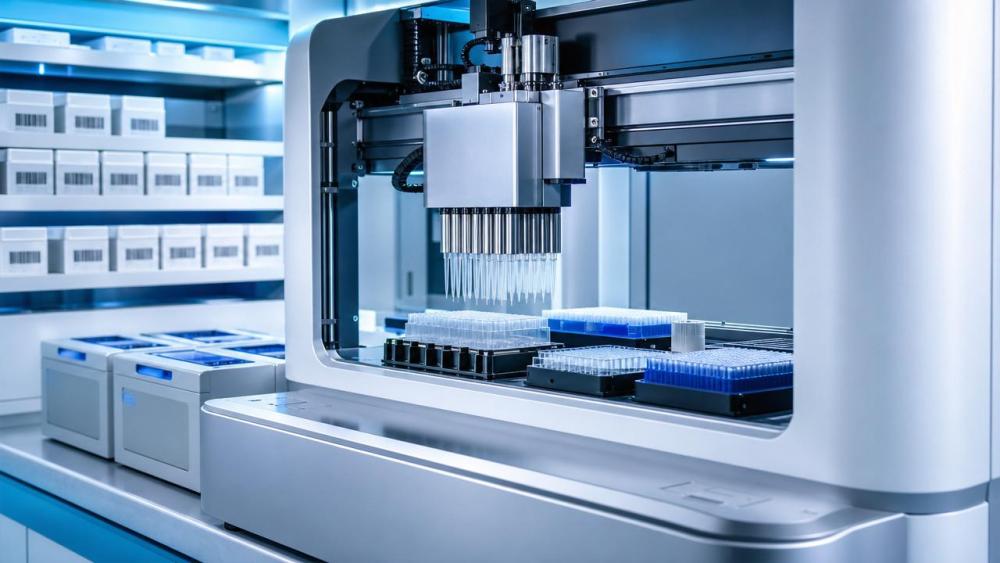
Conclusion: The ASCO 2026-related increase in NGS library prep station orders signals intensifying operational readiness for liquid biopsy–based MRD monitoring in select high-capability settings. It does not yet indicate broad commercialization or routine clinical deployment—but rather highlights infrastructure investment aligned with advanced clinical trial and translational research needs. Stakeholders are advised to interpret this as a workflow capacity signal requiring calibrated, evidence-informed response—not as a generalized market expansion event.
Source Disclosure:
Primary source: BioPlan Associates, May 2026 survey on global NGS library prep station order volume.
Note: Delivery timelines, regional order share, and ASCO presentation count (17 MRD-related studies) are based on publicly reported figures from the ASCO 2026 meeting and associated vendor communications. Ongoing observation is warranted for peer-reviewed publication status, regulatory developments related to MRD assay validation, and regional public procurement disclosures.
Related News
- What CSV documentation should a laboratory systems supplier provide?Oct 26, 2026Dr. Elara Sterling
- SCIEX Begins Construction of High-End Mass Spectrometer Plant in BeijingOct 26, 2026Analytical Metrology Expert
- Which design features make cleanroom benches easier to clean?Oct 25, 2026Bio-containment Strategist
- IndexBox Forecasts 12% CAGR for Global Microbioreactor Market Through 2035Oct 25, 2026Bioprocess Scientist
Related News
- 00
0000-00
What CSV documentation should a laboratory systems supplier provide? - 00
0000-00
SCIEX Begins Construction of High-End Mass Spectrometer Plant in Beijing - 00
0000-00
Which design features make cleanroom benches easier to clean? - 00
0000-00
IndexBox Forecasts 12% CAGR for Global Microbioreactor Market Through 2035 - 00
0000-00
When do hazardous compound labs need isolators for containment?
Industry Global
Weekly Insights
Stay ahead with our curated technology reports delivered every Monday.