





On June 16, 2026, the FDA released a revised Biosafety Cabinet Computerized System Validation Guidance that introduces a new requirement for Class II and Class III biosafety cabinet control systems: they must support a standardized API for remote access to audit-trail data. For manufacturers, buyers, validation teams, and service providers involved in new product submissions, this is worth close attention because the change links cabinet performance data, documentation practices, and regulatory visibility more directly than before, with applicability set for all newly submitted products from January 1, 2027.
What the revised guidance now requires
According to the information provided, the FDA issued the revised guidance on June 16, 2026. The update for the first time makes it mandatory for Class II and Class III biosafety cabinets to have control systems that support a standardized API interface.
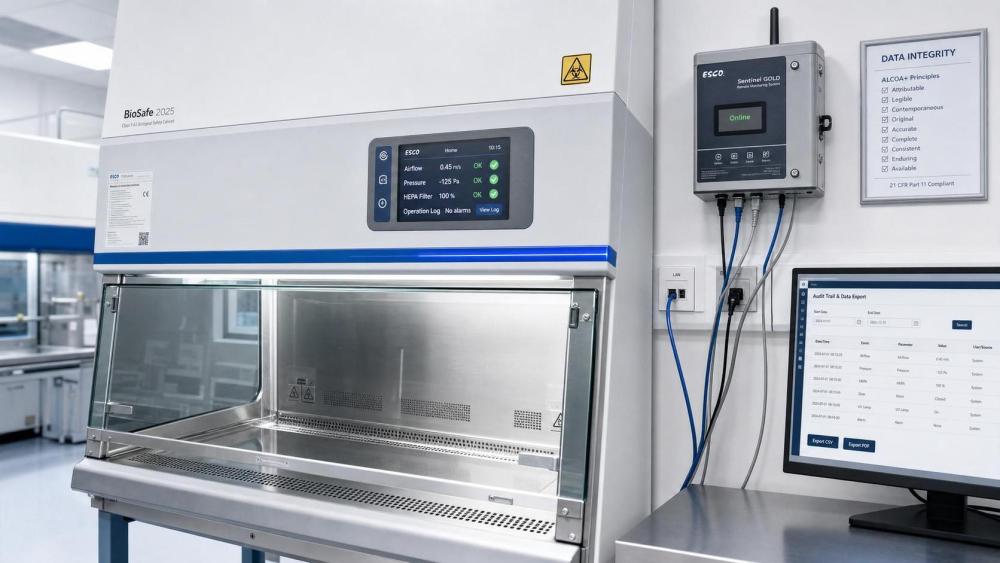
The stated purpose of that interface is to allow regulators or customers to remotely retrieve audit-trail data. The data types specifically referenced in the provided summary include real-time airflow velocity, differential pressure, HEPA filter life, and operation logs.
The requirement is scheduled to apply from January 1, 2027, and it covers all newly submitted products.
Why different parts of the market may feel the impact
For cabinet manufacturers, the focus shifts to control-system readiness
From an industry perspective, manufacturers of Class II and Class III biosafety cabinets are the most directly affected group because the requirement is tied to product control systems and new submissions. The likely impact is concentrated in product design, validation preparation, and submission documentation, especially where remote access to performance and audit-trail records must be demonstrated in a standardized way.
What deserves closer attention is whether current product architectures, software structures, and data-recording methods are already aligned with an API-based access model, or whether redesign work may be needed before the 2027 applicability date for new filings.
For buyers and end users, audit access becomes a practical procurement issue
Purchasing organizations and end users may also be affected because the revised guidance explicitly mentions that customers, not only regulators, may remotely retrieve specified audit-trail data. Analysis shows this could bring the discussion beyond technical compliance and into procurement specifications, acceptance criteria, and ongoing equipment oversight.
In practical terms, buyers may need to pay closer attention to whether a cabinet can provide the required data fields in a usable and reviewable form, particularly when comparing newly submitted products that will fall under the updated expectation.
For validation and service teams, documentation workflows may need adjustment
Service providers, qualification teams, and parties supporting equipment lifecycle management may feel the change through documentation and data-handling workflows. Because the guidance refers to remote retrieval of operating and audit records, the impact may show up in how teams prepare for inspections, customer reviews, maintenance coordination, and evidence retention.
Observably, the main point is not only hardware performance, but also whether required operating data can be accessed consistently when needed by external reviewers.
What companies should watch now
Track how the FDA language is applied in practice
Analysis shows the confirmed fact is the revised guidance and its stated requirement for new submissions from January 1, 2027. What companies should watch next is how this wording is interpreted in actual submission, review, and customer-communication scenarios, since the provided information does not define further implementation detail.
Review affected product lines against the 2027 timing
For companies with Class II or Class III biosafety cabinet products in development or preparing for new submission, the immediate practical issue is timing. The key question is which planned submissions fall after January 1, 2027, because those products are the ones directly captured by the requirement described in the provided summary.
Check data fields, access paths, and audit records together
What deserves closer attention is that the requirement is not framed around connectivity alone. The information provided points to specific retrievable data categories: airflow velocity, differential pressure, HEPA filter life, and operation logs. Companies should therefore assess data capture, retention, and external retrieval capability as one connected compliance topic rather than as separate technical features.
Prepare for customer questions before formal filing milestones
Because customers are expressly mentioned as potential remote data recipients, commercial and technical teams may need aligned messaging before formal submission milestones arrive. In practice, this could affect bid discussions, specification reviews, and supplier questionnaires for products expected to be submitted under the new rule set.
How this development is best understood at this stage
This section is an editorial observation. It is more appropriate to understand this update as a concrete regulatory signal with near-term product development implications, rather than as a distant policy direction. The requirement has a named scope, defined data categories, and a clear future applicability date for new submissions.
At the same time, it is also more appropriate to view the market impact as still unfolding. The provided information confirms the rule change itself, but it does not establish how quickly different manufacturers, buyers, and service organizations will adjust their workflows or purchasing expectations.
From an industry perspective, the broader point is that data accessibility is being treated as part of the validation and oversight conversation for biosafety cabinets, not merely as an optional digital feature.
What this means for the market right now
Based on the confirmed information, the immediate significance of the FDA update is clear: for newly submitted Class II and Class III biosafety cabinets from January 1, 2027, remote audit-trail access through a standardized API is no longer just a product differentiator but a stated requirement in the revised guidance.
A balanced reading is that this is neither a short-lived headline nor a fully settled market outcome. It is more appropriate to understand it as a defined compliance change with practical consequences for product design, submission planning, procurement review, and service coordination, while some operational implications still require continued observation.
Basis of this article and points for continued verification
This article is generated from the user-provided news title, event date, and event summary concerning the FDA revision to the Biosafety Cabinet Computerized System Validation Guidance. The analysis is limited to that provided information and does not add unverified data, company names, market figures, or external outcomes.
For this type of industry update, commonly relevant source categories may include official regulatory notices, company disclosures, industry association updates, authoritative media reporting, and standard-setting documents. A specific official source link was not provided in the input, so the exact source document location still requires ongoing verification.
Further follow-up should focus on whether additional official wording, implementation clarification, or related submission guidance emerges around the 2027 applicability date for newly submitted products.
Related News
- When does a Class II biosafety cabinet provide adequate protection?Sep 12, 2026Bio-containment Strategist
- How to vet a biosafety containment equipment supplier for NSF and EN complianceAug 23, 2026Bio-containment Strategist
- China Opens Export Green Channel for mAb and CGT Equipment from Aug. 15Aug 16, 2026Bio-containment Strategist
- U.S. Safeguard Duties on Quartz Countertop Products Take Effect August 15Aug 15, 2026Bio-containment Strategist
Related News
- 00
0000-00
How to assess supplier support when buying biotech equipment in Europe - 00
0000-00
How to assess GMP audit readiness in Europe before an inspection - 00
0000-00
How to size downstream purification systems for batch capacity - 00
0000-00
When does a Class II biosafety cabinet provide adequate protection? - 00
0000-00
Selecting sterile bioprocess equipment solutions for GMP compliance
Bio-containment Strategist
Weekly Insights
Stay ahead with our curated technology reports delivered every Monday.