





Life Science Instruments Cost Factors: What Impacts ROI Most?
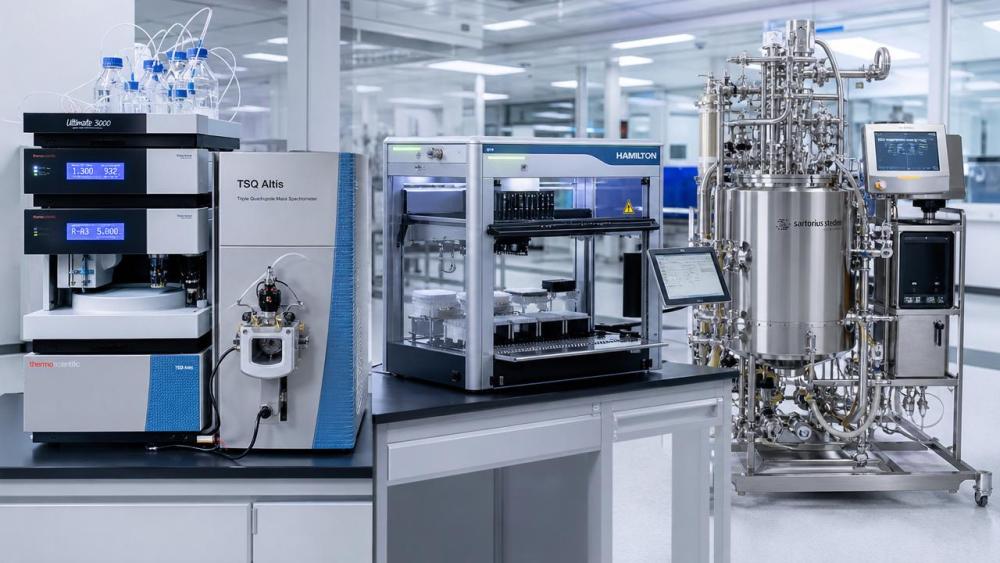
For finance-led purchasing, life science instruments are no longer simple capital assets.
They shape compliance exposure, operating efficiency, staffing models, and future production flexibility.
That makes ROI harder to judge than a price quote alone suggests.
In practice, hidden costs often outweigh the sticker price within two or three budget cycles.
This is especially true in biopharma, where uptime, traceability, and audit readiness directly affect revenue timing.
The smartest buying decisions look beyond acquisition cost and ask one practical question.
Which life science instruments create measurable value across their full operating life?
The answer usually comes from five areas: compliance, utilization, service, automation, and scale-up fit.
Understanding those factors helps turn budget approval into a stronger business case.
Why Purchase Price Rarely Tells the Full Story
A lower quote can look attractive during procurement review.
Yet many life science instruments carry long-tail costs that appear after installation.
These include validation work, software upgrades, calibration, consumables, operator training, and downtime risk.
For example, an LC-MS platform with cheaper entry pricing may require higher service intensity later.
A bioreactor may look expensive upfront but deliver better batch consistency and faster scale-up.
That difference changes cost per usable dataset, cost per batch, or cost per approved release.
So when comparing life science instruments, total cost of ownership is the right starting lens.
Core TCO elements worth modeling
- Acquisition cost, installation, and site preparation.
- IQ/OQ/PQ, CSV, and documentation workload.
- Preventive maintenance, spare parts, and service contracts.
- Reagents, filters, single-use sets, and other recurring consumables.
- Training time, staffing effort, and productivity impact.
- Downtime cost and recovery time after failures.
Compliance Risk Often Has the Biggest Financial Impact
In regulated environments, compliance is not a side issue.
It can be the single biggest driver of ROI for life science instruments.
If systems fail audit expectations, costs appear fast and often without warning.
Those costs may include delayed releases, repeated validation, consultant fees, or restricted market access.
That is why data integrity and validation readiness deserve financial weighting early.
The same principle applies to biosafety cabinets, liquid handlers, and purification equipment.
If a platform simplifies GMP alignment, it protects more value than a lower-cost alternative.
Questions that reduce approval risk
- Does the vendor provide robust validation support?
- Can audit trails, access controls, and records support GMP review?
- How often do software changes trigger revalidation work?
- What is the documented response time for compliance-related service issues?
Utilization Rate Changes the ROI Math Quickly
Even excellent life science instruments underperform financially when utilization stays low.
This is a common issue in multi-site labs and fast-growing process teams.
Teams may buy for peak demand, then operate far below target capacity.
The result is poor asset productivity and a slower payback period.
Utilization should be reviewed in hours, batches, runs, samples, and labor displacement.
A liquid handling workstation, for instance, may justify itself by replacing repetitive manual work.
But that only happens if workflows are standardized and sample volume is stable.
This also means flexible platforms often outperform specialized systems in uncertain pipelines.
How to test realistic utilization
- Map current workflows by run frequency and operator time.
- Estimate demand under normal, peak, and delayed project conditions.
- Model shared use across teams before buying duplicate units.
- Compare capacity with actual throughput targets, not theoretical maximums.
Service, Downtime, and Maintenance Are Quiet Cost Drivers
Downtime is one of the most underestimated costs in life science instruments.
When critical systems stop, the loss spreads beyond repair invoices.
Projects slip, samples degrade, batches miss windows, and staff hours get wasted.
For centrifuges, LC-MS systems, and automated handlers, uptime directly affects operational output.
This makes service quality a real financial variable, not just an after-sales feature.
A cheaper instrument with slow parts replacement can become the most expensive option.
The better question is how fast performance can be restored under failure conditions.
Maintenance indicators that matter
- Mean time between failures in similar use cases.
- Local service coverage and spare-parts availability.
- Preventive maintenance intervals and shutdown duration.
- Remote diagnostics and digital service capability.
- Warranty scope versus full-service contract economics.
Automation Gains Are Valuable Only When They Are Measurable
Automation is one of the strongest ROI arguments for modern life science instruments.
Still, not every automated feature creates real savings.
The best returns come from reducing manual variability, rework, and bottlenecks.
That is why workflow fit matters more than feature count.
For example, automated liquid handling can improve reproducibility and sample throughput significantly.
But if assay types change constantly, setup complexity may offset part of the gain.
Similarly, digitally integrated bioprocess systems can cut deviations and reporting time.
Those benefits become most visible when linked to labor, quality, and cycle-time metrics.
Useful automation ROI measures
- Hours of manual work eliminated per week.
- Reduction in failed runs or repeat tests.
- Improvement in batch consistency or data quality.
- Faster turnaround for release, screening, or analysis.
Scale-Up Flexibility Can Protect Long-Term Value
One of the clearest recent signals is the need for flexibility.
Pipelines shift, modalities evolve, and facility strategies change faster than before.
That makes scale-up compatibility a major ROI factor for life science instruments.
Equipment that supports process transfer, single-use adoption, or modular expansion holds value longer.
This is especially relevant for bioreactors, separation systems, and analytical platforms.
If a system cannot grow with development stages, replacement may arrive earlier than planned.
In real purchasing terms, early obsolescence can erase an apparently strong first-year savings case.
Signs of stronger scale-up economics
- Compatible control logic across development and production stages.
- Straightforward transfer of methods, recipes, or data structures.
- Support for single-use workflows or hybrid manufacturing models.
- Upgrade paths that extend platform life without full replacement.
A Practical Framework for Evaluating Life Science Instruments
A reliable approval model should combine cost control with strategic fit.
That means scoring life science instruments across direct and indirect value drivers.
A simple framework can make internal discussions faster and more objective.
This kind of structure also improves communication between technical teams and budget reviewers.
More importantly, it keeps the purchase discussion focused on measurable outcomes.
Final Takeaway: The Best ROI Usually Comes From Risk Reduction
When reviewing life science instruments, the biggest ROI driver is rarely a single specification.
It is the combined effect of lower compliance risk, stronger uptime, better utilization, and future-ready design.
That shifts the conversation from cheapest purchase to smartest operating decision.
In today’s market, the most resilient life science instruments are the ones that protect continuity.
They support audit confidence, reduce manual friction, and stay relevant as programs scale.
Before approving any major purchase, test the full ROI story under real operating conditions.
That is usually where the true value of life science instruments becomes clear.
Related News
- Biopharma Equipment Upgrade Priorities for Capacity, Compliance, and ROIJun 17, 2026Mr. Julian Vane
- High-Throughput Screening Bottlenecks and How to Fix ThemJun 16, 2026Mr. Julian Vane
- Biopharma Equipment Cost Drivers: What Impacts Total OwnershipJun 14, 2026Mr. Julian Vane
- Life Science Instruments Cost Factors: What Impacts ROI Most?Jun 12, 2026Mr. Julian Vane
Related News
- 00
0000-00
Southeast Asia Green Procurement Rule Adds LCA Filing for GC Exports - 00
0000-00
PMEC China 2026 Day-One Deals Lift Mini-Bioreactor Exports - 00
0000-00
FDA Tightens Remote Validation Rules for Cytotoxic Isolators - 00
0000-00
Shanghai Port Fast Track Cuts TFF Clearance to 32 Hours - 00
0000-00
EMA Rule Takes Effect for UHPLC EU Exports
Mr. Julian Vane
Weekly Insights
Stay ahead with our curated technology reports delivered every Monday.