





On May 25, 2026, the U.S. Food and Drug Administration (FDA) released the draft Computerized System Validation (CSV) Guidance v3.1, introducing new validation and data integrity expectations for computerized systems embedded in imported pharmaceutical and medical device equipment — directly impacting export readiness for Chinese manufacturers.
Key Provisions of the Updated FDA CSV Draft Guidance
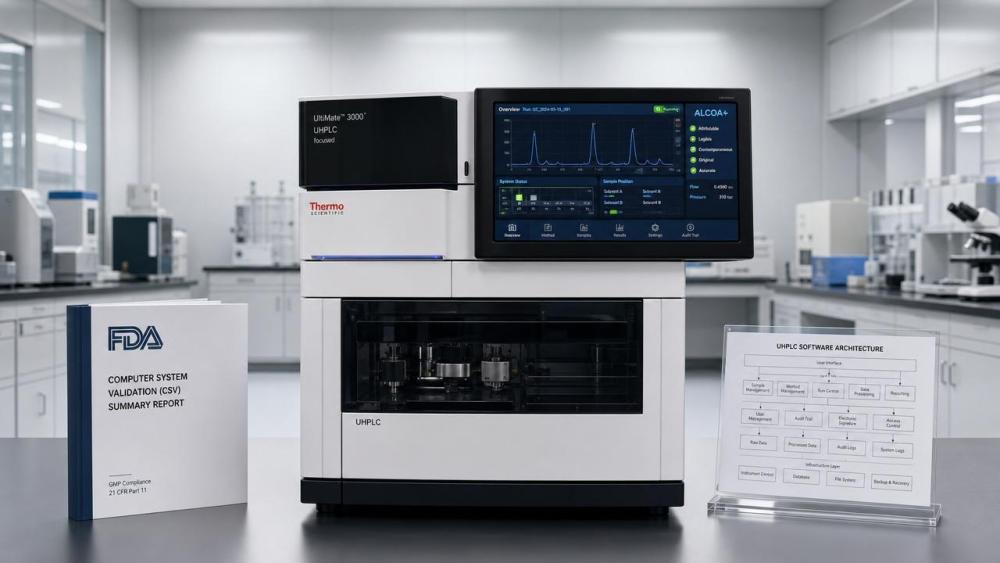
The FDA published the Computerized System Validation (CSV) Guidance Draft v3.1 on May 25, 2026. This draft explicitly requires that software accompanying imported drug and medical device equipment — including analytical instruments and containment systems — be supported by an independent third-party CSV audit report. Additionally, FDA reserves the right to conduct remote Good Manufacturing Practice (GMP) data traceability checks as part of regulatory review or post-market surveillance.
Impact Across the Medical Device and Analytical Instrument Supply Chain
Export-oriented equipment manufacturers
Manufacturers of UHPLC, Q-TOF, GC analyzers, and biological safety cabinets face extended registration timelines and higher compliance costs. Their technical documentation packages must now include validated CSV evidence — not just system specifications — affecting pre-submission preparation and FDA 510(k) or De Novo filing strategies.
Component and subsystem suppliers
Suppliers providing embedded software, firmware, or control modules must align their quality records with CSV lifecycle requirements (e.g., user requirement specifications, risk assessments, test protocols). Lack of traceable development artifacts may delay integration into final devices destined for U.S. markets.
Contract manufacturing and validation service providers
Third-party CSV auditors and validation consultants are seeing increased demand for audit-ready documentation packages and remote audit support. Their service scope must now explicitly cover FDA’s expectation of real-time or near-real-time data accessibility during remote GMP reviews.
Regulatory and compliance support firms
Firms assisting with U.S. market entry must update internal checklists and training materials to reflect the mandatory inclusion of third-party CSV reports. They also need to advise clients on how to structure data retention policies and audit trails to withstand remote FDA scrutiny.
What Exporters Must Prioritize Now
Integrate CSV validation into early-stage product development
CSV is no longer a late-stage compliance add-on. Manufacturers should embed CSV planning — including risk-based validation scope, electronic signature controls, and audit trail design — at the system design phase, especially for devices with embedded software used in regulated environments.
Secure qualified third-party CSV audit capacity
Given limited global capacity for FDA-aligned CSV audits, exporters should engage auditors early and verify their experience with FDA remote data review protocols. Audit reports must clearly map system functions to GMP-relevant data elements (e.g., raw chromatographic data, access logs, parameter change history).
Reassess technical documentation and data retention architecture
Systems must support full, unaltered data retrieval — including metadata and change histories — for remote FDA review. This affects database design, cloud hosting configurations, and local backup strategies. Documentation must demonstrate data integrity across ALCOA+ principles (Attributable, Legible, Contemporaneous, Original, Accurate, Complete, Consistent, Enduring, Available).
Industry Perspective: A Shift Toward Embedded Compliance
Analysis shows this guidance signals a structural shift: FDA is treating software not as ancillary to hardware, but as an integral, auditable component of GMP-regulated equipment. From an industry perspective, it is more appropriate to understand this as a move toward “compliance-by-design” — where data integrity is engineered in, not verified after deployment. What deserves closer attention is how rapidly domestic testing labs and certification bodies adapt their CSV audit methodologies to meet FDA’s remote traceability expectations — particularly regarding secure, time-stamped, and immutable data access pathways.
Taking Stock: Beyond Checklist Compliance
This update does not introduce entirely new concepts, but significantly raises the evidentiary bar for demonstrating data integrity in practice. It underscores that exporting to the U.S. pharmaceutical and medical device markets now demands deeper alignment between software engineering practices, quality management systems, and regulatory reporting infrastructure. Success will hinge less on isolated certifications and more on sustained, auditable data governance capabilities.
Source Information and Ongoing Monitoring
This article was generated based solely on the provided title, event date (May 25, 2026), and summary. Specific official source links were not provided in the input and should be verified continuously. Stakeholders are advised to monitor the FDA’s official guidance docket for final publication timing, public comment responses, and any clarifications on audit report format, remote review procedures, or transitional provisions. Industry feedback, updates to FDA inspection protocols, and evolving interpretations by U.S. regulatory consultants remain critical inputs for operational planning.
Related News
- What CSV documentation should a laboratory systems supplier provide?Oct 26, 2026Dr. Elara Sterling
- SCIEX Begins Construction of High-End Mass Spectrometer Plant in BeijingOct 26, 2026Analytical Metrology Expert
- Which design features make cleanroom benches easier to clean?Oct 25, 2026Bio-containment Strategist
- IndexBox Forecasts 12% CAGR for Global Microbioreactor Market Through 2035Oct 25, 2026Bioprocess Scientist
Related News
- 00
0000-00
What CSV documentation should a laboratory systems supplier provide? - 00
0000-00
SCIEX Begins Construction of High-End Mass Spectrometer Plant in Beijing - 00
0000-00
Which design features make cleanroom benches easier to clean? - 00
0000-00
IndexBox Forecasts 12% CAGR for Global Microbioreactor Market Through 2035 - 00
0000-00
When do hazardous compound labs need isolators for containment?
Industry Global
Weekly Insights
Stay ahead with our curated technology reports delivered every Monday.