





As Cell & Gene Therapies move toward broader commercialization in 2026, GMP data integrity is no longer a narrow IT topic.
It now shapes batch release timing, regulatory trust, and cross-border market access for advanced therapies.
In Cell & Gene Therapies, small data failures can create large quality consequences because processes are short, patient-linked, and highly variable.
That is why 2026 planning must connect digital controls, automated equipment, audit trail governance, and GMP readiness into one operating model.
Why 2026 creates a different risk scenario for Cell & Gene Therapies
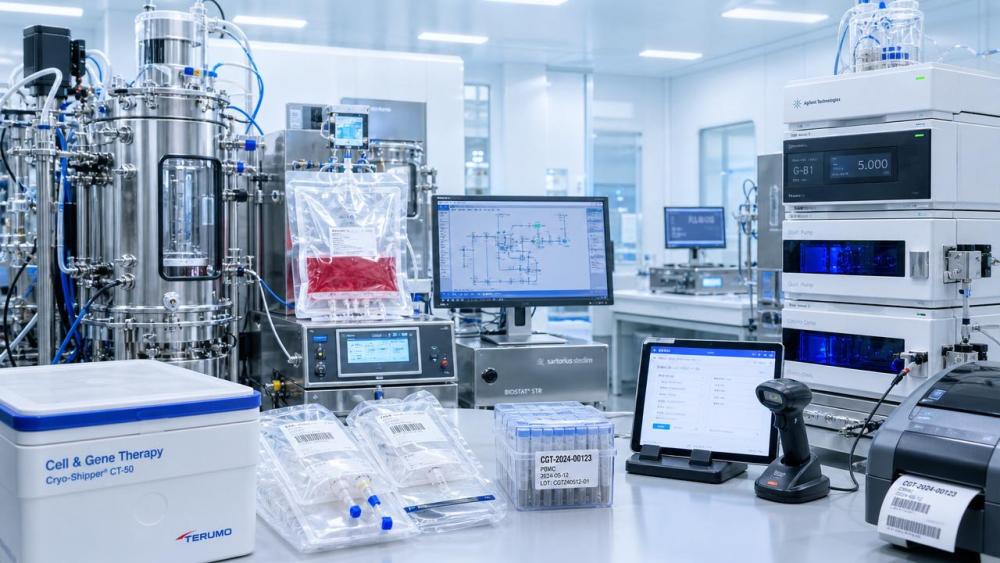
The data integrity profile of Cell & Gene Therapies differs from traditional large-batch biologics.
Many workflows combine manual interventions, single-use systems, decentralized testing, and compressed release windows.
Apheresis records, chain of identity, environmental monitoring, instrument logs, and analytical outputs must remain synchronized.
When systems are not fully integrated, the risk moves from isolated deviation to systemic GMP exposure.
In 2026, broader commercialization also means more comparability studies, more tech transfer events, and more external partners.
Each handoff increases the chance of incomplete metadata, uncontrolled spreadsheets, or audit trail gaps.
Scenario one: autologous Cell & Gene Therapies with chain-of-identity pressure
Autologous Cell & Gene Therapies create the highest sensitivity to data mismatch.
One patient, one batch, one timeline means every label, timestamp, and transfer record must align perfectly.
The core judgment point is not just whether records exist.
It is whether identity-critical data can be reconstructed across collection, manufacturing, testing, release, and delivery.
Common failures include duplicate identifiers, manual relabeling, local file storage, and delayed exception review.
In this scenario, data integrity controls must prioritize real-time reconciliation and exception visibility.
Key signals that risk is rising
- Paper and digital records coexist without defined source-data ownership.
- Barcode events are captured, but audit trail review is infrequent.
- Manual transcriptions link patient data to batch execution records.
- Out-of-hours interventions are logged late or outside validated systems.
Scenario two: allogeneic Cell & Gene Therapies during scale-up and multi-batch expansion
Allogeneic Cell & Gene Therapies introduce a different GMP data integrity challenge.
The process becomes more manufacturing-like, but the product remains biologically complex and sensitive.
As scale increases, more sensors, bioreactors, historians, and analytical systems generate more records.
The judgment point here is whether data consistency survives process expansion and site replication.
A validated MES alone does not solve fragmented parameter mapping between upstream, downstream, and QC systems.
For Cell & Gene Therapies, unnoticed configuration drift can compromise comparability and inspection readiness.
Typical integrity gaps in scale-up
- Different equipment models store critical process parameters in incompatible formats.
- Alarm acknowledgments are not trended across batches.
- Temporary engineering overrides remain undocumented in production history.
- Method version changes in LC-MS or potency assays are weakly governed.
Scenario three: outsourced Cell & Gene Therapies networks and partner data handoffs
Many Cell & Gene Therapies depend on CDMOs, testing labs, logistics providers, and software vendors.
This networked model increases operational flexibility, but it also expands the data integrity boundary.
The key judgment point is whether governance follows the data across organizations, not just inside one site.
A compliant internal process can still fail if external metadata, audit trails, or e-signature controls are incomplete.
For Cell & Gene Therapies, this risk is especially acute in sample transport, release testing, and cloud-based collaboration.
Questions that expose hidden partner risk
- Who owns source data when a contractor performs testing on shared methods?
- Can raw data and metadata be reviewed without vendor mediation?
- Are system backups, user roles, and change controls visible during quality review?
- Do quality agreements define audit trail review and record retention precisely?
How scenario needs differ across the Cell & Gene Therapies value chain
Not every workflow needs the same control depth or the same remediation priority.
The table below highlights where Cell & Gene Therapies risks change by scenario and operating context.
Practical fit recommendations for 2026 GMP data integrity planning
Effective action starts with scenario-based prioritization instead of broad digital ambition.
Cell & Gene Therapies programs should align controls to failure points that directly affect release and regulatory defense.
- Map critical data from source creation to final release decision.
- Classify systems by GMP impact, identity impact, and recovery difficulty.
- Review audit trails by exception trend, not only by periodic checklist.
- Reduce spreadsheet dependence in batch-critical and QC-critical workflows.
- Validate interfaces between instruments, LIMS, MES, and data historians.
- Test data reconstruction during mock deviations and mock inspections.
For BLES-aligned environments, this is where equipment intelligence becomes strategically valuable.
Bioreactors, centrifuges, LC-MS systems, biosafety cabinets, and liquid handlers should not remain isolated data islands.
Their records must support both process understanding and defensible GMP review.
Common misjudgments that weaken Cell & Gene Therapies compliance
Several assumptions continue to undermine otherwise advanced Cell & Gene Therapies operations.
- Assuming automation automatically ensures data integrity.
- Treating CSV as a one-time project instead of a living governance process.
- Focusing on final reports while ignoring raw data and metadata.
- Auditing suppliers without testing actual data retrieval and reconstruction.
- Separating process scale-up decisions from digital evidence requirements.
These mistakes are costly because Cell & Gene Therapies often operate with limited batch redundancy.
A single unresolved integrity issue can block release, trigger retrospective review, and delay commercial momentum.
Next-step actions to strengthen Cell & Gene Therapies resilience
The most effective next step is a focused integrity risk assessment tied to real operating scenarios.
Start with workflows where Cell & Gene Therapies are most exposed: patient-linked records, analytical release data, and partner transfers.
Then connect equipment-level evidence, software validation status, audit trail review routines, and quality governance into one decision framework.
For organizations building global credibility in Cell & Gene Therapies, the goal is clear.
Make every data point traceable, every exception reviewable, and every scale-up step inspection-ready before 2026 pressure intensifies.
That is how GMP data integrity becomes a growth enabler rather than a hidden commercialization barrier.
Related News
- What CSV documentation should a laboratory systems supplier provide?Oct 26, 2026Dr. Elara Sterling
- GenScript ProBio’s Nanjing Biologics Facility Passes NMPA Pre-Approval InspectionOct 22, 2026Dr. Elara Sterling
- How to assess audit trails in analytical data integrity solutionsOct 16, 2026Dr. Elara Sterling
- How user licensing affects laboratory validation system pricingOct 14, 2026Dr. Elara Sterling
Related News
- 00
0000-00
What CSV documentation should a laboratory systems supplier provide? - 00
0000-00
SCIEX Begins Construction of High-End Mass Spectrometer Plant in Beijing - 00
0000-00
Which design features make cleanroom benches easier to clean? - 00
0000-00
IndexBox Forecasts 12% CAGR for Global Microbioreactor Market Through 2035 - 00
0000-00
When do hazardous compound labs need isolators for containment?
Dr. Elara Sterling
Weekly Insights
Stay ahead with our curated technology reports delivered every Monday.