





On July 26, 2026, the European Medicines Agency (EMA) released the final revised version of GMP Annex 11, introducing a document requirement that takes effect on August 1, 2026 for computerized systems registered in the EU. The change matters well beyond regulatory wording: suppliers of systems such as LC-MS, UHPLC, NGS workstations, and biosafety cabinet control systems now face a clearer documentation threshold tied to EU GMP expectations, with direct implications for export compliance, customer qualification, and project timing for Chinese laboratory equipment companies serving the European market.
What the revised Annex 11 now requires
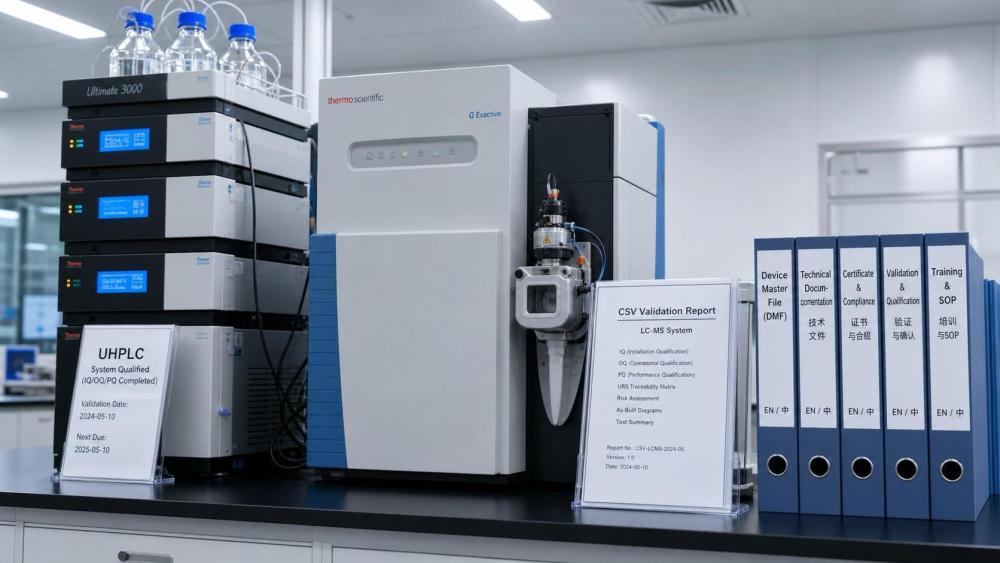
According to the provided event summary, EMA issued the final revised text of Annex 11 on July 26, 2026. The summary states that, from August 1, 2026, all suppliers of computerized systems registered in the EU must provide an English CSV validation report that meets EU GMP requirements, while also maintaining a certified Chinese bilingual archive copy.
The systems explicitly referenced in the provided information include LC-MS, UHPLC, NGS workstations, and biosafety cabinet control systems. The same summary also states that this requirement directly affects the CE/UKCA compliance path and customer onboarding cycle of Chinese laboratory equipment exporters.
Where the operational impact is likely to appear first
Documentation pressure for export-facing equipment suppliers
From an industry perspective, suppliers that sell computerized laboratory or controlled equipment into EU-registered use cases are likely to feel the change first because the new requirement is framed around CSV validation reporting and bilingual archiving. The practical impact may appear in technical dossier preparation, internal document control, and the readiness of submission packages used in customer qualification or regulatory review.
Longer review points for procurement and customer access
Procurement-side friction is also a plausible concern. Where buyers or regulated end users already screen suppliers through documentation review, the addition of a required English CSV report alongside a certified Chinese archive copy may introduce another checkpoint before approval, purchase confirmation, or site acceptance. What deserves closer attention is not only the existence of the report, but whether document format, traceability, and certification status align with what downstream reviewers expect.
Compliance service and testing-related support may see added demand
Certification-related service providers, validation support firms, and document control partners may also be affected because exporters could need more structured support for bilingual archiving, document consistency, and evidence preparation. Analysis shows that the impact here is less about a new product requirement and more about whether supporting compliance files can move smoothly through review, tender, and delivery workflows.
After-sales and lifecycle records may become more sensitive
For service teams and post-delivery support providers, the rule change may increase attention on how validation records are stored, retrieved, and presented during audits, customer follow-up, or quality traceability checks. Even where hardware delivery is unchanged, the supporting compliance record set may become a more visible part of the commercial handover.
What companies should review now
Check whether existing CSV files match the new language requirement
Analysis shows that companies exporting affected systems should first review whether their current CSV validation reports already exist in English and whether their archive process can support a certified Chinese bilingual copy. For many firms, the immediate issue may not be system performance, but document completeness and consistency across languages.
Reassess compliance timing in CE/UKCA-related project planning
The provided summary directly links the change to CE/UKCA compliance pathways and customer access cycles for Chinese exporters. It is therefore reasonable to watch for scheduling effects in submission preparation, customer due diligence, and delivery planning. Companies should treat timeline assumptions cautiously until actual execution practices become clearer.
Review tender, quotation, and delivery document packages
What deserves closer attention is whether tender files, technical response packages, and delivery dossiers need updating to reflect the new CSV documentation expectation. Where commercial teams, regulatory teams, and engineering teams work separately, document gaps can emerge even when the product itself is ready for shipment or installation.
Monitor how execution language develops in practice
The provided information confirms the requirement itself, but does not set out detailed implementation language for every review scenario. Observably, companies should continue tracking how the requirement is reflected in customer documentation requests, qualification checklists, and compliance communications, rather than assuming that all review bodies will apply the wording in exactly the same way from the start.
Why this looks like an execution signal, not just a policy headline
In editorial observation, this update is more appropriate to understand as a near-term execution signal because the event summary includes both a final revised text and a defined effective date of August 1, 2026. At the same time, it should not yet be treated as a fully settled operational outcome across every transaction or review context, because the provided information does not include detailed enforcement scenarios, reviewer practice, or downstream market response.
From an industry perspective, the significance lies in the shift from broad compliance awareness to file-level readiness. The core issue is not only whether suppliers understand Annex 11, but whether their CSV documentation, bilingual archive process, and customer-facing submission materials are organized well enough to avoid delays in approval and delivery.
How the market may need to read this change
This development points to a more document-driven stage of compliance for suppliers of computerized systems entering EU-registered use cases. The confirmed facts already indicate a rule change with immediate documentary consequences, especially for Chinese exporters whose sales process depends on passing customer and compliance review without repeated rework.
Analysis shows that the most balanced reading is to treat this as an implemented rule change with practical near-term consequences, while continuing to watch how detailed execution standards, customer requests, and market feedback evolve after the effective date. That is a more defensible interpretation than assuming either instant uniform enforcement or negligible impact.
Basis of this article and points that still need verification
This article is generated from the user-provided news title, event date, and event summary. The summary states that EMA released the final revised GMP Annex 11 text on July 26, 2026 and set an August 1, 2026 requirement for English CSV validation reports with certified Chinese bilingual archive copies for relevant computerized system suppliers registered in the EU.
For this type of event, source categories typically relevant to later verification may include official regulatory announcements, notices issued by supervisory authorities, trade or customs information, industry association releases, standard-setting documents, and reporting by authoritative industry media. A specific official source link was not provided in the input, so the exact source document and later interpretive materials still need to be verified on an ongoing basis.
Further observation is still needed on detailed implementation wording, certification and review practice, changes in tender or procurement documents, industry feedback, and how affected companies adjust documentation and delivery processes after the stated effective date.
Related News
- What CSV documentation should a laboratory systems supplier provide?Oct 26, 2026Dr. Elara Sterling
- GenScript ProBio’s Nanjing Biologics Facility Passes NMPA Pre-Approval InspectionOct 22, 2026Dr. Elara Sterling
- How to assess audit trails in analytical data integrity solutionsOct 16, 2026Dr. Elara Sterling
- How user licensing affects laboratory validation system pricingOct 14, 2026Dr. Elara Sterling
Related News
- 00
0000-00
What CSV documentation should a laboratory systems supplier provide? - 00
0000-00
SCIEX Begins Construction of High-End Mass Spectrometer Plant in Beijing - 00
0000-00
Which design features make cleanroom benches easier to clean? - 00
0000-00
IndexBox Forecasts 12% CAGR for Global Microbioreactor Market Through 2035 - 00
0000-00
When do hazardous compound labs need isolators for containment?
Dr. Elara Sterling
Weekly Insights
Stay ahead with our curated technology reports delivered every Monday.