





Why do industrial centrifuges matter so much in bioprocess economics?
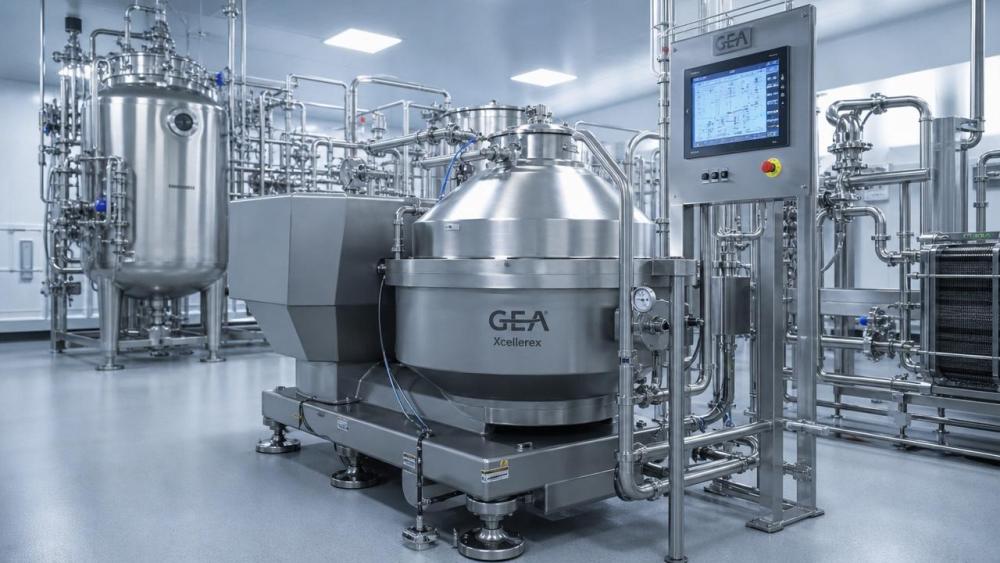
Industrial centrifuges sit at a decisive point in production. They do not create the molecule, but they often determine whether value is captured efficiently or lost downstream.
In biopharma, fermentation and cell culture generate complex broths full of cells, debris, proteins, and process variability. Separation quality affects every step that follows.
That is why industrial centrifuges are rarely just utility equipment. They shape throughput, yield stability, cleaning time, utility demand, and the timing of batch release.
A weak separation step can overload filtration, increase consumables, and create hidden compliance pressure. A well-matched system can shorten cycles and protect downstream purity targets.
This is especially relevant in the BLES context, where bioreactors, purification systems, LC-MS verification, clean handling, and automation must work as one traceable process chain.
In simple terms, industrial centrifuges influence both hard costs and decision speed. That makes them central when expansion, modernization, or payback analysis is on the table.
What actually drives the cost of industrial centrifuges?
The purchase price is only the visible layer. The bigger cost picture usually comes from how the machine performs across validation, utilities, maintenance, and product recovery.
A larger bowl does not automatically mean better economics. Capacity matters, but separation efficiency, solids handling, and cleaning design can change the total cost more than nameplate size.
More advanced industrial centrifuges often cost more because they reduce process friction elsewhere. In actual operations, that trade can be worth far more than the initial premium.
- Rotor and bowl design affect G-force, shear exposure, and clarification performance.
- Material selection affects corrosion resistance, sanitation durability, and lifecycle reliability.
- Automation level affects labor input, batch consistency, alarms, and data integrity.
- CIP or SIP readiness affects turnaround time and GMP documentation burden.
- Footprint and utility demand affect installation, HVAC, power, and water planning.
There is also a less obvious cost driver: process risk. If industrial centrifuges cannot keep pace with upstream output, the entire campaign may run with unstable buffers and scheduling pressure.
That risk matters in commercial biologics, pilot plants, and laboratory-scale expansion alike. Delays are expensive, but inconsistent data packages can be even more expensive.
A practical cost screen before selection
Before comparing quotes, it helps to frame the decision with a compact checklist. This keeps industrial centrifuges from being judged on capital cost alone.
Is higher throughput always the best investment?
Not necessarily. The better question is whether throughput stays aligned with recovery, quality, and campaign rhythm.
Industrial centrifuges with impressive hourly capacity can still underperform financially if they create shear stress, push excess fines downstream, or require frequent intervention.
In many bioprocess lines, the most valuable capacity is usable capacity. That means steady performance across feed variability, not just the best-case number on a specification sheet.
For example, a disc-stack unit may process quickly, but the real value depends on solids characteristics, broth viscosity, and cleaning frequency. Dense harvests behave differently from dilute streams.
This is where BLES-style process intelligence becomes important. Upstream conditions, analytical confirmation, and downstream purification should be reviewed together, not as isolated equipment choices.
A practical way to judge industrial centrifuges is to compare four connected numbers: liters per hour, product recovery, downtime per batch, and filter load after separation.
If one machine runs faster but increases polishing costs, the apparent gain may disappear. More common in real projects is a balanced choice that protects the full process train.
When does throughput become a strategic lever?
- When upstream bioreactors already operate near utilization limits.
- When product campaigns require short turnaround between lots.
- When filtration consumables are becoming a cost hotspot.
- When scale-up plans need room for future volumes without major retrofits.
How do you estimate payback without oversimplifying the numbers?
Payback for industrial centrifuges should not be reduced to purchase price divided by annual savings. That shortcut misses the operational reality of regulated production.
A stronger model combines direct savings with avoided costs. Direct savings include labor, utilities, consumables, and reduced batch hours. Avoided costs include deviations, yield loss, and delay risk.
In biopharma and advanced laboratories, speed alone rarely wins the case. What usually matters is more stable output with fewer surprises during qualification and routine operation.
If industrial centrifuges cut the burden on filters and reduce reprocessing events, the payback may arrive faster than expected, even with a higher initial investment.
The same applies when digital records support compliance review. Reliable alarms, event logs, and validated control logic can reduce manual work around audits and batch documentation.
That point aligns with the BLES emphasis on GMP traceability, automated workflows, and data integrity. Capital decisions are stronger when equipment performance supports both science and compliance.
A realistic payback framework
- Estimate annual throughput gains from reduced cycle time.
- Quantify product recovery changes, even small percentage shifts.
- Include filter savings, cleaning labor, and lower intervention time.
- Add validation and documentation efficiencies where relevant.
- Stress-test the model against variable feed quality and campaign peaks.
Need a quick rule of thumb? If the current separation step causes recurring downstream penalties, industrial centrifuges often pay back through system-wide gains, not one isolated metric.
What mistakes lead to disappointing centrifuge ROI?
The most common mistake is evaluating industrial centrifuges as standalone hardware. Performance on paper can look excellent while process integration remains weak.
Another mistake is focusing on maximum speed while ignoring product sensitivity. Some biologics and cell-related processes are more affected by shear than expected during procurement reviews.
Cleaning strategy is also underestimated. Long turnaround times quietly erode utilization, especially where multiproduct flexibility or strict changeover control matters.
Then there is the data question. Industrial centrifuges that cannot support robust records may create extra validation effort later, particularly under FDA or EMA expectations.
A final trap is underplanning for scale transition. A system sized only for today may force an awkward replacement just when process success begins to accelerate.
In practice, the better path is disciplined cross-checking between process science, facility constraints, and lifecycle economics. That is exactly where integrated intelligence adds value.
So what should be clarified before making the next move?
Start with the process, not the brochure. Clarify feed characteristics, expected solids load, target recovery, cleaning windows, and downstream sensitivity before comparing industrial centrifuges.
Then connect those answers to economics. The strongest evaluation usually combines capital cost, operating profile, compliance fit, and expansion headroom in one decision model.
It also helps to map industrial centrifuges against the wider production chain. Separation affects filtration, analytical release confidence, biosafety routines, and automated handling schedules.
For organizations working in fast-moving biologics, CGT, or laboratory scale-up, that broader view is more useful than a narrow equipment comparison.
A sensible next step is to build a short decision sheet. List throughput needs, validation expectations, maintenance assumptions, and projected payback scenarios side by side.
When industrial centrifuges are judged through that lens, the discussion becomes clearer. The best choice is usually the one that strengthens throughput, traceability, and resilience at the same time.
Related News
- How Can You Prevent Recombinant Protein Loss During Centrifugation?Oct 04, 2026Downstream Purification Fellow
- When Does Centrifugal Separation for Cell Harvest Outperform TFF?Aug 12, 2026Downstream Purification Fellow
- Industrial Centrifuges for Continuous Operation: What Impacts Uptime MostJul 13, 2026Downstream Purification Fellow
- TUV Rheinland Updates BSL-3 Rules for Flow CentrifugesJul 07, 2026Downstream Purification Fellow
Related News
- 00
0000-00
What CSV documentation should a laboratory systems supplier provide? - 00
0000-00
SCIEX Begins Construction of High-End Mass Spectrometer Plant in Beijing - 00
0000-00
Which design features make cleanroom benches easier to clean? - 00
0000-00
IndexBox Forecasts 12% CAGR for Global Microbioreactor Market Through 2035 - 00
0000-00
When do hazardous compound labs need isolators for containment?
Downstream Purification Fellow
Weekly Insights
Stay ahead with our curated technology reports delivered every Monday.