





Liquid Chromatography Mass Spectrometry Setup Mistakes
A reliable liquid chromatography mass spectrometry workflow depends on more than advanced hardware—it starts with disciplined setup.
For operators, small oversights in solvent preparation, column conditioning, ion source parameters, or system equilibration can quickly lead to poor sensitivity, drifting retention times, contaminated spectra, and failed runs.
Understanding common setup mistakes helps protect sample integrity, instrument uptime, and data traceability, especially in regulated pharmaceutical and bioprocessing environments where every chromatographic peak must support confident decisions.
The real operator risk: small setup errors become big data problems
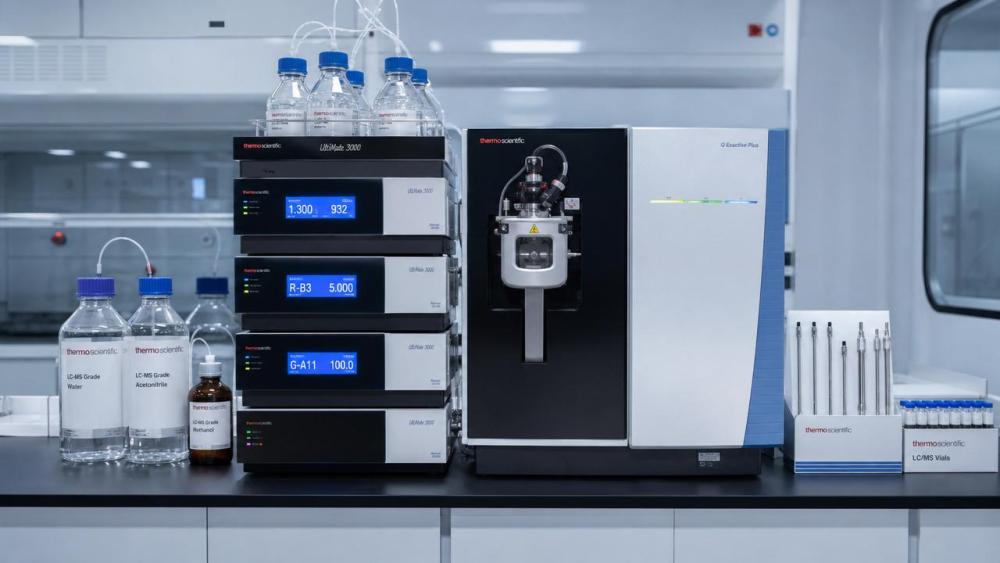
Most liquid chromatography mass spectrometry failures do not begin with catastrophic instrument damage. They begin with minor setup gaps that quietly distort results.
An unfiltered buffer, a poorly seated column, or an unstable electrospray can create symptoms that look like complex analytical problems.
Operators often see noisy baselines, weak response, carryover, poor reproducibility, or unexpected adducts before they identify the original mistake.
The practical goal is not simply avoiding downtime. It is preventing questionable data from entering discovery, QC, or regulated documentation.
In pharmaceutical and bioprocessing laboratories, a failed run may waste samples, delay release decisions, and trigger deviation investigations.
The best setup practice is therefore preventive. Operators should treat each LC-MS run as a controlled system, not a casual sequence.
Mistake 1: preparing mobile phases without controlling purity, compatibility, and freshness
Mobile phase quality is one of the fastest ways to damage liquid chromatography mass spectrometry performance before injection even begins.
Using lower-grade solvents, contaminated water, old additives, or incompatible salts can suppress ionization and contaminate the ion source.
Operators should confirm that solvents are LC-MS grade, additives are volatile, and buffers match the chosen ionization mode.
Phosphate buffers, nonvolatile ion-pairing reagents, detergents, and dirty glassware can leave residues that persist across multiple runs.
Fresh preparation matters because formic acid, ammonium acetate, and ammonium formate solutions can change composition during storage.
Always label mobile phases with composition, date, preparer, and intended method. In regulated settings, undocumented solvent changes create traceability gaps.
Filtration and degassing should match the laboratory’s SOP. Poorly degassed mobile phases can cause pressure fluctuation and unstable spray behavior.
A useful operator habit is to inspect solvent bottles visually. Particles, microbial haze, or salt crystals are setup warnings, not minor details.
Mistake 2: skipping system flushing when methods or sample types change
LC-MS systems remember previous chemistry. Residual salts, proteins, lipids, polymers, and strong eluents can remain inside tubing and valves.
Operators who switch directly between methods often see ghost peaks, carryover, unstable backgrounds, or unexpected mass spectral contaminants.
Method transitions should include an intentional flushing plan. The plan should consider solvent miscibility, column limits, and source cleanliness.
Moving from high-salt bioanalytical methods to sensitive small-molecule detection requires more than a short rinse with starting mobile phase.
Use intermediate solvents when changing from aqueous buffers to high organic conditions. Sudden incompatibility can precipitate salts inside the flow path.
Autosampler needles, injection loops, seal wash lines, and divert valves are common carryover sources that operators sometimes overlook.
Blank injections are not wasted time. They reveal whether the system is actually clean enough for the next sample set.
Mistake 3: installing or conditioning the column too quickly
A column is not just a consumable part. It is the separation engine that determines retention, resolution, and peak shape.
Incorrect flow direction, poorly tightened fittings, void formation, and incompatible solvents can ruin performance before the first sample injection.
Operators should verify column chemistry, dimensions, pressure limits, temperature range, and storage solvent before installation.
New columns and stored columns need controlled equilibration. Starting a run too soon can cause retention drift and unstable peak response.
For gradient methods, equilibration requires enough column volumes at initial conditions. A fixed five-minute wait may be insufficient.
Column temperature should also stabilize before injections begin. Small temperature shifts can change retention, especially for peptide or impurity methods.
Record column serial number, injection count, pressure profile, and observed performance. These details help separate setup issues from column aging.
Mistake 4: assuming the LC and MS are ready because the software says “idle”
Instrument status indicators are useful, but they do not guarantee analytical readiness. Stable hardware is different from stable method performance.
Before running valuable samples, operators should confirm pressure stability, baseline behavior, detector response, and ion source conditions.
Equilibration is especially important after source cleaning, column changes, mobile phase replacement, or overnight shutdown.
A system suitability injection provides stronger evidence than a green status icon. It checks the entire workflow under method conditions.
Operators should watch retention time, peak area, mass accuracy, signal-to-noise ratio, and carryover against predefined acceptance criteria.
When results fail suitability, do not continue hoping samples will improve. Investigate before the sequence consumes critical material.
Mistake 5: using ion source settings copied from another method
The mass spectrometer’s ion source is highly sensitive to flow rate, solvent composition, analyte class, and matrix load.
Copied settings may produce a signal, but not necessarily robust, reproducible, or clean signal suitable for decision-making.
Common setup errors include excessive capillary voltage, incorrect gas temperature, weak nebulization, and poor spray position.
Too much heat can degrade thermally sensitive compounds. Too little heat can cause droplets, unstable ionization, and poor desolvation.
Operators should tune source conditions using representative mobile phase and analyte concentration, not only neat standards in ideal solvent.
Matrix-matched checks are valuable for biological samples, fermentation broths, plasma extracts, and high-salt process intermediates.
Document source parameters carefully. In validated methods, undocumented tuning changes may become compliance risks even when results look acceptable.
Mistake 6: neglecting sample preparation and vial compatibility
Even a perfectly prepared LC-MS system cannot compensate for poor sample setup. Samples must be compatible with method chemistry.
Particulates, precipitated proteins, high salt, excessive detergent, and strong injection solvents commonly create chromatographic and spectral problems.
Injection solvent strength should be close to initial mobile phase conditions. Strong solvents can cause distorted peaks and early breakthrough.
Operators should centrifuge, filter, dilute, or desalt samples according to validated sample preparation requirements.
Vials, caps, inserts, and septa also matter. Plasticizers, silicone residues, and leachables can appear as persistent background ions.
Low-bind containers may be needed for peptides, oligonucleotides, and proteins. Standard vials can cause adsorption and poor recovery.
For trace analysis, prepare process blanks, solvent blanks, and extraction blanks. They identify whether contamination comes from sample preparation.
Mistake 7: overlooking leaks, dead volume, and fitting geometry
LC-MS setup is unforgiving because small mechanical issues produce large analytical consequences. A tiny leak can destroy quantitative confidence.
Leaks may not always appear as visible droplets. They can show as pressure instability, air bubbles, poor peak shape, or reduced response.
Dead volume caused by mismatched fittings creates band broadening, split peaks, and loss of resolution.
Operators should use fittings designed for the column hardware and avoid mixing incompatible ferrule systems without verification.
After maintenance, inspect connections under flow and monitor pressure at method conditions. Hand-tight fittings still require performance confirmation.
In high-pressure UHPLC methods, small connection errors may only appear when gradients reach demanding conditions.
Mistake 8: starting sequences without blanks, calibration checks, and suitability rules
A sequence is not ready just because samples are loaded. Operators need a decision structure before the first injection.
Blank order, calibration standards, QC samples, system suitability, and wash injections should be planned to reveal setup problems early.
Running valuable samples first is risky. If carryover, drift, or poor sensitivity appears later, the entire dataset may be questioned.
System suitability should include measurable criteria, not subjective judgments. Typical checks include retention time, peak area, resolution, and mass accuracy.
For quantitative workflows, calibration curve behavior and QC recovery should be evaluated before reporting results.
In GMP or GLP environments, acceptance criteria must be predefined. Retrospective acceptance decisions weaken data integrity.
Mistake 9: ignoring contamination from the laboratory environment
LC-MS systems detect compounds operators never intended to measure. Laboratory air, gloves, wipes, tubes, and cleaners can introduce contaminants.
Common background ions come from polyethylene glycols, phthalates, detergents, plasticizers, and polymeric residues.
Operators should avoid storing open solvent bottles near cleaning agents, powders, or high-traffic benches.
Glove powder, marker ink, and reused containers can become surprising contamination sources during sensitive analyses.
Separate LC-MS solvent preparation tools from general laboratory use. Dedicated glassware and clean caps reduce unexplained background peaks.
When contamination appears, compare solvent blanks, instrument blanks, and preparation blanks. This narrows the source logically.
Mistake 10: treating maintenance records as paperwork instead of diagnostic tools
Maintenance records help operators understand performance trends. They are not only documents for audits or service engineers.
Pressure changes, declining response, repeated contamination, or unstable spray often have histories visible in previous logs.
Record pump seal changes, source cleaning, column replacement, solvent lot changes, calibration events, and abnormal observations.
Good logs allow teams to distinguish method problems from instrument wear. They also support faster troubleshooting after failed runs.
In regulated environments, complete records connect setup actions to generated data. That traceability protects both operators and organizations.
A practical pre-run checklist for operators
Before starting liquid chromatography mass spectrometry analysis, confirm that mobile phases are fresh, compatible, labeled, and free of visible contamination.
Check solvent levels, waste capacity, pump prime status, seal wash, autosampler temperature, and sample plate location.
Verify column identity, flow direction, temperature, pressure profile, and adequate equilibration at initial method conditions.
Confirm ion source installation, gas supplies, spray stability, calibration status, and MS method polarity or acquisition mode.
Run blanks and system suitability before critical samples. Review results against acceptance criteria before committing the full sequence.
If anything looks abnormal, pause. A short investigation is cheaper than a failed batch of injections and questionable data.
How to troubleshoot setup problems without guessing
When problems appear, isolate the system step by step. Random changes can hide the cause and create new problems.
Start with recent changes. Ask what solvent, column, sample batch, source component, or method parameter changed since the last acceptable run.
Use blanks to separate contamination from carryover. Use standards to separate sample preparation issues from instrument sensitivity problems.
Monitor pressure traces to identify restrictions, leaks, air, or column deterioration. Pressure behavior often reveals mechanical issues early.
Compare chromatographic and mass spectral symptoms together. Poor chromatography and poor ionization may have different causes.
Escalate only after collecting evidence. Clear observations help senior analysts, service engineers, and QA teams resolve issues faster.
What operators should remember
Reliable LC-MS setup is a disciplined routine built from clean chemistry, stable separation, controlled ionization, and documented decisions.
The most damaging mistakes are rarely dramatic. They are ordinary omissions repeated under time pressure.
For operators, the best defense is a consistent checklist, evidence-based troubleshooting, and respect for system suitability.
In pharmaceutical, bioprocessing, and analytical laboratories, every chromatographic peak may influence a scientific or compliance decision.
When setup is controlled, liquid chromatography mass spectrometry becomes more than a powerful instrument. It becomes a trustworthy decision platform.