





Pharmaceutical scale-up looks linear in slide decks, but real expansion rarely follows a straight path.
As processes move from bench to pilot and then to commercial output, overlooked costs emerge fast.
They often hide inside transfer packages, validation timelines, cleaning strategy, analytical drift, and unstable supply assumptions.
That is why pharmaceutical scale-up is no longer only an engineering task.
It is a cross-functional business decision affecting capital planning, compliance exposure, launch timing, and long-term margin protection.
For life science operations, the smartest gains now come from spotting hidden cost signals before scale creates expensive rigidity.
Why pharmaceutical scale-up is entering a more expensive era
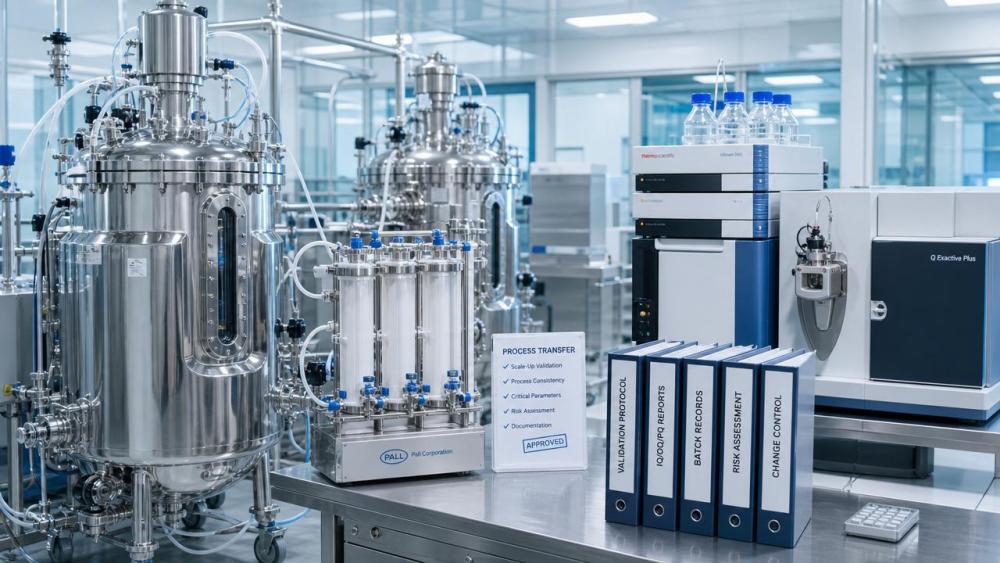
The old assumption was simple: larger volume would lower unit cost.
Today, pharmaceutical scale-up faces a very different operating environment.
Biologics are more sensitive, audits are more data-driven, and supply chains are less predictable than before.
Single-use systems add flexibility, yet they also shift cost structures into consumables, qualification, and change control.
Meanwhile, advanced analytics such as LC-MS raise confidence, but also expand expectations for comparability and traceability.
In this setting, pharmaceutical scale-up becomes a balance between speed, control, yield, and compliance depth.
Trend signals shaping cost pressure
- Smaller batch portfolios and more frequent changeovers.
- Greater dependence on digital records and CSV expectations.
- Tighter acceptance criteria for purity, potency, and consistency.
- Longer lead times for critical components and single-use assemblies.
- Higher pressure to reach commercial readiness without overbuilding assets.
The seven hidden costs that quietly weaken pharmaceutical scale-up ROI
Many cost overruns do not begin with equipment price.
They begin with assumptions carried forward from development into production.
1. Process transfer gaps
Lab success often depends on tacit knowledge.
At scale, undocumented operator habits become batch variability, rework, and delayed qualification.
2. GMP documentation expansion
Pharmaceutical scale-up multiplies records, deviations, SOP revisions, and review cycles.
Documentation load can consume more time than expected, especially during tech transfer and validation campaigns.
3. Equipment qualification and CSV drag
Installation is not readiness.
IQ, OQ, PQ, software validation, audit trails, and user access design all create hidden schedule and labor costs.
4. Yield loss during scale transition
Oxygen transfer, mixing, shear, hold time, and filtration behavior rarely scale perfectly.
A small percentage loss in recovery can erase the expected benefit of larger throughput.
5. Analytical comparability burden
More batches mean more testing, more trending, and more investigations.
When methods lack robustness, pharmaceutical scale-up can stall behind data review rather than production capacity.
6. Cleaning, contamination, and biosafety controls
Whether using stainless systems or disposable flow paths, contamination control has a cost curve.
Environmental monitoring, cleaning validation, and segregation strategy often expand after the first risk review.
7. Supply flexibility failure
A process may be scientifically scalable but commercially fragile.
If bags, filters, sensors, resins, or spare parts lack alternate sources, pharmaceutical scale-up inherits avoidable volatility.
What is driving these hidden pharmaceutical scale-up costs
The pressure comes from technical complexity and from business model change.
Where the impact appears across operations and commercial readiness
The hidden cost of pharmaceutical scale-up does not stay inside manufacturing alone.
It spreads across quality systems, analytical labs, planning, and launch execution.
Operational impact
- Lower line utilization during qualification and troubleshooting.
- More deviation investigations and CAPA workload.
- Increased need for real-time process monitoring and trending.
- Additional training burden for automated and digital systems.
Business impact
- Slower commercialization and weaker forecast confidence.
- Higher cost per batch despite larger installed capacity.
- Reduced flexibility when portfolio priorities suddenly change.
- Greater audit exposure if systems were scaled before governance matured.
This is especially relevant in environments using bioreactors, centrifuges, LC-MS platforms, biosafety cabinets, and liquid handling automation together.
Each system may work well individually, yet scale friction appears at the interfaces between them.
The control points that deserve attention before pharmaceutical scale-up accelerates
A stronger strategy begins by identifying cost-sensitive checkpoints early.
- Define critical process parameters with commercial relevance, not only lab convenience.
- Stress-test mixing, aeration, shear, and filtration assumptions before late-stage transfer.
- Build validation timelines into capital plans from day one.
- Review data integrity architecture across instruments, software, and user permissions.
- Map every single-source consumable and define backup pathways.
- Connect analytical metrology capacity to projected batch release volume.
- Quantify changeover, cleaning, and environmental monitoring costs in realistic scenarios.
Practical response options for reducing pharmaceutical scale-up risk
The goal is not to eliminate all uncertainty.
The goal is to make uncertainty measurable, governable, and less expensive.
A sharper next step for pharmaceutical scale-up planning
Pharmaceutical scale-up succeeds when technical expansion and business discipline move together.
The most durable advantage comes from seeing hidden costs before they harden into routine losses.
For organizations navigating biologics, downstream purification, analytical metrology, and automation, this means auditing interfaces, not only assets.
It also means measuring readiness through validation depth, supply flexibility, data integrity, and yield stability together.
A practical next move is to conduct a structured pharmaceutical scale-up review across process transfer, GMP systems, analytical capacity, and equipment lifecycle risk.
That review can reveal whether current scale assumptions support commercial resilience, or only temporary output growth.
In a market where speed matters, the better question is no longer how fast to scale.
It is how to scale without letting invisible costs consume future value.
Related News
- Zylidac Bio and Prolific Machines Partner to Scale Optogenetics for GMP ProductionOct 23, 2026Prof. Alistair Thorne
- How to prevent oxygen limitation in process scale-up for biologicsOct 18, 2026Prof. Alistair Thorne
- How to maintain product quality when scaling up a bioprocessOct 09, 2026Prof. Alistair Thorne
- What should you verify before choosing a bioprocessing equipment exporter?Oct 08, 2026Prof. Alistair Thorne
Related News
- 00
0000-00
What CSV documentation should a laboratory systems supplier provide? - 00
0000-00
SCIEX Begins Construction of High-End Mass Spectrometer Plant in Beijing - 00
0000-00
Which design features make cleanroom benches easier to clean? - 00
0000-00
IndexBox Forecasts 12% CAGR for Global Microbioreactor Market Through 2035 - 00
0000-00
When do hazardous compound labs need isolators for containment?
Prof. Alistair Thorne
Weekly Insights
Stay ahead with our curated technology reports delivered every Monday.