





The American Society of Clinical Oncology (ASCO) Annual Meeting, held on May 29, 2026, revealed pivotal clinical data that is accelerating demand for high-throughput next-generation sequencing (NGS) library preparation systems—particularly among international contract research organizations (CROs) sourcing from Chinese manufacturers.
Confirmed Event Facts
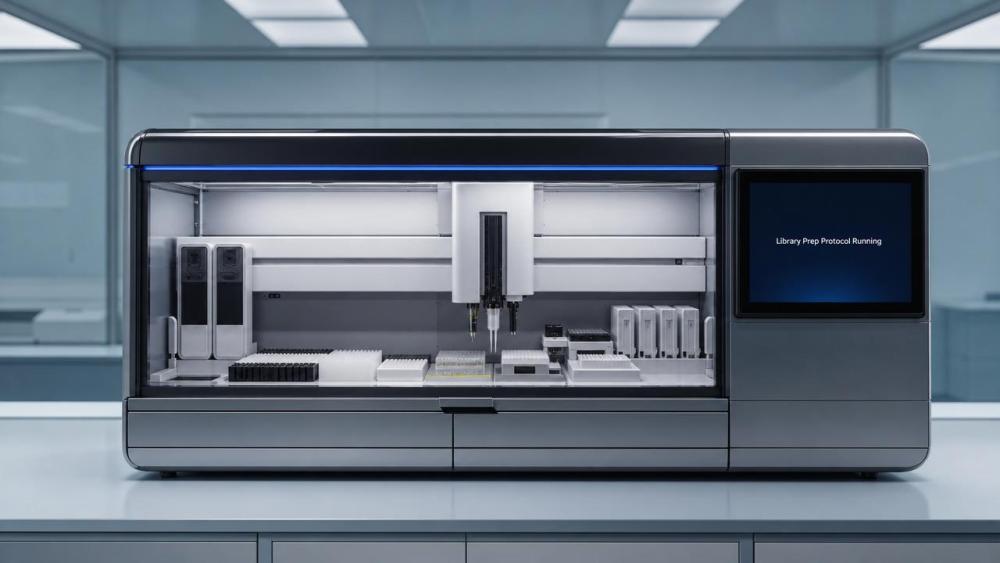
At the 2026 ASCO Annual Meeting—opening May 29—13 Plenary Late-Breaking Abstracts (LBA) were presented. Over 60% of these LBAs focused on predictive biomarker discovery for immunooncology combination therapies. This emphasis directly accelerated the development and clinical validation of targeted NGS panels. In response, multiple global CROs have placed follow-up orders for NGS Library Prep Stations with Chinese suppliers, compressing standard delivery timelines to 6–8 weeks. As a result, overseas procurement priority and willingness to accept premium pricing for high-throughput library preparation workstations have increased markedly.
Impact Across Supply Chain Roles
Export-Oriented Equipment Manufacturers
Manufacturers supplying NGS Library Prep Stations face intensified order volume and tighter delivery expectations. The compressed 6–8 week lead times require real-time capacity planning, raw material buffer management, and accelerated quality release protocols—especially for export-bound units requiring CE marking or FDA-aligned documentation.
Raw Material and Component Suppliers
Suppliers of precision fluidic modules, thermocycling components, and barcode-scanning hardware are seeing upstream demand shifts. Increased order frequency and batch size variability now necessitate dynamic inventory forecasting and stricter traceability controls to support rapid device assembly and regulatory documentation.
Contract Manufacturing and Integration Service Providers
Firms offering turnkey NGS workstation integration—including automation software validation, instrument calibration, and IQ/OQ documentation—are experiencing higher request volumes for pre-shipment compliance verification. Their role in bridging technical specifications with international regulatory expectations (e.g., IEC 61010-1, ISO 13485 alignment) has become more operationally critical.
Logistics and Regulatory Support Providers
Freight forwarders and regulatory consultants specializing in medical device exports report rising inquiries regarding customs classification (e.g., HTS code 9027.50 for automated lab analyzers), export license requirements for dual-use components, and harmonized technical file packaging for EU MDR or UKCA submissions.
Key Operational Priorities for Enterprises
Accelerated Delivery Planning and Capacity Readiness
With international CROs enforcing 6–8 week delivery windows, manufacturers must review production scheduling logic, assess bottleneck stations (e.g., robotic arm calibration, optical module testing), and formalize escalation pathways for expedited component sourcing—without compromising ISO 13485 process controls.
Technical Documentation Alignment for Export Markets
NGS Library Prep Stations deployed in clinical trial settings increasingly require conformity with IVD regulatory frameworks. Firms must verify that user manuals, risk management files (per ISO 14971), and performance evaluation reports explicitly reference intended use in biomarker assay development and align with CLIA/CAP or CAP-accredited lab workflows.
Supplier Qualification and Subcomponent Traceability
Given heightened scrutiny on analytical reproducibility in LBA-supported trials, original equipment manufacturers must strengthen supplier audits for critical subsystems—such as thermal cycler accuracy, liquid handling precision, and barcode reader reliability—and maintain full lot-level traceability across firmware, optics, and consumable interfaces.
Industry Observation: Beyond Short-Term Orders
Analysis shows this ASCO-driven demand spike reflects a structural shift—not just cyclical procurement. The fact that over 60% of Plenary LBAs prioritize predictive biomarkers signals growing reliance on standardized, scalable NGS library prep infrastructure in late-phase immuno-oncology trials. From an industry perspective, what deserves closer attention is how rapidly this raises the bar for manufacturing maturity: buyers now implicitly expect not only regulatory-compliant hardware, but also integrated validation packages supporting clinical assay transfer. It is more appropriate to understand this as an inflection point where operational excellence in device manufacturing converges with clinical utility requirements in real-world trial execution.
Strategic Implication for the Diagnostics Ecosystem
This development underscores a broader evolution: NGS library preparation is transitioning from a research-grade workflow to a regulated, high-stakes clinical infrastructure component. For manufacturers, it reinforces that scalability, documentation rigor, and cross-border regulatory fluency—not just technical capability—are now non-negotiable differentiators. The trend does not guarantee sustained growth, but it does reset minimum viable thresholds for market participation in global oncology diagnostics supply chains.
Source Attribution and Monitoring Guidance
This article was generated exclusively from the provided title, event date (May 29, 2026), and factual summary. Specific official source links were not provided in the input and should be verified continuously. Stakeholders are advised to monitor upcoming updates from ASCO’s Clinical Cancer Advances report, FDA guidance on NGS-based companion diagnostics, and revisions to ISO/IEC 17025 applicability for NGS assay validation laboratories. Ongoing observation of tender specifications issued by multinational CROs—and any formalization of LBA-derived biomarker validation requirements into procurement clauses—remains essential.
Related News
- What CSV documentation should a laboratory systems supplier provide?Oct 26, 2026Dr. Elara Sterling
- SCIEX Begins Construction of High-End Mass Spectrometer Plant in BeijingOct 26, 2026Analytical Metrology Expert
- Which design features make cleanroom benches easier to clean?Oct 25, 2026Bio-containment Strategist
- IndexBox Forecasts 12% CAGR for Global Microbioreactor Market Through 2035Oct 25, 2026Bioprocess Scientist
Related News
- 00
0000-00
What CSV documentation should a laboratory systems supplier provide? - 00
0000-00
SCIEX Begins Construction of High-End Mass Spectrometer Plant in Beijing - 00
0000-00
Which design features make cleanroom benches easier to clean? - 00
0000-00
IndexBox Forecasts 12% CAGR for Global Microbioreactor Market Through 2035 - 00
0000-00
When do hazardous compound labs need isolators for containment?
Industry Global
Weekly Insights
Stay ahead with our curated technology reports delivered every Monday.