





For finance approvers in GMP-driven biopharma operations, biopharmaceutical data integrity cost is more than a compliance line item—it directly shapes audit readiness, batch release timelines, remediation risk, and long-term ROI. From validated digital systems to traceable workflows and staff training, understanding what truly drives these costs helps decision-makers balance regulatory certainty with scalable operational efficiency.
Why does biopharmaceutical data integrity cost rise so quickly in GMP operations?
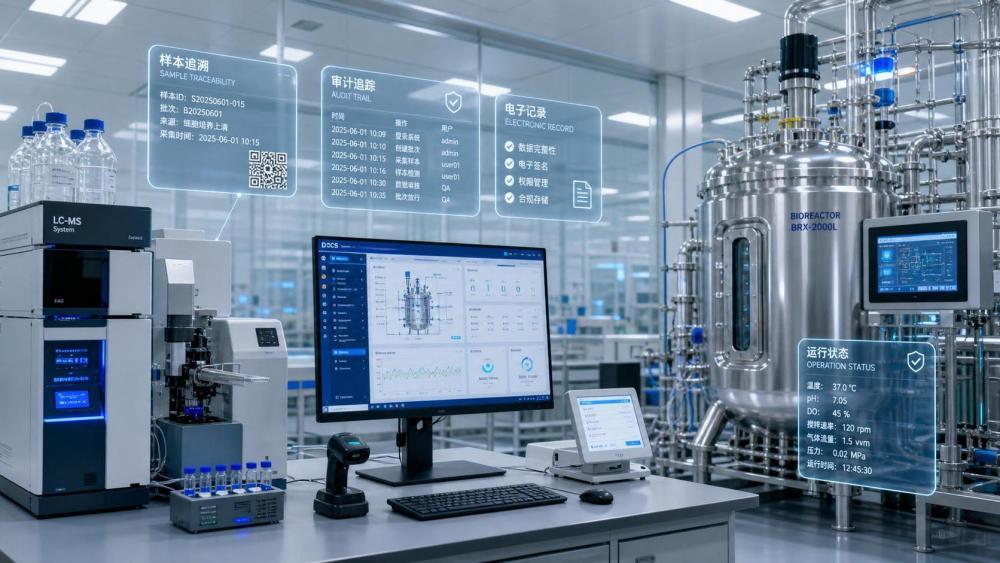
Many finance teams first see data integrity spending as software, storage, or validation expense. In practice, biopharmaceutical data integrity cost expands because GMP environments connect instruments, people, procedures, and release decisions across the full product lifecycle.
A single weak point can trigger costly rework. An unvalidated chromatography data path, incomplete audit trail review, or uncontrolled spreadsheet in QC can delay release, increase deviation handling, and force corrective actions that cost far more than preventive investment.
For organizations working with biologics, recombinant proteins, and Cell & Gene Therapies, the cost profile becomes even more complex. Data comes from bioreactors, centrifuges, LC-MS systems, biosafety equipment, and liquid handling workstations, each with different traceability and access-control requirements.
- Instrument diversity increases integration, validation, and review workload across upstream, downstream, and analytical environments.
- Hybrid records create hidden risk when paper logbooks, local device files, and enterprise systems do not align.
- Global GMP expectations from FDA, EMA, and PIC/S require consistent controls, not only one-time documentation.
- High-value batches magnify the financial impact of a failed review, an invalid result, or missing metadata.
This is where BLES adds value for finance approvers. Its intelligence perspective connects microscopic process behavior with CSV, scale-up, and ROI logic, helping decision-makers evaluate data integrity cost as an operational control system rather than an isolated compliance purchase.
What cost components should finance approvers break down first?
A practical review of biopharmaceutical data integrity cost starts with cost buckets that can be budgeted, compared, and challenged. The table below helps finance teams separate visible spending from hidden operational exposure.
The key takeaway is simple: purchase price rarely reflects the true biopharmaceutical data integrity cost. The dominant drivers often appear later in validation effort, workflow redesign, exception handling, and post-implementation governance.
The five biggest hidden cost drivers
- Legacy instrument estates that store raw data locally and require manual export.
- Non-standard workflows between R&D, QC, manufacturing, and QA review teams.
- Inadequate audit trail review procedures, especially in chromatography and mass spectrometry environments.
- Frequent changes in batch scale, product mix, or site expansion that force repeated qualification updates.
- Under-scoped supplier support during implementation, leading to expensive internal firefighting later.
Finance approvers should therefore ask not only “What is the system cost?” but also “What is the cost of proving, maintaining, and defending trustworthy data under inspection?”
Which GMP scenarios create the highest data integrity burden?
Not every unit operation carries the same risk profile. In BLES-covered environments, the burden of biopharmaceutical data integrity cost varies significantly depending on process criticality, sample throughput, and system complexity.
The table below compares common GMP scenarios and where finance teams should expect heavier validation, review, and remediation pressure.
For finance reviewers, the message is not that every system deserves the same budget. It is that high-risk data environments should receive earlier and deeper investment because their failure cost is disproportional to their purchase cost.
Why analytics often cost more than expected
Analytical platforms such as LC-MS generate dense, high-value, highly review-sensitive data. Reprocessing restrictions, method changes, metadata retention, and user permissions can multiply both validation effort and QA review time. This is why biopharmaceutical data integrity cost often spikes in QC and characterization laboratories first.
BLES follows this area closely because analytical truth directly affects release confidence. When the instrument is powerful but data governance is weak, the business case collapses under investigation workload and delayed decisions.
How should finance approvers compare solution options?
A useful cost comparison should move beyond capital expenditure. The real question is which architecture produces the lowest total burden over validation, operation, review, and audit defense.
Comparison framework for procurement review
- Check whether raw data is generated, stored, and backed up in a controlled environment rather than scattered local folders.
- Assess whether audit trails are enabled by default, readable in review, and linked to routine SOP execution.
- Estimate change-management load. Highly customized systems may look flexible but increase recurring validation expense.
- Review supplier documentation depth, including validation packages, configuration records, and support responsiveness.
- Measure the labor saved in exception handling, reconciliation, and review-by-exception capability.
The following table helps compare common implementation paths that influence biopharmaceutical data integrity cost during procurement and scale-up.
For many sites, the best financial decision is not full replacement overnight. It is a risk-ranked roadmap that prioritizes critical control points such as analytical systems, electronic batch support, and high-throughput automated workflows.
What standards and controls most affect budget justification?
When finance approvers request budget defense, compliance language matters. Spending becomes easier to justify when linked to recognized expectations such as data being attributable, legible, contemporaneous, original, and accurate, often expanded in practice to complete, consistent, enduring, and available.
Budget-sensitive control areas
- Electronic records and electronic signatures controls where applicable to regulated systems.
- Computerized System Validation aligned with intended use, risk, and lifecycle documentation.
- Audit trail review procedures for systems that can create, modify, reprocess, or delete critical data.
- Role-based access, segregation of duties, and periodic account review to reduce both fraud and error exposure.
- Backup, retention, and disaster recovery planning to preserve original records and retrieval capability.
BLES is particularly relevant here because its Strategic Intelligence Center bridges CSV interpretation, process-scale realities, and investment logic. That perspective helps finance teams avoid a common trap: funding equipment performance without funding the evidence system that makes the performance defensible.
How can organizations reduce biopharmaceutical data integrity cost without weakening compliance?
Lower cost does not come from cutting controls blindly. It comes from better architecture, simpler workflows, and smarter prioritization. In most GMP organizations, cost reduction is achievable when the operating model is redesigned around risk concentration points.
Cost-control actions that usually work
- Standardize user roles and review workflows across laboratories so training and access control do not multiply by instrument family.
- Replace uncontrolled spreadsheets in critical decisions with validated or governed digital tools wherever possible.
- Prioritize integration for systems that drive release, specification decisions, or deviation closure rather than digitizing everything at once.
- Require implementation deliverables from suppliers early, including documentation scope, test evidence, backup logic, and change procedures.
- Use periodic review metrics such as exception count, review cycle time, and repeat deviation rate to spot waste before audits do.
This approach is especially relevant in facilities balancing innovative drug pipelines with commercial manufacturing pressure. Whether the asset is a 2000 L bioreactor, a downstream separation train, or a liquid handling platform, the best savings come from preventing rework, not from delaying governance.
FAQ: what do finance approvers ask most about biopharmaceutical data integrity cost?
Is biopharmaceutical data integrity cost mainly an IT budget issue?
No. IT infrastructure is only one layer. The larger burden often sits in validation, SOP design, review effort, deviation handling, training, and supplier coordination. If finance assigns the topic only to IT, major GMP risks can remain unfunded.
Which systems usually deserve priority funding?
Start with systems that directly influence product quality decisions, batch disposition, or regulatory defensibility. In many operations, this means analytical platforms, electronic production records around critical processing steps, and automated workflows with large sample throughput.
Can a lower-cost standalone instrument still be the right choice?
Yes, but only when the intended use is low risk, traceability expectations are clear, and compensating controls are realistic. A cheaper instrument may become more expensive if it forces manual transcription, fragmented storage, or repeated data reconciliation.
How should ROI be measured for data integrity investments?
Use a mix of avoided and created value: reduced deviation volume, shorter review and release cycles, fewer retrospective investigations, lower consultant dependence, smoother audits, and better scalability for new products or new sites.
Why choose us when evaluating data integrity investments?
BLES supports finance-facing decisions by connecting process reality with compliance economics. Our coverage spans upstream bioreactors, downstream purification, high-molecular analytical metrology, biosafety infrastructure, and automated liquid handling, so recommendations are grounded in how data is actually generated and defended in GMP operations.
If you are reviewing biopharmaceutical data integrity cost for a new project, site upgrade, or remediation plan, you can consult us on concrete decision points rather than generic marketing claims.
- Parameter confirmation for instrument data capture, audit trail depth, retention, and user control expectations.
- Product and system selection guidance for bioreactors, separation systems, LC-MS environments, biosafety workflows, and liquid handling platforms.
- Delivery-cycle discussion for implementation planning, validation preparation, and phased rollout sequencing.
- Customized solution review for sites balancing GMP compliance, rapid scale-up, SUT transition, and budget constraints.
- Certification and regulatory expectation mapping for CSV, data governance, and inspection-readiness planning.
- Quotation communication that considers lifecycle cost, not only procurement price.
When finance teams need sharper visibility into cost drivers, trade-offs, and implementation risk, BLES helps turn technical complexity into decision-ready intelligence. That makes budget approval faster, more defensible, and more aligned with long-term GMP performance.
- high-molecular analytical metrology
- automated liquid handling
- bioreactors
- separation systems
- LC-MS systems
- liquid handling workstations
- GMP compliance
- recombinant proteins
- biosafety equipment
- liquid handling platforms
- data integrity
- computerized system validation
- biopharmaceutical data integrity
- biopharmaceutical data integrity cost
Related News
- What CSV documentation should a laboratory systems supplier provide?Oct 26, 2026Dr. Elara Sterling
- GenScript ProBio’s Nanjing Biologics Facility Passes NMPA Pre-Approval InspectionOct 22, 2026Dr. Elara Sterling
- How to assess audit trails in analytical data integrity solutionsOct 16, 2026Dr. Elara Sterling
- How user licensing affects laboratory validation system pricingOct 14, 2026Dr. Elara Sterling
Related News
- 00
0000-00
What CSV documentation should a laboratory systems supplier provide? - 00
0000-00
SCIEX Begins Construction of High-End Mass Spectrometer Plant in Beijing - 00
0000-00
Which design features make cleanroom benches easier to clean? - 00
0000-00
IndexBox Forecasts 12% CAGR for Global Microbioreactor Market Through 2035 - 00
0000-00
When do hazardous compound labs need isolators for containment?
Dr. Elara Sterling
Weekly Insights
Stay ahead with our curated technology reports delivered every Monday.