





Choosing the right Cell & Gene Therapy equipment is rarely a simple technology preference. For technical evaluators, the real question is which platform best supports sterility assurance, process flexibility, GMP control, scale-up logic, and total lifecycle cost.
In most early-stage and multi-product CGT settings, single-use systems offer a faster and lower-risk path. In high-throughput, mature, and repetitive production environments, stainless systems may deliver stronger long-term economics and process stability.
This is why the single-use versus stainless debate should not be framed as a winner-takes-all choice. It is a platform fit decision shaped by process modality, batch strategy, facility constraints, validation burden, and commercial intent.
What technical evaluators should compare first
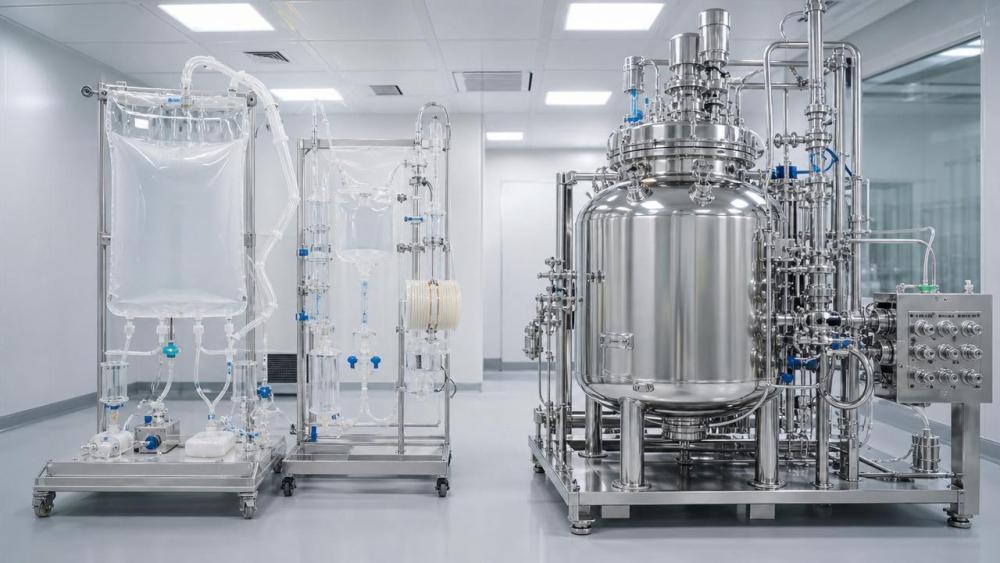
When users search for guidance on Cell & Gene Therapy equipment, their core intent is practical comparison. They want to know which system reduces risk, supports compliance, and remains viable from development through commercial manufacturing.
For technical assessment teams, the most important questions are usually not theoretical. They involve contamination control, product changeover speed, material compatibility, cleaning validation, automation integration, operator dependence, and cost across the expected production horizon.
That means the article should focus less on generic definitions and more on decision criteria. Evaluators need a framework that helps them compare single-use and stainless systems against real CGT operating conditions.
In cell and gene therapy, those conditions are especially demanding. Processes may involve autologous or allogeneic workflows, viral vector production, adherent or suspension culture, highly sensitive cells, and tight chain-of-identity controls.
As a result, equipment selection influences more than utility design or capex planning. It directly affects aseptic assurance, turnaround time, batch failure exposure, digital traceability, and how confidently a site can withstand GMP inspection.
Why single-use systems often lead in early and flexible CGT manufacturing
Single-use technology has become highly attractive in CGT because it aligns with the operational reality of small batches, changing protocols, and uncertain commercial demand. It minimizes cleaning requirements and shortens line clearance between campaigns.
For technical evaluators, the most obvious benefit is contamination risk reduction. Disposable contact surfaces remove many variables associated with cleaning validation, residue carryover, and microbial control after repeated use.
This matters greatly in autologous workflows, where each patient batch is high value and replacement is impossible. A contamination event is not only a quality deviation but potentially a direct treatment loss.
Single-use systems also support rapid facility deployment. Teams can build modular process suites around disposable bioreactors, mixing systems, tubing sets, sterile connectors, and closed transfer assemblies without the same utility burden as stainless infrastructure.
That flexibility is valuable for organizations still optimizing process design. When media strategies, cell expansion steps, vector handling, or downstream unit operations are likely to change, a rigid installed system can become a constraint rather than an asset.
Another advantage is faster multi-product changeover. CGT manufacturers often face production environments where different vectors, constructs, or patient-specific lots must move through shared cleanroom space with minimal downtime.
In those cases, disposable flow paths can reduce turnaround time and simplify scheduling. The operational gain is not just convenience. It can directly improve facility utilization and reduce delays in capacity-limited programs.
From a validation perspective, single-use can also reduce certain burdens. There is less focus on cleaning validation and CIP or SIP performance, although that does not mean validation becomes simple overall.
Technical teams still need strong control over extractables and leachables, gamma stability, supplier change notification, assembly integrity, filter compatibility, and documented suitability for process fluids and hold times.
Where stainless systems still offer strong advantages
Stainless steel remains highly relevant, especially where process repetition, scale, and utilization are high enough to justify the investment. Technical evaluators should not treat stainless as outdated simply because single-use is widely discussed.
One major strength is long-term durability. In facilities running stable, mature processes over many years, stainless systems can provide dependable mechanical performance and more predictable supply continuity than disposable assemblies sourced from external vendors.
Stainless also supports stronger economics in some large-scale, high-frequency operations. Once a process is locked and campaign patterns are stable, repeated purchases of bags, manifolds, connectors, and filters can exceed the lifecycle cost of reusable systems.
There is also a process-control argument. Stainless platforms are often integrated with robust utility systems, fixed automation architecture, and well-characterized thermal and mixing performance that support consistency at commercial scale.
For viral vector or biologics-adjacent processes moving toward larger and more standardized output, this process robustness can become decisive. Evaluators may value fixed piping and hardware when the goal is repeatability rather than frequent reconfiguration.
Cleaning and sterilization, while burdensome, can also be strengths when the site has mature quality systems. A well-designed CIP and SIP strategy, supported by validated procedures and experienced operators, can produce a very controlled manufacturing environment.
In highly regulated operations with strong engineering support, stainless systems may fit organizations that prioritize data-rich utility integration, lower disposable waste volume, and long asset life over fast reconfiguration.
The real trade-offs: sterility, scalability, compliance, and cost
Technical evaluators should compare single-use and stainless across four dimensions first: sterility assurance, scalability, compliance effort, and total cost of ownership. These are the factors most likely to change project outcomes.
Sterility assurance is often the starting point in CGT. Single-use systems reduce exposure linked to cleaning failures, but they introduce risks related to assembly handling, connection integrity, bag damage, and vendor component quality.
Stainless systems avoid some disposable-specific risks, yet they depend heavily on validated cleaning, maintenance discipline, dead-leg control, and microbial management across repeated campaigns. The sterility question is not which is perfect, but which is more controllable in your setting.
Scalability should be assessed by process type, not by assumptions. In many CGT programs, scale-out matters more than scale-up. Multiple parallel small batches may be more relevant than one larger vessel.
Single-use platforms often support that scale-out logic very well, especially in personalized therapy models. However, if the program is likely to converge into larger, more centralized manufacturing with stable demand, stainless may eventually become more attractive.
Compliance effort is another area where decisions are often oversimplified. Single-use reduces cleaning validation burden, but quality oversight shifts toward incoming component control, supplier qualification, material traceability, and change management.
Stainless requires more extensive validation around cleaning, sterilization, maintenance, and utilities. Yet if those systems are deeply institutionalized and well documented, they may be easier to defend in some established manufacturing organizations.
Total cost must include more than capex. Teams should model consumables, utilities, labor, downtime, deviation risk, waste handling, warehouse load, engineering support, supplier redundancy, and campaign scheduling efficiency.
A low initial investment can become expensive if consumables are complex and vulnerable to shortages. Conversely, a high capex installation may become uneconomical if program demand remains uncertain or process architecture keeps changing.
How CGT modality changes the equipment decision
Not all cell and gene therapy processes create the same equipment requirements. Technical evaluators should anchor decisions in modality-specific process realities rather than broad industry trends.
For autologous cell therapy, single-use is often the stronger fit. Small lot size, strict segregation, rapid turnover, and patient-linked manufacturing favor closed disposable assemblies and modular systems that support contamination control and operational agility.
For allogeneic cell therapy, the answer depends on stage and forecast. During development and uncertain early commercialization, single-use remains attractive. If production volumes increase and workflows stabilize, stainless may become more compelling in selected unit operations.
For viral vector manufacturing, the balance can be mixed. Upstream culture and buffer preparation may favor single-use for flexibility, while some downstream steps or supporting infrastructure may justify fixed stainless assets if throughput becomes predictable.
For mRNA, plasmid, or ancillary biologics supporting CGT, process scale and repeatability can push evaluation in different directions. These adjacent platforms sometimes resemble broader biopharma economics more than patient-specific cell therapy logic.
This is why a single facility may rationally use both approaches. The best Cell & Gene Therapy equipment strategy is often hybrid, with single-use in product-contact paths and stainless in utilities, media prep, storage, or high-volume support functions.
Key technical questions to ask before selecting a platform
Evaluation teams should use a structured checklist. First, define the manufacturing model clearly. Are you supporting early clinical work, late-stage scale-up, commercial launch, or a networked multi-site production plan?
Second, quantify batch profile. How many batches per month are expected, how variable are recipes, and how costly is downtime? High variability generally favors single-use, while high repetition may strengthen the case for stainless.
Third, assess contamination consequences. In CGT, one failed batch may represent a patient-specific loss or a severe schedule impact. This often changes risk weighting in favor of disposable closed systems.
Fourth, examine supply chain resilience. Single-use performance depends heavily on vendors. Technical evaluators should review lead times, component standardization, alternate sourcing options, and supplier change control discipline.
Fifth, verify material and process compatibility. Evaluate leachables, adsorption, shear sensitivity, gas transfer needs, temperature exposure, hold duration, and pressure limits. A convenient disposable format is not useful if it compromises process performance.
Sixth, compare digital and automation integration. Can the system support data integrity, electronic batch records, alarms, audit trails, and recipe control at the level required for GMP operations and future scale-out?
Seventh, model facility and staffing implications. Stainless may demand more utilities and engineering support. Single-use may reduce those burdens but increase warehousing, assembly preparation, and waste management complexity.
A practical decision framework for technical evaluators
A useful way to evaluate Cell & Gene Therapy equipment is to score each platform against weighted criteria. Typical categories include sterility risk, process flexibility, scalability, validation burden, operator complexity, capex, opex, and supplier dependency.
Weighting matters more than the raw score. A patient-specific therapy program may assign the highest value to contamination avoidance and fast changeover, while a mature vector platform may prioritize reproducibility and long-term cost efficiency.
Scenario planning is also important. Evaluators should compare not only current demand, but also plausible future states such as capacity doubling, process transfer to another site, or progression from clinical to commercial manufacturing.
It is equally important to assess failure modes. Ask where each platform is most vulnerable. For single-use, common issues include component availability, bag integrity, and connector handling. For stainless, focus on cleaning deviations, utility dependence, and turnaround delays.
Do not ignore organizational readiness. The best technical choice on paper may fail if the site lacks the right maintenance skills, supplier quality program, automation support, or contamination control discipline.
In many cases, the best answer is phased adoption. Organizations may begin with single-use systems to accelerate development and early manufacturing, then introduce selected stainless assets as processes stabilize and volumes justify fixed investment.
Conclusion: choose for platform fit, not industry fashion
The single-use versus stainless decision in CGT should be driven by manufacturing reality, not trend following. For most early-stage, flexible, and contamination-sensitive programs, single-use offers the strongest operational and compliance advantages.
For mature, high-utilization, and highly standardized production environments, stainless can still provide superior long-term value, process consistency, and infrastructure integration. Neither option is universally better across all contexts.
Technical evaluators should therefore focus on platform fit: product modality, batch strategy, contamination impact, validation resources, facility design, and forecast certainty. That is the most reliable way to select Cell & Gene Therapy equipment that supports both present execution and future scale.
When the evaluation is done well, the result is not just an equipment purchase. It is a manufacturing architecture decision that shapes sterility assurance, operational flexibility, compliance confidence, and the economics of bringing advanced therapies to patients.
Related News
- CP Pharma Opens R&D Hub for Bioprocess ValidationJun 10, 2026Bioprocess Scientist
- K-REACH Decree Revision Takes Effect for Bioprocess EquipmentJun 09, 2026Bioprocess Scientist
- CPHI & PMEC China 2026 Opens With SUTs in FocusJun 08, 2026Bioprocess Scientist
- Monoclonal Antibodies: Key Scale-Up Risks in Process TransferJun 06, 2026Bioprocess Scientist
Related News
- 00
0000-00
CP Pharma Opens R&D Hub for Bioprocess Validation - 00
0000-00
ASEAN Tightens GMP Proof for Bioprocess Equipment Imports - 00
0000-00
Saudi SASO Adds Dual Compliance for UHPLC and GC - 00
0000-00
FDA Starts Cybersecurity Review for Bioprocess Systems - 00
0000-00
EU Rule Tightens Audit Trail Requirements for Q-TOF and UHPLC
Bioprocess Scientist
Weekly Insights
Stay ahead with our curated technology reports delivered every Monday.