





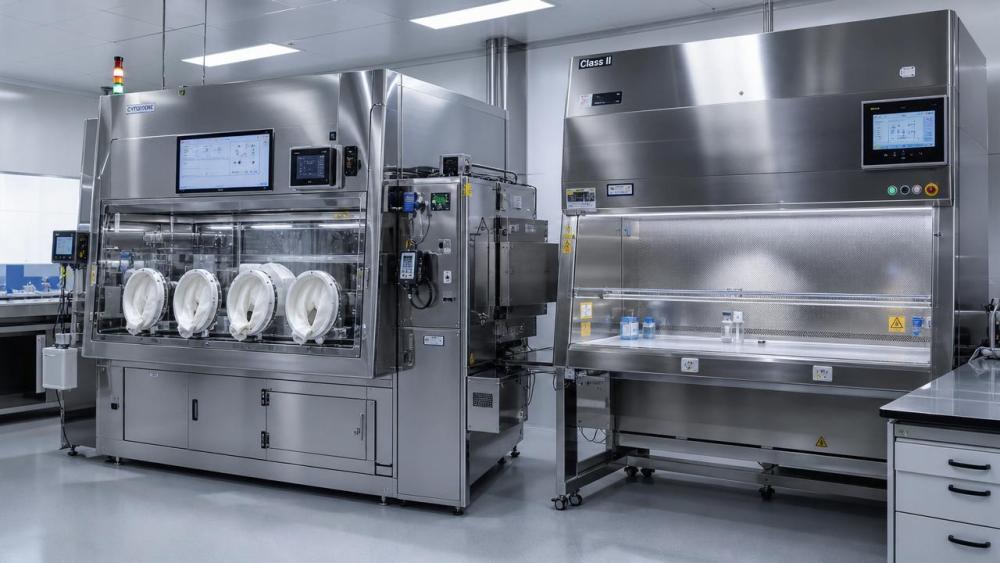
On June 8, 2026, the U.S. FDA announced a dedicated cybersecurity review for bioprocess automation systems, with Cytotoxic Isolators and Class II/III Biosafety Cabinets included in the first group of covered high-risk equipment. For manufacturers, exporters, buyers, and service teams involved in regulated bioprocess equipment, this is worth close attention because the review directly connects product registration, technical documentation, and U.S. market access to cybersecurity readiness rather than to mechanical or process performance alone.
What the FDA Has Confirmed So Far
According to the provided event information, the FDA launched the "Bioprocess Automation System Cybersecurity Special Review" on June 8, 2026. The first batch covers high-risk equipment including Cytotoxic Isolators and Class II/III Biosafety Cabinets. The review focuses on remote control interfaces, firmware update mechanisms, and vulnerabilities related to OT/IT converged architectures. Starting in October 2026, all newly registered products will be required to provide proof of compliance with ISO/IEC 62443-4-2. The provided information also states that Chinese exporters need to prepare cybersecurity validation packages in parallel in order to maintain access to the U.S. market.
Where the Immediate Pressure May Appear
Registration-facing equipment manufacturers
From an industry perspective, manufacturers of covered equipment may be affected first because the new requirement is tied to new product registration from October 2026. The main impact is likely to appear in product documentation, technical review preparation, and internal coordination between product design and compliance functions. What deserves closer attention is whether current product architectures, especially around access control and update pathways, are already documented in a way that supports a compliance submission.
Exporters serving the U.S. market
Analysis shows that exporters, particularly those shipping covered systems into the United States, may face pressure in customer communication and market continuity planning. The practical issue is not only the equipment itself, but also whether a complete cybersecurity validation package can be presented when requested. For these companies, the key change to watch is the shift from general product qualification toward documentation that can support regulatory review expectations.
Procurement and end-user evaluation teams
Buyers and end users involved in sourcing high-risk containment or biosafety equipment may also need to adjust their evaluation priorities. Observably, supplier selection, registration timing, and delivery planning could be influenced if cybersecurity evidence becomes part of product acceptance or market entry review. The area to monitor is whether procurement discussions begin to include firmware management, remote access controls, and OT/IT integration risks alongside traditional safety and performance criteria.
Service and technical support functions
Teams responsible for installation, remote support, updates, or lifecycle maintenance may also feel the impact because the FDA review explicitly highlights remote control interfaces and firmware update mechanisms. This means the business effect may extend beyond the factory gate into service workflows, post-sale support arrangements, and records used to explain how field changes are controlled.
What Companies Should Watch Now
Track how the requirement is expressed in practice
What deserves closer attention is the difference between the announced direction and the way it is applied in actual registration work. Companies should closely follow whether later official wording further clarifies submission expectations for covered equipment and how ISO/IEC 62443-4-2 proof is expected to be presented in registration materials.
Check product scope and filing timelines
Businesses with Cytotoxic Isolators, Class II Biosafety Cabinets, or Class III Biosafety Cabinets in their export or registration pipeline should review which products may be affected first and how this aligns with planned U.S. filings after October 2026. This is especially relevant where launch timing, model updates, or new registrations are already scheduled.
Prepare the cybersecurity validation package early
Based on the provided information, Chinese exporters need to prepare a cybersecurity validation package to maintain U.S. market access. In practical terms, companies may need to organize technical evidence related to remote interfaces, firmware update controls, and OT/IT architecture risk handling so that internal teams and external customers are not working from incomplete materials later.
Align compliance, engineering, and customer communication
Analysis shows that this is not only a regulatory issue. It may also affect how sales, regulatory, engineering, and after-sales teams answer customer questions and manage delivery expectations. Companies should therefore pay attention to whether the same cybersecurity message is consistently reflected across registration documents, technical materials, and customer-facing explanations.
Why This Looks Like More Than a Narrow Filing Update
Observably, this development can be read as a signal that cybersecurity is being treated as a review dimension for certain automated bioprocess systems, especially where containment, biosafety, and connected control functions intersect. It is more appropriate to understand this as a regulatory direction with immediate procedural consequences for new registrations, while also remaining a dynamic issue that still requires continued observation as implementation details become clearer.
How the Market May Read This Stage
At this stage, the confirmed point is clear: for specified high-risk equipment, cybersecurity evidence is becoming part of the registration threshold for new products in the U.S. market from October 2026. From an industry perspective, this should be understood neither as a one-day market shift nor as a purely symbolic announcement. It is better viewed as a concrete compliance signal with near-term documentation implications and longer-term relevance for product design, support models, and export readiness.
Basis of This Article and Ongoing Verification
This article is based on the user-provided news title, event date, and event summary. For developments of this kind, commonly relevant source types may include official announcements, company statements, industry association updates, authoritative media coverage, and standards organization documents. A specific official source link was not provided in the input, so further verification remains necessary. Areas for continued follow-up include any additional FDA wording, registration-related implementation details, and how ISO/IEC 62443-4-2 proof is expected to be documented for covered products.
Related News
- When do hazardous compound labs need isolators for containment?Oct 24, 2026Bio-containment Strategist
- ECHA Adds SVHC Screening Step for Cytotoxic IsolatorsJul 12, 2026Bio-containment Strategist
- When Sterile Processing Needs Containment Systems Beyond Basic Clean AirJul 08, 2026Bio-containment Strategist
- TUV Rheinland Tightens BSL-3 Rule for Cytotoxic IsolatorsJul 06, 2026Bio-containment Strategist
Related News
- 00
0000-00
What CSV documentation should a laboratory systems supplier provide? - 00
0000-00
SCIEX Begins Construction of High-End Mass Spectrometer Plant in Beijing - 00
0000-00
Which design features make cleanroom benches easier to clean? - 00
0000-00
IndexBox Forecasts 12% CAGR for Global Microbioreactor Market Through 2035 - 00
0000-00
When do hazardous compound labs need isolators for containment?
Bio-containment Strategist
Weekly Insights
Stay ahead with our curated technology reports delivered every Monday.