





On 28 May 2026, the European Union’s Medical Device Coordination Group (MDCG) issued a critical regulatory update affecting manufacturers and suppliers of ultra-high-performance liquid chromatography (UHPLC) systems used in Good Manufacturing Practice (GMP) environments—particularly those integrating artificial intelligence for peak identification and integration. This development directly impacts pharmaceutical quality control, analytical instrument suppliers, and China-based exporters serving the EU medical device and diagnostics markets.
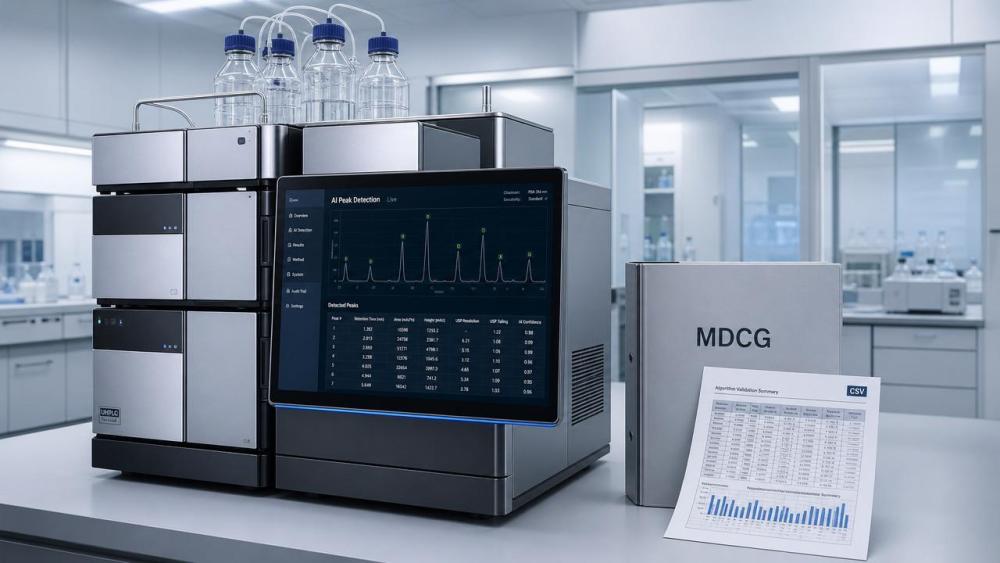
MDCG Guidance Adds Mandatory AI Algorithm Validation Requirement
On 28 May 2026, the MDCG published MDCG 2026-12 Guidance Addendum, stipulating that all UHPLC systems deployed in GMP-regulated settings—and equipped with AI-driven peak recognition or integration modules—must complete algorithm traceability validation and supplementary Computer System Validation (CSV) documentation by 28 February 2027. The guidance applies to both complete UHPLC instruments and OEM modules supplied from China to the EU market. A six-month transition period commenced immediately upon publication.
Impact Across the Analytical Instrument Supply Chain
Direct Exporters to the EU
Companies shipping fully assembled UHPLC systems or AI-integrated modules into the EU must now ensure their technical documentation aligns with the new verification expectations before the deadline. Non-compliance may result in customs delays, CE marking challenges, or rejection during notified body audits.
Component and Subsystem Manufacturers
Suppliers providing AI inference engines, firmware modules, or embedded software for UHPLC platforms face increased scrutiny on software development lifecycle (SDLC) records, version control, and algorithm training data provenance—especially where those components contribute to GMP-critical analytical results.
Contract Manufacturing and Integration Service Providers
Firms performing system integration, calibration, or validation services for UHPLC platforms must update their service offerings to include AI-specific traceability assessments and CSV addenda, potentially requiring staff retraining and updated SOPs.
Supply Chain and Regulatory Support Providers
Consultancies, test laboratories, and compliance platform vendors are seeing rising demand for AI validation support—including model interpretability reporting, bias testing protocols, and audit-ready CSV evidence packages tailored to MDCG 2026-12.
Key Compliance Priorities for Affected Enterprises
Review and Update CSV Documentation Packages
Organisations must extend existing CSV protocols to explicitly cover AI model inputs, outputs, decision logic, retraining triggers, and versioned deployment logs—not just static software binaries.
Establish Algorithm Traceability Frameworks
Traceability must link each AI-generated peak assignment or integration result back to specific training datasets, hyperparameters, and validation metrics, satisfying both MDCG expectations and ISO/IEC 17025 and ICH Q5A(R2) alignment principles.
Verify Supplier Declarations for AI-Enabled Components
OEM integrators must obtain and assess supplier-provided evidence—including algorithm validation reports and change control histories—for any third-party AI modules embedded in their UHPLC systems.
Adjust Delivery Timelines and Technical Tender Responses
Procurement cycles for EU-based pharma labs and contract research organisations (CROs) are beginning to reference MDCG 2026-12 in tender specifications; enterprises should revise delivery commitments and technical bid submissions accordingly.
Analysis: A Strategic Shift Toward Verifiable AI in Regulated Analytics
Analysis shows this guidance marks a pivotal step in the EU’s broader strategy to treat AI not as generic software—but as an integral, auditable part of analytical instrumentation used in life sciences quality assurance. From an industry perspective, the six-month window is notably tight for full algorithmic traceability implementation, especially for legacy systems undergoing retrofitting. What deserves closer attention is how notified bodies will interpret ‘algorithm traceability’ in practice—whether through source-code-level inspection, model-card documentation, or empirical performance benchmarking against reference standards. Observably, this requirement accelerates the convergence of AI engineering rigor and regulated quality systems, raising the bar for both technical competence and documentation discipline across the supply chain.
Strategic Implications for Global Instrument Suppliers
This update signals that AI-enabled analytical tools are no longer treated as ‘black-box enhancements’ but as GMP-critical process elements demanding end-to-end accountability. For Chinese exporters, it underscores the growing necessity of embedding regulatory-by-design principles early in R&D—not as a post-development compliance exercise. While the immediate impact is procedural, the long-term implication is structural: competitive advantage will increasingly depend on demonstrable AI governance capabilities, not just hardware performance.
Source Information and Ongoing Monitoring
This article was generated exclusively from the user-provided title, event date (28 May 2026), and summary text. Specific official source links were not provided in the input and should be verified continuously. Stakeholders are advised to monitor upcoming MDCG working documents, notified body interpretation notes, and updates to EN ISO 13485:2016 Annex A regarding AI system validation. Further clarification on acceptable traceability formats, transitional arrangements for multi-vendor systems, and enforcement timelines remains pending and warrants close observation.
Related News
- What CSV documentation should a laboratory systems supplier provide?Oct 26, 2026Dr. Elara Sterling
- SCIEX Begins Construction of High-End Mass Spectrometer Plant in BeijingOct 26, 2026Analytical Metrology Expert
- Which design features make cleanroom benches easier to clean?Oct 25, 2026Bio-containment Strategist
- IndexBox Forecasts 12% CAGR for Global Microbioreactor Market Through 2035Oct 25, 2026Bioprocess Scientist
Related News
- 00
0000-00
What CSV documentation should a laboratory systems supplier provide? - 00
0000-00
SCIEX Begins Construction of High-End Mass Spectrometer Plant in Beijing - 00
0000-00
Which design features make cleanroom benches easier to clean? - 00
0000-00
IndexBox Forecasts 12% CAGR for Global Microbioreactor Market Through 2035 - 00
0000-00
When do hazardous compound labs need isolators for containment?
Industry Global
Weekly Insights
Stay ahead with our curated technology reports delivered every Monday.