





Why does cleanroom technology attract so many GMP audit findings?
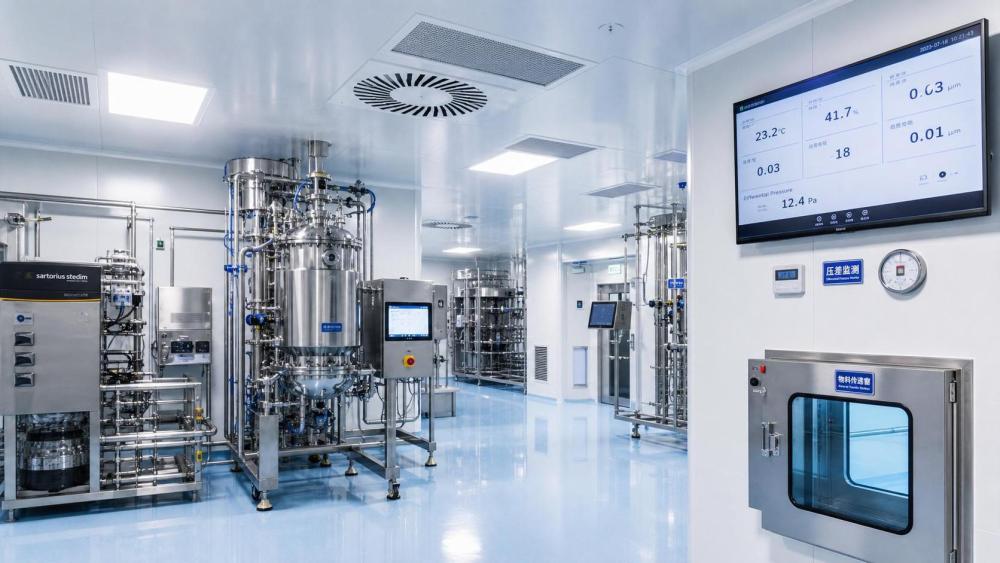
In regulated biopharma sites, cleanroom technology sits between process science and compliance discipline.
It protects products, operators, and data credibility at the same time.
That is why inspectors rarely treat it as a background utility.
More often, they review it as a critical control system.
The pattern is familiar across bioreactors, downstream purification, LC-MS support labs, biosafety areas, and automated liquid handling suites.
When environmental control weakens, even strong process design starts to look unreliable.
A cleanroom may pass routine operation for months, yet still fail under audit questions.
The reason is simple.
GMP findings usually come from gaps between designed performance and documented control.
BLES often tracks this exact gap across life science facilities.
The issue is rarely one dramatic failure.
It is usually a chain of small weaknesses in airflow, behavior, monitoring, maintenance, and records.
If those weaknesses align, audit findings follow quickly.
When does a compliant cleanroom design still become an audit problem?
This happens more often than teams expect.
A room can meet classification targets during qualification, but still fail in real use.
Inspectors look for operational reality, not only commissioning reports.
One common gap is airflow that works on paper but not around actual equipment layouts.
Large bioreactor skids, isolators, centrifuge feed lines, and robotic workstations can disrupt intended airflow paths.
Another issue is pressure cascade drift.
Rooms may be qualified correctly, then slowly lose differential pressure stability after filter loading or facility changes.
Door opening frequency also matters more than many procedures admit.
In actual production, traffic patterns often differ from the original contamination control strategy.
The practical warning signs are usually visible before an audit.
- Unexplained particle excursions near transfer points.
- Repeated interventions inside critical zones.
- HEPA integrity results that pass, but trend unfavorably.
- Room recovery times longer than validated expectations.
- Operator movement that blocks first-air protection.
In practice, cleanroom technology fails audits when design assumptions are never rechecked against process evolution.
That is especially relevant in CGT, where layouts and batch activities change quickly.
Which GMP gaps are cited most often in cleanroom technology reviews?
Not every finding has the same weight.
Still, several themes appear again and again across inspections.
The table below helps separate routine assumptions from high-risk weaknesses.
Notice that these are not exotic failures.
They are control weaknesses hiding inside normal operations.
For cleanroom technology, inspectors expect evidence that engineering, microbiology, and quality review are connected.
If one side works alone, documentation starts to look fragmented.
Are monitoring and documentation usually the real weak point?
Very often, yes.
Many facilities invest heavily in cleanroom technology, then underinvest in how they prove control every day.
That creates a classic audit mismatch.
The room may be technically sound, but the quality narrative is weak.
Environmental monitoring is a typical example.
Sites collect large volumes of data, yet still struggle to explain why sampling locations were chosen.
Trend reports may show monthly counts, but miss links to interventions, maintenance events, or personnel flow changes.
The same problem appears in digital systems.
If alarms, access logs, calibration records, and corrective actions sit in separate platforms, review becomes reactive.
BLES frequently highlights this point because modern life science operations are now data-dense.
Without disciplined review logic, more data does not mean better compliance.
A strong approach usually includes the following:
- Link sampling plans to risk mapping and interventions.
- Trend viable and non-viable data together.
- Review alerts against maintenance, cleaning, and occupancy.
- Document why temporary changes do not alter validated control.
- Verify data integrity for automated monitoring systems.
When documentation tells a coherent story, cleanroom technology becomes easier to defend under inspection.
What gets missed during daily operation, not during qualification?
Routine behavior is where many cleanroom risks mature.
Qualification confirms capability.
Daily discipline proves ongoing control.
One overlooked area is operator interaction with equipment.
A biosafety cabinet or clean bench can perform exactly as intended, yet poor staging still compromises protection.
Another weak point is material transfer logic.
Items enter the room through approved routes, but actual wiping technique, hold times, and packaging removal may vary by shift.
This is where audit questions become uncomfortably specific.
Inspectors often ask what happens on a busy day, during changeover, or after an alarm.
They want to know whether the cleanroom technology remains controlled under pressure, not just under ideal procedure flow.
Useful internal checks include:
- Observe actual gowning, not only training completion records.
- Challenge transfer steps with worst-case material volumes.
- Rehearse response to pressure loss or particle alarms.
- Confirm that line clearance does not create airflow obstruction.
- Check whether room behavior changed after new equipment installation.
Small operational drift can eventually invalidate the confidence placed in cleanroom technology.
How should teams prioritize fixes before the next GMP inspection?
The smartest path is not to rewrite every SOP at once.
Start with the controls that directly protect sterile or low-bioburden operations.
Then move outward to supporting evidence.
A practical triage model works well.
This sequencing keeps effort tied to risk.
It also prevents teams from spending weeks on cosmetic edits while major control gaps stay open.
Where facilities support advanced bioprocessing or high-throughput labs, the review should include equipment-specific airflow and access impacts.
That detail matters because cleanroom technology is never isolated from process architecture.
The most defensible sites treat audit readiness as a live operating condition.
They do not wait for inspectors to connect the dots first.
What is the practical takeaway for improving cleanroom technology compliance?
Cleanroom technology should be reviewed as a GMP control system, not only as facility infrastructure.
That shift changes how gaps are found and fixed.
The strongest improvement plans usually combine engineering checks, contamination control strategy, data review, and operator observation.
For sites navigating rapid scale-up, tech transfer, or new platform adoption, this integrated view becomes even more important.
BLES follows these intersections closely because reliable cleanroom performance supports everything from cell culture consistency to downstream purity and traceable analytical work.
A useful next step is to map recent deviations, airflow evidence, monitoring trends, and change records into one review file.
Then check where the story breaks.
That exercise usually reveals the GMP gaps most likely to trigger future findings.
Once those gaps are visible, prioritization becomes clearer, remediation becomes faster, and cleanroom technology becomes easier to defend with confidence.
Related News
- When digital laboratory workflow solutions reduce GMP data integrity riskSep 19, 2026Dr. Elara Sterling
- How biopharma teams can prepare audit trails for GMP inspectionsSep 18, 2026Dr. Elara Sterling
- How electronic analytical data integrity supports GMP audit readinessSep 17, 2026Dr. Elara Sterling
- How to build a system lifecycle validation strategy for GMP complianceSep 16, 2026Dr. Elara Sterling
Related News
- 00
0000-00
When digital laboratory workflow solutions reduce GMP data integrity risk - 00
0000-00
How biopharma teams can prepare audit trails for GMP inspections - 00
0000-00
How electronic analytical data integrity supports GMP audit readiness - 00
0000-00
How to build a system lifecycle validation strategy for GMP compliance - 00
0000-00
How to assess supplier support when buying biotech equipment in Europe
Dr. Elara Sterling
Weekly Insights
Stay ahead with our curated technology reports delivered every Monday.