





Why high-molecular analytical metrology is moving to the center of QA
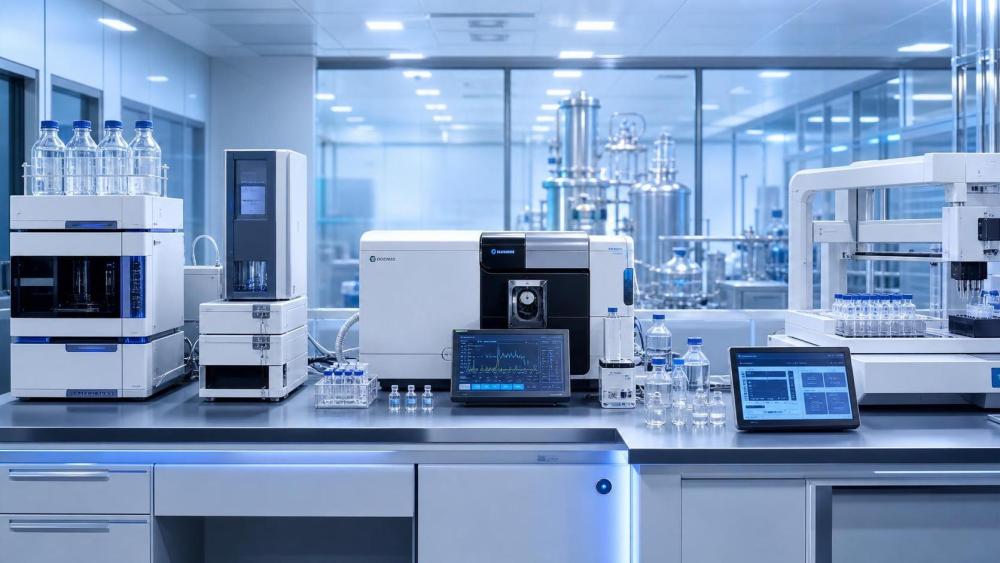
Biopharma quality control is entering a more demanding phase in 2026.
Complex biologics, CGT pipelines, and accelerated development timelines are raising the bar for release certainty.
That shift is pushing high-molecular analytical metrology beyond a specialist function.
It is now becoming a board-level quality capability tied to compliance, speed, and market confidence.
In practical terms, laboratories can no longer treat high-molecular analytical metrology as a final checkpoint.
They are expected to use it earlier, connect it across workflows, and defend every result under GMP scrutiny.
This is especially visible in ecosystems tracked by BLES.
Its lens spans bioreactors, downstream purification, LC-MS systems, biosafety environments, and automated liquid handling.
Across those pillars, one signal stands out.
High-molecular analytical metrology is increasingly expected to link microscopic process behavior with audit-ready evidence.
The value is not only sharper characterization.
The real value is better decisions when product heterogeneity, data integrity, and release pressure collide.
The market signal is no longer subtle
Recent demand patterns show a broader redefinition of analytical expectations.
Sponsors want deeper molecular visibility, but they also want evidence that survives inspection without slowing operations.
That combination is why high-molecular analytical metrology is expanding from method performance into system architecture.
A few signals explain why this change feels more urgent in 2026.
- Biologics portfolios contain more structurally sensitive molecules, including mAbs, conjugates, and advanced therapies.
- Regulators are looking harder at data lineage, software validation, and method lifecycle evidence.
- Scale-up programs need tighter correlation between upstream shifts and downstream quality attributes.
- Automation is generating higher testing throughput, which magnifies weak data governance.
More importantly, these signals are no longer isolated inside analytical labs.
They affect release planning, tech transfer, site harmonization, and capital allocation.
When one glycoform shift, aggregate level, or charge variant profile triggers deviation reviews, every delayed decision becomes expensive.
What is driving the next wave of high-molecular analytical metrology
The strongest drivers are technical, regulatory, and economic at the same time.
That is why the trend is durable rather than temporary.
This is where the BLES perspective becomes useful.
High-molecular analytical metrology does not operate in a vacuum.
It reflects upstream cell behavior, downstream separation stress, LC-MS interpretation depth, and the repeatability of liquid handling steps.
When those layers are stitched together well, metrology supports both scientific confidence and scale-up discipline.
The biggest impact is happening across connected workflows
One of the clearest 2026 shifts is that quality issues are being traced across process boundaries.
High-molecular analytical metrology is becoming the language used to connect those boundaries.
Upstream and cell culture decisions
Minor changes in oxygen transfer, pH control, or feeding strategies can reshape molecular quality attributes.
That means metrology data is now informing process tuning far earlier than before.
Downstream purification and separation
Centrifugation, filtration, and polishing steps can introduce or enrich unwanted variants.
Better high-molecular analytical metrology helps teams distinguish process noise from true product risk.
Analytical platforms and digital review
LC-MS, orthogonal methods, and automated handling systems are producing richer but more complex records.
Without controlled metadata, review workflows slow down and audit exposure rises.
This broadens the role of metrology leaders.
They are no longer only method guardians.
They are becoming translators between development science, manufacturing reliability, and quality governance.
Where decision quality will separate strong organizations from reactive ones
Not every investment in high-molecular analytical metrology creates equal value.
The difference usually comes down to operating discipline rather than instrument count.
- Prioritize methods that support comparability, deviation closure, and release confidence together.
- Map data flows from sample preparation to report approval before adding more automation.
- Treat CSV, audit trails, and user access design as strategic infrastructure, not documentation cleanup.
- Build cross-functional review routines linking process changes with molecular signatures.
From a market perspective, this matters because budget discipline is tighter.
Capital is moving toward systems that reduce uncertainty across several stages, not single-point improvements.
That favors high-molecular analytical metrology programs with clear links to batch release, site readiness, and platform scalability.
It also explains why intelligence-led evaluation models are gaining traction.
BLES reflects this direction by combining GMP interpretation, scale-up science, and ROI thinking in one analytical frame.
What to watch next as 2026 unfolds
Several signals will reveal whether high-molecular analytical metrology is delivering strategic value or only technical activity.
The most useful indicators are often simple.
- How often analytical findings change process decisions before deviations escalate.
- Whether review cycles shrink without weakening data integrity controls.
- How well methods transfer across sites, partners, or scale stages.
- Whether automation increases consistency instead of multiplying exception handling.
A sensible next step is to review the metrology stack as a connected business capability.
Look at molecular characterization depth, digital validation exposure, and cross-workflow traceability together.
Then compare those findings against future pipeline complexity, not only current workload.
The organizations that move early will not simply measure better.
They will release with more confidence, defend quality with less friction, and scale innovation with fewer blind spots.
That is the real direction of high-molecular analytical metrology in 2026.
Related News
- How analytical metrology systems support data integrity in QC labsSep 22, 2026Dr. Elara Sterling
- How to evaluate a process technology equipment manufacturer for GMP readinessSep 21, 2026Dr. Elara Sterling
- When digital laboratory workflow solutions reduce GMP data integrity riskSep 19, 2026Dr. Elara Sterling
- How biopharma teams can prepare audit trails for GMP inspectionsSep 18, 2026Dr. Elara Sterling
Related News
- 00
0000-00
How analytical metrology systems support data integrity in QC labs - 00
0000-00
How to evaluate a process technology equipment manufacturer for GMP readiness - 00
0000-00
When does a single use manufacturing platform reduce scale-up risk? - 00
0000-00
When digital laboratory workflow solutions reduce GMP data integrity risk - 00
0000-00
How biopharma teams can prepare audit trails for GMP inspections
Dr. Elara Sterling
Weekly Insights
Stay ahead with our curated technology reports delivered every Monday.