





In 2026, data integrity is no longer just an audit requirement—it is a frontline risk for quality control and safety teams managing GMP laboratories, automated instruments, and validated digital workflows.
Effective pharmaceutical compliance solutions must connect ALCOA+ principles, computerized system validation, secure instrument data capture, and real-time deviation visibility across bioprocessing, purification, LC-MS, and liquid handling environments.
This article explores how organizations can reduce compliance exposure, strengthen traceability, and build inspection-ready operations in an increasingly automated pharmaceutical landscape.
Why Pharmaceutical Compliance Solutions Need a Checklist in 2026
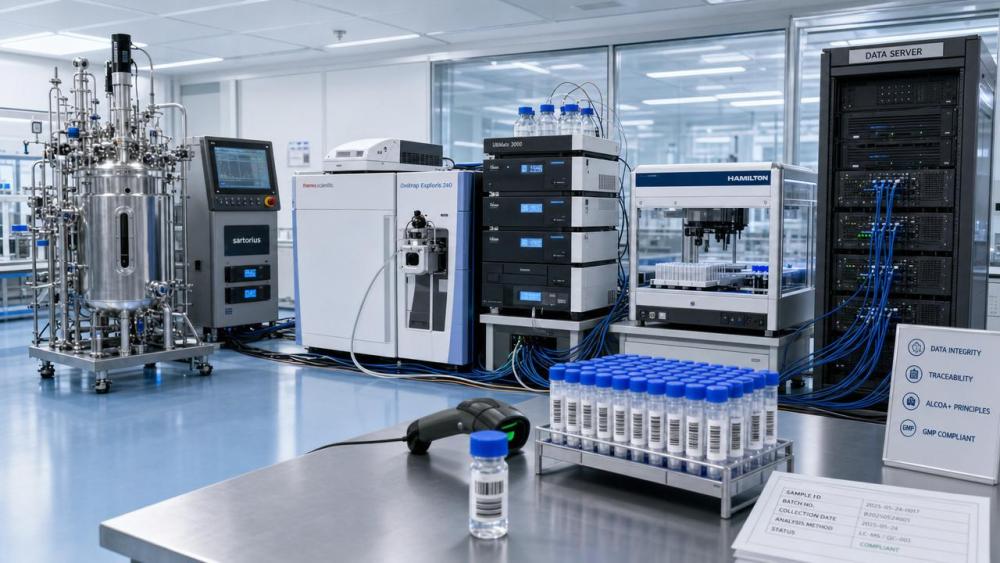
Modern GMP operations depend on connected instruments, electronic records, cloud dashboards, and automated sample movement.
That connectivity increases speed, but it also expands the surface where data integrity failures can occur.
Pharmaceutical compliance solutions provide structure when teams must control batch records, chromatograms, audit trails, calibration files, and user permissions.
A checklist approach prevents isolated decisions that satisfy one department while weakening the validated process chain.
It also helps connect GMP expectations with practical instrument behavior in bioreactors, centrifuges, LC-MS systems, biosafety cabinets, and liquid handlers.
The goal is not more paperwork. The goal is fewer uncontrolled records, fewer hidden deviations, and faster inspection response.
Core Checklist for Reducing Data Integrity Risk
The following checklist turns pharmaceutical compliance solutions into daily operating controls, not occasional audit preparation tasks.
- Map every GMP data source, including instruments, middleware, spreadsheets, LIMS entries, batch records, and exported analytical reports.
- Verify ALCOA+ coverage for each critical record, especially attribution, legibility, contemporaneous capture, original format, and long-term availability.
- Validate computerized systems using risk-based CSV or CSA methods aligned with process impact and patient safety relevance.
- Restrict user privileges by role, separating method creation, data review, approval, system administration, and electronic signature authority.
- Enable secure audit trails for creation, modification, deletion, export, reprocessing, configuration changes, and failed access attempts.
- Review audit trails with documented frequency, predefined triggers, trained reviewers, and evidence-based escalation routes.
- Control time synchronization across instruments, servers, controllers, and workstations to avoid inconsistent event sequencing.
- Protect raw data from overwriting by using validated storage, controlled retention periods, backup verification, and restoration testing.
- Document interface logic between equipment software, historians, MES, LIMS, QMS, and enterprise reporting platforms.
- Train operators on data integrity behaviors, including immediate entry, deviation reporting, password discipline, and prohibited workarounds.
Strong pharmaceutical compliance solutions turn these items into accountable routines, supported by system evidence and periodic management review.
Checklist for GMP Instruments and Automated Workflows
Instrument compliance is often where data integrity becomes concrete.
A method may be approved, but an uncontrolled local file can still compromise an entire study or batch decision.
- Confirm that each instrument produces attributable raw data before results are transferred, summarized, or converted into reports.
- Lock validated methods after approval and require documented change control for parameters affecting quality decisions.
- Capture instrument status, calibration state, maintenance condition, and environmental context at the time of analysis.
- Prevent manual reprocessing without reason codes, reviewer approval, version comparison, and traceable result selection.
- Test data transfer failure modes, including network outage, partial upload, duplicate records, and delayed synchronization.
- Require periodic access reviews for shared workstations, service accounts, vendor logins, and remote support sessions.
Pharmaceutical compliance solutions should treat instruments as part of the validated data lifecycle, not isolated laboratory assets.
This is especially important when automated liquid handlers generate high-volume records faster than manual review can detect anomalies.
Application Scenario: Bioreactors and Fermentation Data
Bioreactors generate continuous data streams for temperature, pH, dissolved oxygen, agitation, feed rates, alarms, and process events.
For monoclonal antibodies or recombinant proteins, these records support process understanding and batch disposition.
Pharmaceutical compliance solutions must secure both controller data and contextual records explaining interventions during cell culture.
A sterile feed adjustment, probe replacement, or alarm acknowledgment must remain traceable to trained personnel and approved procedures.
Risk increases when development teams scale from bench reactors to 2000L systems without harmonized historian rules.
Validated recipes, controlled setpoint changes, and synchronized timestamps help preserve comparability across scale-up stages.
Application Scenario: Downstream Purification and Separation
Industrial centrifuges, filtration skids, chromatography systems, and ultrafiltration units create critical evidence during product recovery.
Records may include G-force settings, flow rates, pressure curves, column performance, conductivity, and fraction collection history.
Pharmaceutical compliance solutions should connect these data sets with batch records and deviation management workflows.
A pressure spike or abnormal turbidity event must not remain buried inside equipment software.
It should trigger review, investigation, and quality impact assessment before release decisions are finalized.
This linkage supports faster root cause analysis when yield loss, impurity carryover, or contamination concerns appear.
Application Scenario: LC-MS and Analytical Metrology
LC-MS systems present high data integrity pressure because raw files, processing methods, integrations, and reports can diverge.
Small molecular differences may influence impurity identification, potency interpretation, or comparability conclusions.
Pharmaceutical compliance solutions must control method versions, integration changes, sample sequences, calibration curves, and system suitability outcomes.
Reprocessed chromatograms require clear justification and reviewer visibility into original and final results.
The strongest controls make manipulation difficult while preserving scientific flexibility for justified investigation.
Application Scenario: Liquid Handling and High-Throughput Screening
Automated liquid handling workstations reduce manual pipetting errors, yet they introduce script, deck layout, and plate map risks.
In NGS preparation or target screening, one misaligned template can compromise hundreds of wells.
Pharmaceutical compliance solutions should version-control scripts, verify barcodes, track reagent lots, and capture execution logs automatically.
Exception handling is equally important when tips clog, liquid levels fail, or robotic movements are interrupted.
The system should preserve partial run evidence and prevent silent continuation after critical errors.
Commonly Overlooked Risks in Pharmaceutical Compliance Solutions
Uncontrolled Spreadsheets
Spreadsheets often become unofficial calculation engines for trending, dilution factors, equipment logs, or acceptance criteria.
If they influence GMP decisions, they need validation, access control, formula protection, and change history.
Shared User Accounts
Shared accounts destroy attribution, even when the underlying test was scientifically valid.
Pharmaceutical compliance solutions should prohibit shared credentials and document exceptions with compensating controls.
Vendor Service Access
Remote support can solve urgent technical issues, but it may also change configurations without quality awareness.
Approved access windows, session recording, change review, and vendor qualification reduce this exposure.
Incomplete Backup Testing
Backups are not reliable evidence until restoration has been tested under realistic conditions.
Restoration drills should include raw data, metadata, audit trails, electronic signatures, and report templates.
Practical Execution Plan for Inspection-Ready Operations
Successful pharmaceutical compliance solutions require sequencing.
Trying to fix every system at once usually creates fatigue and inconsistent remediation.
- Prioritize systems by GMP impact, patient risk, product release relevance, and history of deviations or audit observations.
- Perform a data integrity gap assessment covering people, process, technology, documentation, and third-party dependencies.
- Create remediation plans with owners, target dates, interim controls, validation deliverables, and objective closure evidence.
- Standardize SOPs for audit trail review, access control, backup testing, incident handling, and electronic record approval.
- Monitor leading indicators, including overdue reviews, disabled audit trails, failed backups, repeated reprocessing, and late deviations.
Governance must remain close to operations.
Data integrity cannot be delegated entirely to IT, quality assurance, or equipment suppliers.
Cross-functional review keeps pharmaceutical compliance solutions aligned with real laboratory behavior and evolving GMP expectations.
How to Evaluate Pharmaceutical Compliance Solutions
Selection should focus on evidence, integration depth, validation support, and operational usability.
A solution that looks strong in a presentation may fail during actual deviation review or inspector questioning.
- Request examples of audit trail reports, user access matrices, validation documentation, and restored archived records.
- Check whether the platform supports GMP workflows across laboratories, manufacturing areas, and equipment service activities.
- Assess integration with LIMS, QMS, MES, historians, instrument software, barcode systems, and identity management tools.
- Confirm that alerts are actionable, risk-ranked, and linked to investigation workflows rather than producing uncontrolled noise.
- Review vendor quality maturity, cybersecurity posture, release management, support model, and regulatory inspection experience.
The best pharmaceutical compliance solutions reduce manual reconciliation while improving the confidence of every quality decision.
Summary and Next Action Guide
Data integrity risk in 2026 is shaped by automation, connected equipment, complex analytics, and higher inspection expectations.
Pharmaceutical compliance solutions must therefore protect the complete data lifecycle, from instrument capture to final quality approval.
Start with a focused inventory of GMP systems and records.
Then rank risks, close control gaps, validate critical workflows, and train teams on daily data integrity behavior.
For bioprocessing, purification, LC-MS, biosafety, and liquid handling environments, this approach creates traceable and inspection-ready operations.
The immediate next step is simple: choose one high-impact workflow and test whether its records are attributable, complete, secure, and retrievable.
If the evidence is weak, pharmaceutical compliance solutions should become a strategic priority before the next audit exposes the gap.
Related News
- What CSV documentation should a laboratory systems supplier provide?Oct 26, 2026Dr. Elara Sterling
- GenScript ProBio’s Nanjing Biologics Facility Passes NMPA Pre-Approval InspectionOct 22, 2026Dr. Elara Sterling
- How to assess audit trails in analytical data integrity solutionsOct 16, 2026Dr. Elara Sterling
- How user licensing affects laboratory validation system pricingOct 14, 2026Dr. Elara Sterling
Related News
- 00
0000-00
What CSV documentation should a laboratory systems supplier provide? - 00
0000-00
SCIEX Begins Construction of High-End Mass Spectrometer Plant in Beijing - 00
0000-00
Which design features make cleanroom benches easier to clean? - 00
0000-00
IndexBox Forecasts 12% CAGR for Global Microbioreactor Market Through 2035 - 00
0000-00
When do hazardous compound labs need isolators for containment?
Dr. Elara Sterling
Weekly Insights
Stay ahead with our curated technology reports delivered every Monday.