





In regulated pharmaceutical environments, audit readiness depends on more than documented procedures—it requires trustworthy, traceable, and inspection-ready data across every instrument, workflow, and decision point.
For quality control and safety management teams, pharmaceutical compliance solutions help close gaps in GMP records, computerized system validation, access control, and data integrity governance.
This article explores how robust compliance strategies support reliable laboratory operations, reduce regulatory risk, and strengthen confidence during FDA, EMA, and global GMP audits.
What Are Pharmaceutical Compliance Solutions for Audit-Ready Data Integrity?
Pharmaceutical compliance solutions are structured systems, controls, and workflows that keep regulated data accurate, complete, attributable, and reviewable.
They connect GMP expectations with daily laboratory behavior, instrument operation, software records, and quality decision-making.
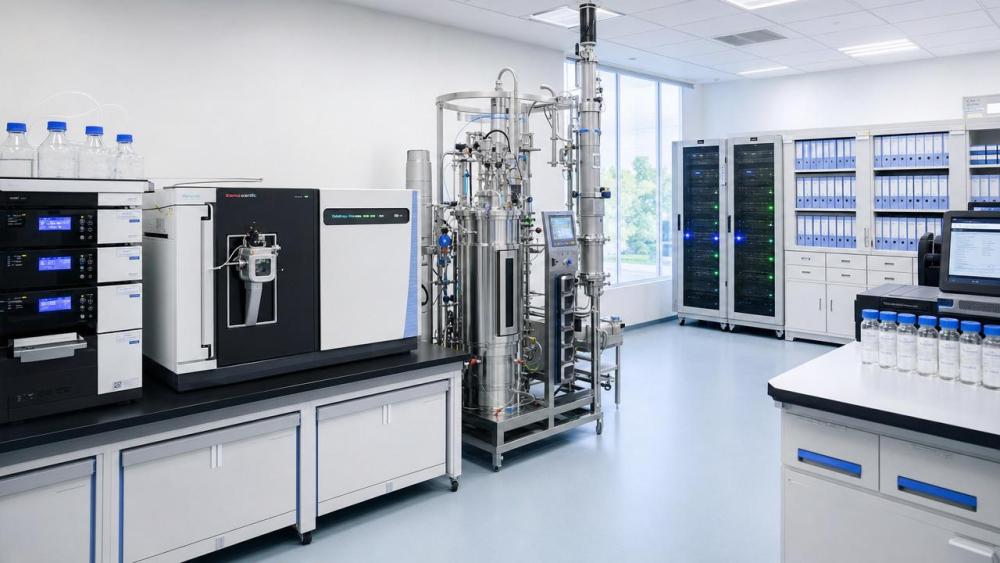
In modern laboratories, records rarely come from one location. Data may originate from LC-MS systems, bioreactors, centrifuges, liquid handlers, and environmental monitoring tools.
Without consistent controls, the audit trail becomes fragmented. Pharmaceutical compliance solutions reduce that fragmentation through validation, governance, and standard operating discipline.
A strong framework usually includes electronic records management, role-based access, review-by-exception, deviation handling, and change control.
It also includes computerized system validation, commonly called CSV, which proves that digital systems perform as intended.
The purpose is not paperwork volume. The purpose is evidence that scientific results remain reliable under pressure.
For BLES, this evidence links microscopic process precision with stringent GMP audit expectations across bioprocessing, purification, metrology, and automation.
Why Does Data Integrity Become a Core Audit Risk?
Data integrity becomes critical because regulators judge quality decisions by the trustworthiness of supporting records.
If a chromatogram peak, cell culture parameter, or pipetting record cannot be defended, the final batch decision may be challenged.
Pharmaceutical compliance solutions address this risk by applying ALCOA+ principles to electronic and hybrid records.
Data should be attributable, legible, contemporaneous, original, accurate, complete, consistent, enduring, and available.
These principles sound simple. However, they become complex when instruments, operators, software, and outsourced testing networks interact.
Common risks include shared passwords, disabled audit trails, undocumented manual integrations, uncontrolled spreadsheets, and delayed record review.
Another frequent issue is insufficient linkage between equipment qualification and generated data.
For example, a validated LC-MS method still needs secure acquisition, controlled processing, and justified reintegration rules.
Pharmaceutical compliance solutions make these controls visible before an inspector asks for proof.
- They define who can create, modify, approve, or archive records.
- They protect raw data from deletion, overwriting, or unapproved reprocessing.
- They document deviations and link them to corrective actions.
- They support rapid evidence retrieval during FDA, EMA, or local GMP audits.
When data integrity is handled reactively, audit preparation becomes stressful. When it is designed into operations, inspection readiness becomes routine.
Which Workflows Benefit Most from Pharmaceutical Compliance Solutions?
The greatest benefit appears in workflows where critical quality attributes depend on multiple systems and human decisions.
Bioreactor operations are a clear example. Temperature, dissolved oxygen, pH, agitation, and feed strategy all affect cell performance.
Pharmaceutical compliance solutions help preserve these parameters as controlled evidence, not isolated machine logs.
Downstream purification also requires strong oversight. Centrifuges, filtration systems, and chromatography platforms generate process records that must remain traceable.
In analytical laboratories, LC-MS and related metrology platforms require tight controls over methods, calibration, system suitability, and data processing.
Automated liquid handling adds another dimension. Dispensing scripts, plate maps, reagent identities, and run logs must align.
Biosafety cabinets and clean benches also support compliance. Their airflow performance, maintenance history, and use records protect sample and operator safety.
Pharmaceutical compliance solutions are especially valuable in CGT, biologics, sterile manufacturing, high-throughput screening, and contract testing environments.
These areas combine scientific complexity with high regulatory sensitivity.
Where do compliance gaps usually appear?
Gaps often appear at interfaces. A validated instrument may export data into an uncontrolled folder or spreadsheet.
Another gap appears when paper forms summarize electronic records without clear reconciliation.
Pharmaceutical compliance solutions should therefore map complete data flows, from sample receipt to final report approval.
This mapping exposes hidden manual steps, undocumented calculations, and weak review points before they become audit observations.
How Should Pharmaceutical Compliance Solutions Be Selected?
Selection should begin with risk, not software features. The highest-risk data flows deserve the strongest controls.
A practical assessment reviews product impact, process criticality, record complexity, user access, and regulatory exposure.
Pharmaceutical compliance solutions should support validated intended use, not force teams into artificial workflows.
For computerized systems, confirm alignment with 21 CFR Part 11, EU Annex 11, GAMP 5, and internal quality policies.
The solution should provide secure authentication, configurable permissions, audit trails, electronic signatures, backup controls, and disaster recovery procedures.
It should also support lifecycle documentation, including user requirements, risk assessments, test evidence, and periodic review.
For instrument-heavy laboratories, integration matters. Compliance value increases when systems exchange data without uncontrolled copying.
Pharmaceutical compliance solutions should also fit operational realities. Overly rigid controls may encourage workarounds, which create new risks.
- Check whether audit trails are meaningful, searchable, and protected.
- Confirm that record review workflows match GMP responsibilities.
- Evaluate vendor support for validation documentation and change notifications.
- Test how exceptions, deviations, and reprocessing events are documented.
- Assess user training needs before full deployment.
The best pharmaceutical compliance solutions make correct behavior easier than noncompliant shortcuts.
What Is the Difference Between Compliance Software and a Compliance Strategy?
Compliance software is a tool. A compliance strategy is the controlled operating model around that tool.
Many audit failures occur because organizations buy technology but leave governance unclear.
Pharmaceutical compliance solutions should combine technology, procedures, training, oversight, and scientific justification.
For example, an audit trail function is useful only when someone reviews it with defined criteria.
Electronic signatures help only when approval meaning is documented and access is controlled.
Cloud storage supports availability only when backup, retention, cybersecurity, and supplier qualification are addressed.
A strategic framework should define ownership. Quality, IT, laboratory operations, engineering, and validation functions need coordinated responsibilities.
This is where BLES intelligence emphasizes the bridge between equipment capability and GMP defensibility.
Pharmaceutical compliance solutions become stronger when process scientists and compliance experts review data flows together.
What Mistakes Undermine Audit Readiness?
One mistake is treating audit readiness as a final inspection exercise.
Regulators expect continuous control, not last-minute document gathering.
Another mistake is focusing only on final reports while ignoring raw data and intermediate processing steps.
Pharmaceutical compliance solutions must preserve the full story behind each approved result.
A third mistake is accepting vendor claims without local verification.
Even advanced platforms require site-specific configuration, training, validation, and procedural alignment.
Weak periodic review is another common issue. Systems change, users change, methods change, and regulatory expectations evolve.
Pharmaceutical compliance solutions should include scheduled checks for access rights, audit trail trends, backup success, and open deviations.
Cost-driven shortcuts can also create hidden liabilities. Delaying validation or review often increases remediation cost later.
The safest path is proportionate control. High-risk workflows need deeper evidence, while low-risk records need practical safeguards.
How long does implementation usually take?
Implementation time depends on system complexity, integration depth, validation scope, and training requirements.
A focused laboratory module may take weeks. A multi-site platform may require several months.
Pharmaceutical compliance solutions should be phased around risk, operational continuity, and audit calendar pressure.
How Can a Practical Roadmap Improve Compliance Outcomes?
A practical roadmap begins with a current-state data integrity assessment.
This assessment should identify critical records, responsible systems, manual transfers, review points, and known weaknesses.
Next, prioritize remediation by patient impact, batch release relevance, and inspection likelihood.
Pharmaceutical compliance solutions should then be implemented through controlled phases, not disruptive big-bang changes.
- Map data flows from instrument generation to final approval.
- Classify records by GMP impact and data integrity risk.
- Define user roles, approval authority, and segregation of duties.
- Validate computerized systems according to intended use.
- Train users with real workflow examples and exception scenarios.
- Review audit trails, deviations, and changes at defined intervals.
This roadmap works across broad life science operations, from upstream cell culture to automated screening and analytical release testing.
It also supports international equipment suppliers seeking stronger credibility in regulated markets.
BLES views this discipline as essential for scaling hope responsibly, where every microliter and chromatogram peak must remain traceable.
FAQ: Key Questions About Pharmaceutical Compliance Solutions
Audit-ready data integrity is built through daily control, not emergency preparation.
Effective pharmaceutical compliance solutions align instruments, software, people, and procedures into one defensible quality system.
The next step is to review the most critical records and trace how each one is created, changed, reviewed, and archived.
From that evidence map, targeted pharmaceutical compliance solutions can reduce risk, improve operational confidence, and support stronger GMP audit performance.
Related News
- What CSV documentation should a laboratory systems supplier provide?Oct 26, 2026Dr. Elara Sterling
- GenScript ProBio’s Nanjing Biologics Facility Passes NMPA Pre-Approval InspectionOct 22, 2026Dr. Elara Sterling
- How to assess audit trails in analytical data integrity solutionsOct 16, 2026Dr. Elara Sterling
- How user licensing affects laboratory validation system pricingOct 14, 2026Dr. Elara Sterling
Related News
- 00
0000-00
What CSV documentation should a laboratory systems supplier provide? - 00
0000-00
SCIEX Begins Construction of High-End Mass Spectrometer Plant in Beijing - 00
0000-00
Which design features make cleanroom benches easier to clean? - 00
0000-00
IndexBox Forecasts 12% CAGR for Global Microbioreactor Market Through 2035 - 00
0000-00
When do hazardous compound labs need isolators for containment?
Dr. Elara Sterling
Weekly Insights
Stay ahead with our curated technology reports delivered every Monday.