





Pharmaceutical Compliance Solutions Audit Readiness Starts With Real Operating Context
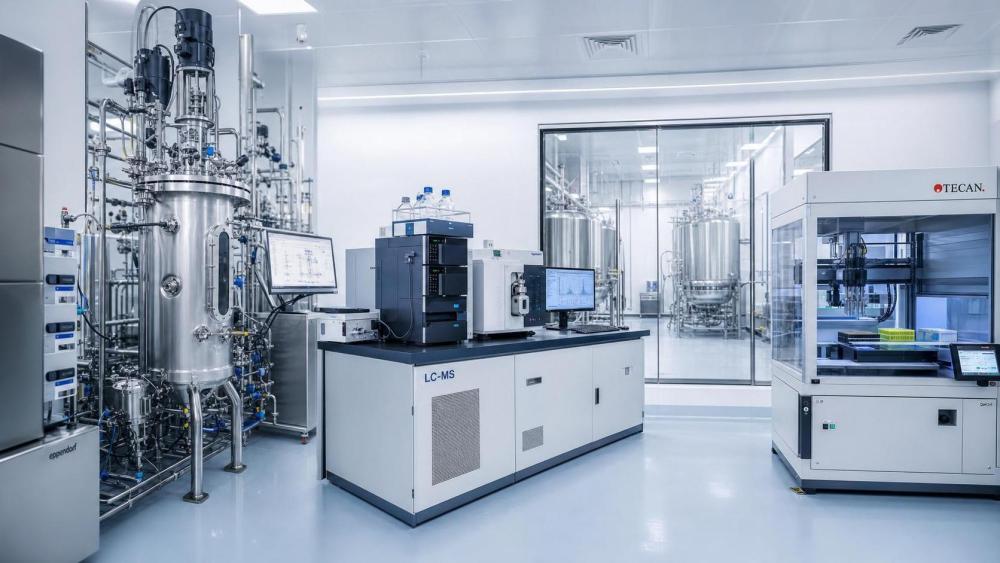
In 2026, pharmaceutical compliance solutions audit readiness is shaping daily decisions across bioprocessing, QC, validation, and automation.
The main shift is simple. Audit readiness now depends less on static binders and more on connected evidence.
That matters in environments where one workflow may touch bioreactors, centrifuges, LC-MS systems, biosafety cabinets, and liquid handling workstations.
BLES follows this operating reality closely, especially where GMP compliance, scale-up speed, and traceable data have to work together.
In practice, pharmaceutical compliance solutions audit readiness becomes valuable when it reduces inspection friction without slowing development.
The right approach changes by scenario. A CGT pilot suite does not face the same pressure points as an analytical lab or a downstream purification line.
Why Different Environments Ask for Different Compliance Depth
Many teams treat audit readiness as one universal program. That is usually where gaps begin.
A sterile cell culture operation needs tight control over environmental records, recipe changes, and batch-level traceability.
An LC-MS platform, by contrast, is judged more heavily on method integrity, metadata retention, user access, and result reconstruction.
Automated liquid handling adds another layer. Small dispensing errors can become major data integrity issues when thousands of wells are processed.
This is why pharmaceutical compliance solutions audit readiness should be mapped to process criticality, system connectivity, and evidence burden.
More common judgment points include who changes parameters, where records originate, how deviations are reviewed, and whether raw data can be reconstructed quickly.
A useful comparison before implementation
Before selecting tools or workflows, it helps to compare the audit pressure in each operating area.
In Cell Culture and Scale-Up, Audit Readiness Lives Inside Process Control
In upstream operations, pharmaceutical compliance solutions audit readiness often rises or falls with process visibility.
A 20L development reactor and a 2000L production-scale vessel may use similar logic, but the compliance risk is not equal.
Scale-up introduces more interfaces, more manual interventions, and more pressure to explain why one parameter change happened at one exact time.
In this setting, audit readiness should connect setpoints, alarms, batch comments, calibration windows, and electronic approvals.
BLES often frames this as the link between microscopic cell behavior and macroscopic compliance evidence. That framing is useful.
When dissolved oxygen drift, sparger performance, or pH control affects yield, inspection questions rarely stop at engineering explanation alone.
The stronger answer combines process science with a defensible record of who observed the event, who adjusted the run, and how impact was assessed.
Downstream Purification Needs Evidence That Follows Material Movement
Downstream scenarios are different because traceability must travel with product fractions, not just with machines.
Industrial centrifuges and separation systems generate compliance questions around transfer timing, cleaning verification, and parameter lock control.
A common weakness appears when equipment records are complete, but intermediate material status remains fragmented across spreadsheets or local files.
That gap can delay investigations during an audit, especially if product loss, hold time excursions, or cross-batch mix-up risk must be ruled out.
For this reason, pharmaceutical compliance solutions audit readiness in purification should emphasize chain of custody and exception linkage.
It is not enough to prove that the centrifuge was qualified. The records must also show what moved, when it moved, and under which release conditions.
Analytical Labs Face a Different Audit Story Than Production Suites
Analytical environments often appear more controlled because they are digital. In reality, they can be harder to defend.
LC-MS systems create dense evidence trails. Raw files, processing methods, reprocessing history, user privileges, and report versions all matter.
Here, pharmaceutical compliance solutions audit readiness depends on whether data integrity is native to the workflow or added afterward.
If analysts export, rename, or manually reconcile files outside validated pathways, the audit burden grows quickly.
More robust setups use controlled method libraries, restricted role permissions, secure time stamps, and review by exception.
This is also where CSV maturity matters. FDA and EMA scrutiny increasingly focuses on whether computerized systems behave consistently across updates and integrations.
What tends to be overlooked in analytical audit readiness
- Validated methods exist, but user role design still allows unnecessary editing rights.
- Instrument qualification is current, but backup restoration has never been tested under inspection timing.
- Audit trails are available, yet periodic review is inconsistent or poorly documented.
- Data are retained, but metadata needed for full reconstruction remain split across systems.
Automation and Biosafety Areas Need Compatibility, Not Just Compliance Features
In biosafety cabinets, clean benches, and automated liquid handling zones, the challenge is often operational compatibility.
The compliance requirement may look familiar, but the working conditions are not. Airflow controls, aseptic handling, and fast cycle execution change what is practical.
For liquid handling platforms, pharmaceutical compliance solutions audit readiness should include script governance, plate identity control, and interface stability.
For biosafety environments, document access, deviation capture, and operator confirmation steps must fit restricted movement and contamination controls.
This is where implementation teams often misjudge the site. They choose a compliance layer that is technically complete but awkward at the bench.
When users create side records to compensate, audit readiness weakens even if the software looked strong during selection.
Where Misjudgment Usually Happens Before an Inspection
The most frequent mistake is treating similar workflows as identical compliance environments.
A research-heavy CGT workflow may need flexible development controls, while late-stage commercial operations need tighter version discipline.
Another mistake is focusing on purchase specifications while ignoring implementation burden, validation updates, and maintenance ownership.
In practical terms, pharmaceutical compliance solutions audit readiness is weakened when review responsibility is unclear after go-live.
It also suffers when sites validate software, but never test how quickly records can be assembled under real inspection pressure.
The better pattern is to simulate likely questions early, especially around deviations, user actions, batch impact, and data reconstruction.
A Practical Way to Match Audit Readiness to Site Conditions
A workable framework should stay close to operations rather than abstract policy language.
- Map critical systems by data source, intervention points, and release impact.
- Rank workflows by inspection exposure, not only by equipment value.
- Check whether CSV, audit trails, and backup recovery match current system integrations.
- Review whether operators can complete required records without parallel paper workarounds.
- Test one realistic inspection drill for each high-risk area before formal audit season.
This approach fits the BLES view of intelligent stitching across process science, automation, and GMP evidence.
It also keeps pharmaceutical compliance solutions audit readiness tied to actual process behavior, which is where audit confidence is built.
Next-Step Judgment Matters More Than Generic Readiness Claims
Strong audit readiness rarely comes from one platform alone. It comes from matching controls to the way each site really operates.
For 2026 planning, the useful next step is to review each critical scenario separately, then compare evidence gaps across lab, pilot, and production activities.
That means checking process control records, analytical data integrity, automation scripts, validation scope, and recovery speed under inspection conditions.
Where pharmaceutical compliance solutions audit readiness is already strong, the remaining work is usually integration discipline and review cadence.
Where it is weak, the gap is often not awareness. It is the absence of a scenario-based standard for deciding what evidence must exist before the audit begins.
- automated liquid handling
- bioreactors
- fermenters
- industrial centrifuges
- separation systems
- LC-MS systems
- biosafety cabinets
- clean benches
- liquid handling workstations
- GMP compliance
- pharmaceutical compliance solutions
- liquid handling platforms
- pharmaceutical compliance solutions audit readiness
- data integrity
- pharmaceutical compliance
- analytical data integrity
Related News
- How to assess audit trails in analytical data integrity solutionsOct 16, 2026Dr. Elara Sterling
- How user licensing affects laboratory validation system pricingOct 14, 2026Dr. Elara Sterling
- How secure data integrity systems support GMP audit readinessOct 12, 2026Dr. Elara Sterling
- How laboratory validation systems support GMP data integrityOct 10, 2026Dr. Elara Sterling
Related News
- 00
0000-00
How to assess audit trails in analytical data integrity solutions - 00
0000-00
How to assess an automated liquid handling platform's throughput - 00
0000-00
How user licensing affects laboratory validation system pricing - 00
0000-00
When does pathogen sample processing require a Class III cabinet? - 00
0000-00
How secure data integrity systems support GMP audit readiness
Dr. Elara Sterling
Weekly Insights
Stay ahead with our curated technology reports delivered every Monday.