





Why validated pharmaceutical compliance now sits at the center of GMP decisions
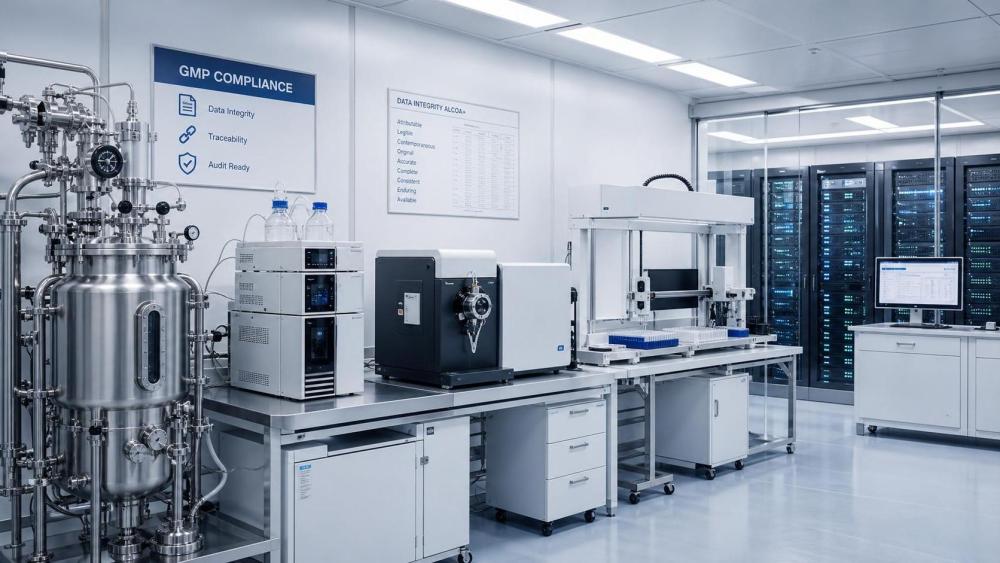
Validated pharmaceutical compliance has moved far beyond paperwork. It now shapes batch release confidence, inspection readiness, digital trust, and patient protection across biopharma and laboratory operations.
In practical terms, GMP and data integrity checks decide whether a record can defend a process, an instrument, and a product claim under scrutiny.
That matters even more in environments using bioreactors, centrifuges, LC-MS platforms, biosafety cabinets, and automated liquid handling systems.
These systems generate high-volume, high-impact data. If validation is weak, small gaps can spread into deviations, delayed investigations, or rejected lots.
BLES follows this intersection closely because modern life science equipment is no longer judged only by performance. It is also judged by traceability, electronic records control, and audit defensibility.
That is why validated pharmaceutical compliance is best understood as an operating discipline. It connects process control, software validation, user practice, and document integrity into one accountable system.
What does validated pharmaceutical compliance actually include?
A common mistake is to reduce it to equipment qualification alone. In reality, it covers the full chain from intended use to evidence of ongoing control.
At the core, validated pharmaceutical compliance usually combines GMP expectations, CSV discipline, data integrity controls, and procedural consistency.
For laboratory and production systems, that often means:
- clear user requirements tied to intended process use
- risk-based qualification of hardware, software, and interfaces
- controlled access, audit trails, and secure record retention
- data review procedures that detect anomalies early
- change control for methods, recipes, firmware, and user permissions
- periodic verification that the validated state still exists
The ALCOA+ principles remain a useful test. Records should be attributable, legible, contemporaneous, original, accurate, complete, consistent, enduring, and available.
In bioprocessing, those principles apply to reactor parameters, environmental monitoring, cleaning records, chromatograms, sample prep logs, and robotic dispensing histories.
More commonly, trouble starts where data moves between systems. A validated balance connected to middleware, then exported to LIMS, creates multiple control points.
So validated pharmaceutical compliance is not one document set. It is the documented proof that every critical step is understood, controlled, and reviewable.
Which GMP and data integrity checks matter most during routine operations?
During inspections, auditors rarely begin with abstract theory. They look for evidence that daily controls are reliable, repeatable, and resistant to manipulation.
The highest-value checks usually sit in routine workflows, not special projects. A focused review table helps clarify where gaps often appear.
In actual facilities, LC-MS and liquid handling systems often deserve extra attention because they combine software complexity, high sample volume, and frequent method updates.
BLES frequently highlights this point: advanced instruments may be analytically excellent, yet still expose compliance risk if metadata, audit trails, or interface controls are weak.
For that reason, validated pharmaceutical compliance should be reviewed during operation, not only at installation or before an audit.
How do you judge whether a system is truly inspection-ready?
Inspection-ready does not mean every file exists. It means the system can explain itself clearly through traceable records, controlled behavior, and consistent user practice.
A useful test is to follow one critical data path from generation to approval. If the story breaks, the validated state is weaker than it looks.
For example, in a downstream purification workflow, ask whether centrifuge settings, filter batch records, sample identities, and review signoffs stay linked end to end.
In a clean bench or biosafety cabinet context, inspection readiness also includes environmental checks, maintenance evidence, airflow verification, and deviation escalation discipline.
The more reliable approach is to test readiness with scenario questions:
- Can a changed method be traced to approval and training records?
- Can a deleted run be explained from the audit trail without guesswork?
- Can the original raw data be retrieved quickly and completely?
- Can the system prove that only authorized users performed key actions?
- Can the backup copy be restored without data loss or chronology gaps?
If those answers depend on memory, email chains, or local spreadsheets, validated pharmaceutical compliance is still fragile.
That is also where BLES intelligence becomes useful. Its coverage of CSV, process scale-up, and automation helps connect technical performance with compliance survivability.
Where do compliance programs usually fail, even when validation files exist?
The failure point is often not missing paperwork. It is the gap between documented intent and daily behavior.
One recurring issue is treating validation as a one-time event. Systems then drift through software patches, role changes, instrument relocation, or evolving assays.
Another issue is over-trusting vendors. Supplier documentation helps, but validated pharmaceutical compliance remains the operator’s responsibility within the actual use environment.
Data review is another weak area. Teams may confirm results, yet skip review of metadata, aborted runs, overwritten files, or unusual sequence patterns.
More subtle failures appear in integrated facilities using robotics and digital workflows. When liquid handlers, balances, barcode readers, and LIMS exchange data, ownership can blur.
That is why cross-functional accountability matters. Validation, IT, engineering, lab operations, and QA need one agreed control model.
The most common warning signs include:
- periodic review is scheduled but rarely completed on time
- deviations are corrected locally without root cause depth
- training records exist, yet user practice stays inconsistent
- interfaces are validated once, then ignored after updates
- paper printouts are trusted more than native electronic records
These are not minor administrative flaws. Under inspection, they directly weaken the credibility of validated pharmaceutical compliance.
What is a practical way to strengthen validated pharmaceutical compliance without slowing operations?
The most workable approach is risk-based control. Focus first on systems that influence batch disposition, critical quality attributes, sterility assurance, or data used for release decisions.
In many sites, that includes chromatography software, bioreactor control platforms, EM systems, electronic batch records, and automated sample preparation tools.
A lean improvement sequence usually works better than a large rewrite:
- Map critical data flows and identify where original records are created.
- Rank systems by product impact and data integrity exposure.
- Review user access, audit trail use, backup recovery, and change history.
- Close gaps with revised SOPs, targeted retraining, and requalification where needed.
- Set a review cadence that tests the validated state during routine work.
This is also where BLES offers a useful perspective. Its coverage links compliance oversight with process science, automation maturity, and scale-up realities rather than treating them separately.
For facilities handling innovative drugs or CGT workflows, that integrated view is especially important. Novel processes often change quickly, and compliance controls must keep pace.
The next sensible step is to review one high-impact system end to end. Check whether its validation package, operational records, and data integrity controls still tell one coherent story.
If they do not, validated pharmaceutical compliance should be treated as an active improvement priority, not a closed task.
Related News
- What CSV documentation should a laboratory systems supplier provide?Oct 26, 2026Dr. Elara Sterling
- GenScript ProBio’s Nanjing Biologics Facility Passes NMPA Pre-Approval InspectionOct 22, 2026Dr. Elara Sterling
- How to assess audit trails in analytical data integrity solutionsOct 16, 2026Dr. Elara Sterling
- How user licensing affects laboratory validation system pricingOct 14, 2026Dr. Elara Sterling
Related News
- 00
0000-00
What CSV documentation should a laboratory systems supplier provide? - 00
0000-00
SCIEX Begins Construction of High-End Mass Spectrometer Plant in Beijing - 00
0000-00
Which design features make cleanroom benches easier to clean? - 00
0000-00
IndexBox Forecasts 12% CAGR for Global Microbioreactor Market Through 2035 - 00
0000-00
When do hazardous compound labs need isolators for containment?
Dr. Elara Sterling
Weekly Insights
Stay ahead with our curated technology reports delivered every Monday.