





On July 12, 2026, TUV Rheinland issued what was described as the first Annex 11 + Annex 15 integrated validation certificate for nanoliter dispensers, and the certified platform has already entered scaled delivery. The development is worth watching for laboratory automation suppliers, CXO laboratories, procurement teams, and regulated workflow operators because it connects three issues that are usually evaluated separately: data integrity under ALCOA+, dispensing consistency at 10 nL, and compatibility with established library preparation protocols across multiple platforms.
What Has Been Confirmed So Far
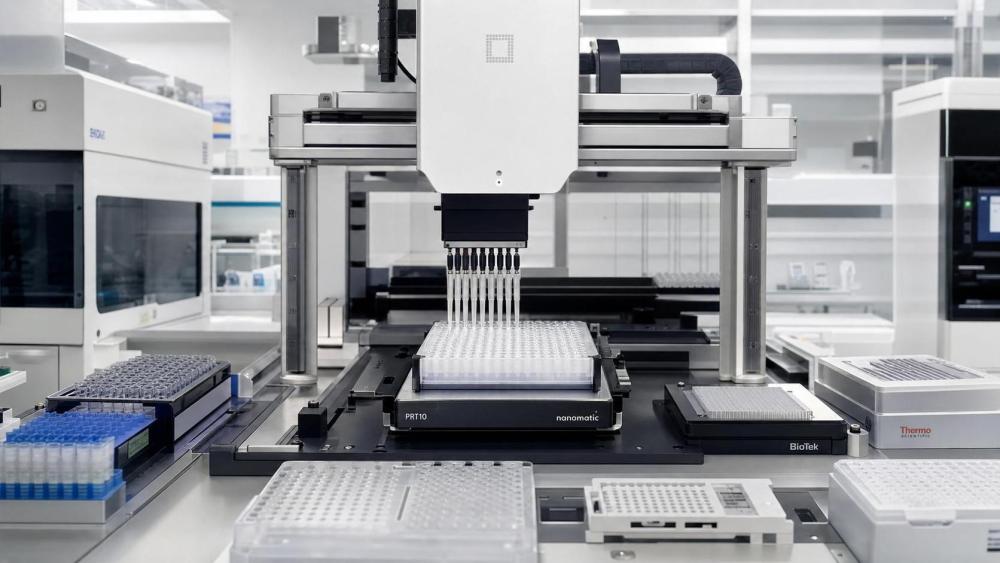
The confirmed event centers on a nanoliter liquid handling platform described as the first in the world to achieve joint validation aligned with EMA Annex 11 and Annex 15 requirements. According to the provided information, TUV Rheinland issued the certificate on July 12, 2026, specifically for nanoliter dispensers under an “Annex 11 + Annex 15 Integrated Validation Certificate.”
The certificate scope covers three stated areas: data integrity based on ALCOA+ principles, process robustness measured at ±0.8% CV at 10 nL, and cross-platform interoperability supporting library protocols associated with Illumina, Nanostring, and 10x Genomics. The first batch of equipment has been delivered to CXO laboratories in the UK and South Korea.
Why Different Market Participants May Be Paying Attention
For regulated laboratory operators, the signal is about validation workload
From an industry perspective, regulated laboratories and CXO facilities may view this development through the lens of implementation risk. A platform positioned around joint validation, data integrity, and process robustness may affect how these teams assess documentation readiness, qualification planning, and integration into existing controlled workflows. What deserves closer attention is whether buyers begin to treat combined validation coverage as a practical screening condition during instrument selection.
For procurement and vendor management teams, the issue is comparability
Procurement functions may be affected because the announcement links certification with measurable dispensing performance and compatibility across multiple library preparation environments. In practice, that can shift attention toward supplier evidence packages, validation documentation, and protocol fit rather than hardware specifications alone. Teams involved in sourcing may need to compare not only purchase terms, but also the depth of supporting records tied to compliance and workflow interoperability.
For service providers and workflow integrators, interoperability becomes more visible
Service providers working around genomics or library preparation workflows may pay attention to the stated support for Illumina, Nanostring, and 10x Genomics protocols. Analysis shows that interoperability claims can matter most at the point where equipment is introduced into mixed-platform laboratory environments. The practical impact would likely appear in method transfer discussions, instrument onboarding, and customer expectations around compatibility evidence.
What Companies Should Track Next
Watch how certification language is used in formal procurement and qualification
Companies active in laboratory equipment supply, regulated services, or technical purchasing should monitor whether this form of integrated validation becomes part of customer specifications, audit questions, or tender language. The key point is not the label alone, but how it is translated into required documents and acceptance criteria during actual procurement.
Separate certificate scope from operational fit
The provided information confirms certificate coverage across ALCOA+, process robustness, and interoperability, but businesses should still distinguish between certified scope and the exact demands of their own workflows. For sales, application, and quality teams, this means checking how customer requirements map to protocol use, record controls, and qualification steps rather than assuming that one certificate resolves every implementation detail.
Pay attention to delivery into the UK and South Korea as an early market signal
The first batch delivery to CXO laboratories in the UK and South Korea is a confirmed commercial milestone. Observably, companies serving these markets may want to track whether early installations influence local purchasing conversations, validation expectations, or turnaround demands from laboratory clients. At this stage, the information supports monitoring rather than broad conclusions.
Prepare clearer customer communication around evidence packages
Suppliers and service teams may need to strengthen how they present validation files, interoperability claims, and performance records in customer discussions. Where regulated buyers are involved, document clarity, scope definition, and qualification boundaries are likely to matter as much as the instrument claim itself.
How This Development Is Best Interpreted for Now
Analysis shows that this news is better understood as an early industry signal than as a settled market shift. The combination of Annex 11, Annex 15, ALCOA+, nanoliter-level robustness, and stated cross-platform protocol support suggests a growing emphasis on linking compliance evidence with operational usability. At the same time, the currently confirmed facts remain narrow: a certificate was issued, its scope was defined, and initial deliveries were made to CXO laboratories in two markets.
What deserves closer attention is whether other buyers, suppliers, and validation stakeholders begin to treat this integrated approach as a new benchmark. Until more adoption patterns or follow-on disclosures emerge, the event should be read as a notable reference point rather than proof of a fully established industry standard.
What This Means in Practical Terms
At present, the clearest significance of the announcement lies in the convergence of compliance, precision, and workflow compatibility within one validated equipment narrative. For the industry, that is relevant because these areas often shape separate review processes. It is more appropriate to understand this development as a concrete but still developing signal: important enough to track in procurement, qualification, and customer communication, but still requiring continued observation before drawing wider conclusions about market adoption.
Basis of This Article
This article is based on the user-provided news title, event date, and event summary. For this type of development, commonly relevant source categories may include official announcements, company statements, industry association updates, authoritative media coverage, and standard-related documentation. A specific official source link was not provided in the input, so further verification remains necessary. Follow-up attention should focus on any later official wording, additional delivery disclosures, and how the stated validation scope is referenced in real procurement and laboratory qualification practice.
Related News
- How to prevent carryover in automated low-volume liquid handlingSep 28, 2026Lab Automation Architect
- TUV Validation Marks First Scaled Nanoliter Dispensing DeliveryJul 14, 2026Lab Automation Architect
- EMA-Qualified Nanoliter Platform Enters Volume DeliveryJul 13, 2026Lab Automation Architect
- NanoPipette Pro Moves to Volume Delivery After EMA Pre-CertificationJul 10, 2026Lab Automation Architect
Related News
- 00
0000-00
What CSV documentation should a laboratory systems supplier provide? - 00
0000-00
SCIEX Begins Construction of High-End Mass Spectrometer Plant in Beijing - 00
0000-00
Which design features make cleanroom benches easier to clean? - 00
0000-00
IndexBox Forecasts 12% CAGR for Global Microbioreactor Market Through 2035 - 00
0000-00
When do hazardous compound labs need isolators for containment?
Lab Automation Architect
Weekly Insights
Stay ahead with our curated technology reports delivered every Monday.