





Why does pharmaceutical downstream purification have such a wide cost range?
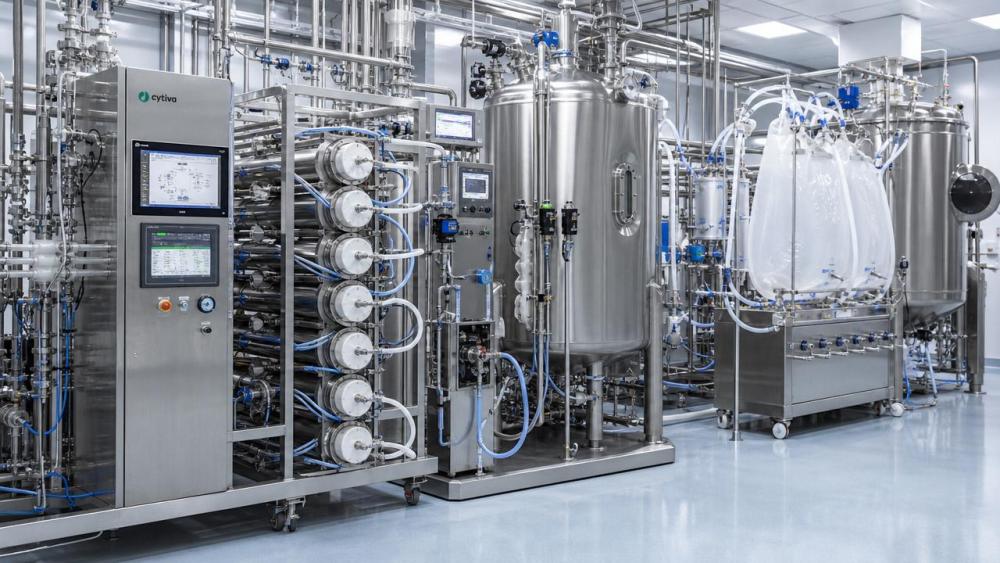
Pharmaceutical downstream purification rarely follows a simple price logic. A lower quote can still create a higher lifetime cost.
The reason is straightforward. Purity targets, yield recovery, cleaning strategy, validation burden, and batch scale all move together.
In practice, centrifuges, membrane systems, chromatography skids, sensors, and single-use assemblies form one economic chain.
If one link limits flow rate or creates product loss, the full pharmaceutical downstream purification process becomes more expensive.
This is why BLES often frames equipment decisions around process continuity, data integrity, and scale-up realism rather than sticker price.
That perspective matters even more for biologics and CGT, where small deviations can reshape cost per gram and release timelines.
A useful starting point is to separate visible capital spending from hidden operating expense.
- Visible cost includes the skid, columns, pumps, automation, installation, and qualification support.
- Hidden cost includes resin lifetime, buffer consumption, labor hours, cleaning validation, and failed batches.
- Strategic cost includes flexibility for new molecules, capacity expansion, and compliance updates.
When those layers are reviewed together, pharmaceutical downstream purification becomes easier to compare on a true ROI basis.
Which cost drivers usually matter more than the equipment price itself?
The expensive part is often not the machine. It is the operating pattern the machine forces over years of production.
Chromatography is a good example. Resin selection, cycle time, packing consistency, and buffer preparation can outweigh hardware depreciation.
Filtration systems show a similar pattern. Membrane fouling, flux decline, and changeout frequency directly affect throughput and labor demand.
Centrifugation looks efficient on paper, yet shear sensitivity and solids variability may change recovery economics from batch to batch.
For pharmaceutical downstream purification, the most common cost drivers usually include the following points.
- Product loss at each step, especially after clarification and polishing.
- Buffer volume requirements and storage footprint.
- Cleaning-in-place complexity and validation documentation.
- Downtime caused by component changeovers or maintenance windows.
- Manual interventions that increase deviation risk under GMP.
BLES places these costs in a broader equipment ecosystem. Upstream bioreactor consistency influences impurity load, and LC-MS capability strengthens analytical release confidence.
That wider view matters because pharmaceutical downstream purification is never isolated from the rest of the process train.
How should ROI be judged when purification systems promise higher performance?
A faster skid or a more automated platform does not automatically deliver better ROI. The return depends on where the constraint really sits.
If the bottleneck is sample variability, a premium automation package may not unlock the expected value.
If the bottleneck is campaign turnover, then single-use flow paths or faster qualification may have a strong payoff.
A practical ROI review for pharmaceutical downstream purification should compare financial and process indicators side by side.
A common mistake is using only purchase price and expected speed. A better method is modeling cost per successful batch.
That method reflects what BLES emphasizes across scale-up decisions: process science, GMP discipline, and realistic operating behavior.
What changes when comparing single-use and stainless systems?
This question appears often because pharmaceutical downstream purification now sits between flexibility needs and tightening cost control.
Single-use technology can reduce cleaning time, water demand, and cross-contamination concern. That is especially attractive in multiproduct environments.
Stainless systems still make sense where campaign size is large, utility infrastructure is mature, and consumable dependency must stay low.
The comparison is rarely ideological. It is usually operational.
- Single-use often wins on faster changeover and lower initial facility burden.
- Stainless often wins on high-volume stability and predictable long-run material cost.
- Single-use requires attention to extractables, leachables, and supply continuity.
- Stainless requires stronger cleaning validation and more utility management.
For pharmaceutical downstream purification, the right answer usually depends on campaign frequency, molecule diversity, and future process switching needs.
BLES frequently connects this decision to wider factory strategy, including automated liquid handling, data capture maturity, and scale-up roadmaps.
Where do compliance and data integrity affect cost more than expected?
Many budgets treat compliance as a separate line item. In reality, it shapes the full economics of pharmaceutical downstream purification.
Equipment without robust audit trails, electronic records support, or validation documentation can slow commissioning and increase remediation work.
That delay has a real cost. It can postpone tech transfer, process qualification, or commercial readiness.
This is one reason BLES pays close attention to CSV expectations, GMP inspection logic, and traceability design.
The hidden issue is not only regulatory exposure. It is operational friction.
- Manual data transfer increases review time and deviation risk.
- Weak software architecture can limit future integration with MES or LIMS.
- Incomplete vendor documentation can extend qualification timelines.
- Poor alarm management may create avoidable batch interventions.
In other words, compliance is not just about passing inspection. It is part of ROI protection.
What are the most common mistakes when budgeting pharmaceutical downstream purification?
The first mistake is assuming scale-up will preserve lab economics. It often does not.
Buffer preparation, hold times, and column sizing can behave very differently at manufacturing scale.
The second mistake is comparing technologies without a consistent decision frame. Fast today may be expensive after validation, training, and spare parts.
The third mistake is ignoring adjacent systems. Clarification quality, biosafety workflows, and analytical turnaround all influence purification economics.
A short review list can prevent these traps.
- Map impurity profile changes from upstream to final polishing.
- Estimate cost per batch, not just cost per machine.
- Check vendor support for qualification, software, and spare availability.
- Stress-test assumptions for future volume and molecule mix.
- Review whether analytical tools can confirm process consistency fast enough.
That final point is easy to overlook. Yet in pharmaceutical downstream purification, slow or uncertain analytics can erase gains from better hardware.
How can a smarter evaluation model support better long-term decisions?
A smarter model connects process science, equipment architecture, and economics before purchase decisions are locked in.
That means reviewing not only throughput and purity, but also utility demand, validation scope, automation readiness, and failure recovery options.
For pharmaceutical downstream purification, a disciplined evaluation usually answers four practical questions.
- Does the system protect yield across normal process variability?
- Can it support GMP traceability without major retrofit work?
- Will consumables and maintenance stay acceptable over the asset life?
- Does it remain useful when pipeline priorities change?
This is where an intelligence-led approach adds value. BLES links purification equipment choices with upstream behavior, analytical certainty, and commercial scale logic.
That broader lens helps turn pharmaceutical downstream purification from a cost center into a controllable investment decision.
A sensible next step is to build a comparison sheet using yield, compliance effort, consumables, changeover time, and expansion flexibility.
When those factors are scored together, the path to a scalable and financially sound purification strategy becomes much clearer.
Related News
- How to size downstream purification systems for batch capacitySep 13, 2026Downstream Purification Fellow
- How to Evaluate GMP Protein Purification Systems for Scale and ComplianceJul 19, 2026Downstream Purification Fellow
- Protein Polishing Systems: How to Compare Yield, Purity, and ThroughputJul 13, 2026Downstream Purification Fellow
- Protein A Purification Systems: Key Factors That Drive Yield and Resin CostJul 12, 2026Downstream Purification Fellow
Related News
- 00
0000-00
How to assess supplier support when buying biotech equipment in Europe - 00
0000-00
How to assess GMP audit readiness in Europe before an inspection - 00
0000-00
How to size downstream purification systems for batch capacity - 00
0000-00
When does a Class II biosafety cabinet provide adequate protection? - 00
0000-00
Selecting sterile bioprocess equipment solutions for GMP compliance
Downstream Purification Fellow
Weekly Insights
Stay ahead with our curated technology reports delivered every Monday.