





On June 10, 2026, the U.S. FDA released a draft guidance on cell and gene therapy manufacturing equipment that introduces a new data-architecture expectation for continuous-flow centrifuges used in CAR-T and TCR-T processes. The change matters not only as a technical specification issue, but also as a potential compliance and market-entry issue for equipment makers, exporters, CGT manufacturers, procurement teams, and related service providers working with the U.S. market.
What the draft guidance specifically introduces
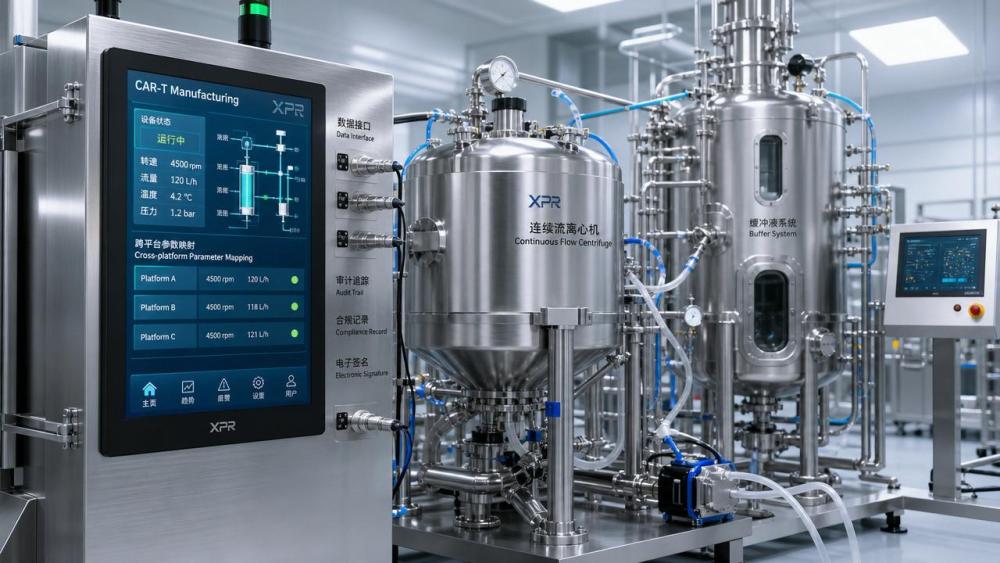
According to the information provided, the FDA issued the Cell & Gene Therapy Manufacturing Equipment Guidance Draft on June 10, 2026. The draft, for the first time, requires continuous-flow centrifuges used in CAR-T and TCR-T manufacturing to support an extensible metadata model (EMM) and cross-platform process-parameter mapping. The stated purpose is to support a Platform Knowledge Reuse (PKR) review pathway. The information provided also indicates that this requirement will affect the technical entry requirements for Chinese continuous-flow centrifuges exported to U.S. CGT companies.
Where the practical pressure is likely to appear
Export-facing equipment suppliers may face a higher technical access threshold
From an industry perspective, suppliers seeking to sell continuous-flow centrifuges into the U.S. CGT market may be affected because the draft links equipment capability to a review-oriented data structure. The impact is likely to appear in product specifications, technical documentation, bid alignment, and customer qualification discussions. What deserves closer attention is whether existing product data structures, interface descriptions, and parameter-mapping capabilities can be clearly presented in compliance materials for U.S.-bound business.
CGT manufacturers and procurement teams may need to reassess equipment selection criteria
For buyers using or planning CAR-T and TCR-T manufacturing lines, the draft signals that equipment evaluation may no longer focus only on mechanical or process performance. Analysis shows that procurement and technical teams may need to pay closer attention to whether a centrifuge can support EMM and cross-platform parameter mapping in a way that fits a PKR-related review logic. This could affect equipment comparison, supplier qualification, tender language, and document requests during sourcing.
Compliance, validation, and service functions may need stronger document coordination
Related compliance teams, testing support functions, and after-sales service providers may also be affected because the rule change points toward a stronger link between equipment operation and structured data readiness. Observably, the pressure may show up in technical files, parameter traceability records, interface explanations, change-control materials, and post-delivery support expectations. Even without detailed execution rules in the provided information, the need for clearer evidence packages appears more relevant than before.
What companies should monitor now
Review whether current technical files can explain data architecture clearly
Analysis shows that companies should first examine whether product dossiers, technical specifications, and supporting documents can clearly describe EMM-related design and cross-platform parameter-mapping capability. If such descriptions are weak or fragmented, later customer review or compliance communication may become more difficult.
Watch for changes in customer-facing specification language
It is more appropriate to understand this draft as a signal that procurement and qualification documents may evolve. Exporters, sales teams, and bid managers should therefore monitor whether customers begin adding new wording on metadata structure, platform compatibility, parameter mapping, or PKR-related readiness into RFQs, technical appendices, or qualification checklists.
Prepare for possible pressure on delivery and project coordination
From an industry perspective, if customers ask for more detailed technical proof or structured documentation before purchase or installation, project timelines could be affected at the review and clarification stage rather than only at shipment. Companies involved in export delivery, installation, and service handover should pay attention to whether extra documentation or technical explanation becomes a precondition for project progress.
Keep tracking how the draft is interpreted in practice
Because the provided information does not include final execution details, companies should avoid treating every possible implication as an established requirement. What deserves closer attention is how the draft is later reflected in compliance interpretation, customer qualification practice, tender language, and market feedback.
Why this reads as more than a product feature update
Observably, the significance of this development lies in how equipment capability is being connected to a review pathway rather than being treated only as a standalone hardware issue. Analysis shows that the draft is best read as a regulatory and commercial signal: data architecture, interoperability logic, and process-parameter portability may become more visible in market access discussions for CGT equipment. At the same time, because the information provided refers to a draft guidance, this remains a change that still requires continued observation rather than a fully settled enforcement outcome.
How to interpret the signal at this stage
At this stage, it is more appropriate to understand the FDA draft as an early but concrete indication that CGT equipment reviews may place greater weight on structured data compatibility tied to PKR. For exporters and suppliers, the issue is not only whether a centrifuge performs its process task, but whether its data model and parameter-mapping logic can be presented in a way that aligns with emerging U.S. expectations. The immediate takeaway is therefore cautious: the rule direction is clearer, while the exact pace and depth of implementation still need to be watched.
Basis and follow-up checkpoints
This article is generated from the user-provided news title, event date, and event summary. For developments of this type, relevant source categories usually include official regulatory releases, guidance documents, trade or customs information, industry association updates, standards-related materials, and reporting by authoritative media. No specific official source link was provided in the input, so the exact official publication link still requires follow-up verification. Continued monitoring should focus on later regulatory detail, compliance interpretation, tender-document changes, market feedback, and how companies implement the requirement in practice.
Related News
- When Does Centrifugal Separation for Cell Harvest Outperform TFF?Aug 12, 2026Downstream Purification Fellow
- Industrial Centrifuges for Continuous Operation: What Impacts Uptime MostJul 13, 2026Downstream Purification Fellow
- TUV Rheinland Updates BSL-3 Rules for Flow CentrifugesJul 07, 2026Downstream Purification Fellow
- CBP Reclassifies Continuous Flow Centrifuges, Adds 25% DutyJul 03, 2026Downstream Purification Fellow
Related News
- 00
0000-00
How to assess GMP audit readiness in Europe before an inspection - 00
0000-00
How to size downstream purification systems for batch capacity - 00
0000-00
When does a Class II biosafety cabinet provide adequate protection? - 00
0000-00
Selecting sterile bioprocess equipment solutions for GMP compliance - 00
0000-00
How to maintain GMP compliance documentation that stands up to audits
Downstream Purification Fellow
Weekly Insights
Stay ahead with our curated technology reports delivered every Monday.