





On June 8, 2026, Saudi Arabia’s SASO released a revised version of SASO IEC 61000-3-2 that changes the compliance path for imported UHPLC systems. From September 1, 2026, these products must meet both IE3 energy-efficiency requirements and ALCOA+ data-integrity certification at the same time, with certification issued by a SASO-authorized laboratory rather than supported only by CE or FDA declarations. For equipment exporters, buyers, certification service providers, and delivery teams, this is worth close attention because it shifts compliance from a single-document expectation to a dual-certification entry requirement.
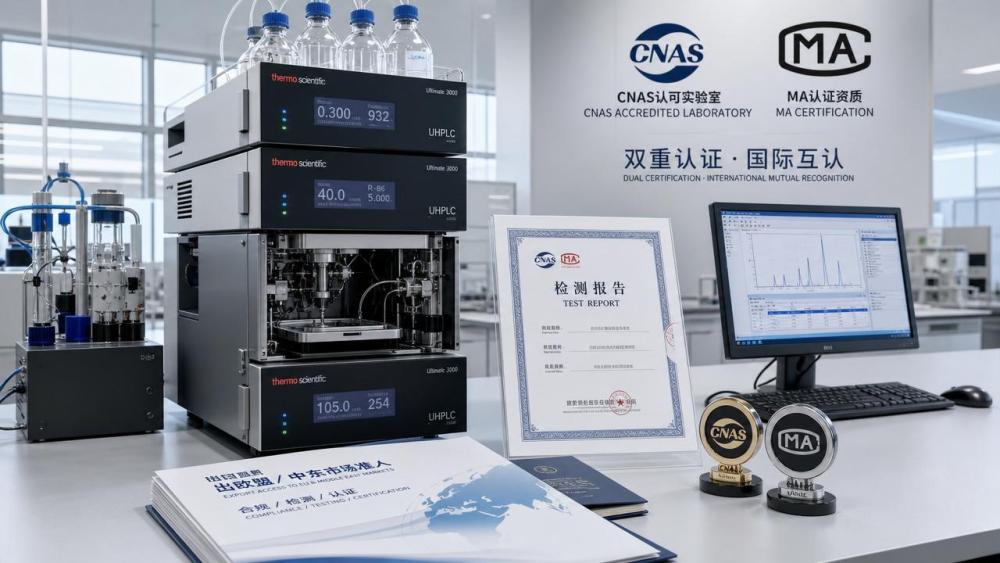
A revised entry requirement for imported UHPLC systems
The confirmed change is limited but clear. SASO published the revised SASO IEC 61000-3-2 on June 8, 2026. Under that revision, all imported UHPLC systems must, from September 1, 2026, satisfy two requirements simultaneously: an IE3 energy-efficiency level and ALCOA+ data-integrity certification.
The certification must be issued by a SASO-authorized laboratory. The event summary also makes clear that CE or FDA declarations on their own will not be accepted as a substitute for this requirement.
Where the rule change may reshape business workflows
Export transactions face a stricter market-entry checkpoint
From an industry perspective, exporters and direct trading companies are likely to feel the impact first because the rule is tied to imported UHPLC systems. The practical pressure point is no longer only product shipment, but whether the product file and certification path are aligned with SASO’s dual requirement before delivery commitments are finalized.
What deserves closer attention is the documentation chain around market access. Where a business previously relied on CE or FDA-related declarations as support material, this change suggests that such documents may no longer be sufficient on a standalone basis for Saudi-bound UHPLC shipments.
Procurement and project delivery may need earlier compliance screening
For procurement teams and buyers, the rule change may affect supplier selection, tender review, and delivery scheduling. Analysis shows that any procurement process involving UHPLC systems for the Saudi market may need earlier verification of whether both IE3 and ALCOA+ requirements can be demonstrated through a SASO-authorized laboratory.
This matters not only at contract award stage, but also when reviewing technical files, bid qualifications, and handover readiness. If compliance evidence is treated as a late-stage formality, the risk may shift into delivery timing and acceptance readiness.
Testing and certification service providers become more central
Certification-related companies and testing service institutions may see a more central role because the summary explicitly requires a SASO-authorized laboratory. Observably, the key change is not simply that standards have been updated, but that the acceptable source of certification has been narrowed.
For companies coordinating cross-border compliance, this may increase attention on laboratory authorization status, report acceptability, and the completeness of technical and data-integrity records submitted for review.
After-sales and traceability teams may need closer document continuity
After-sales providers and quality-traceability teams may also need to watch this development. Analysis shows that once data integrity is named alongside energy efficiency, businesses may need stronger continuity between pre-shipment certification materials, delivered system documentation, and post-delivery support records.
At this stage, it would be premature to describe any fixed enforcement outcome. Still, the change is relevant for teams handling installation files, service records, and customer-side compliance responses.
What companies should review now
Check whether current certification assumptions still hold
Analysis shows that one immediate task is to reassess whether existing Saudi-market compliance assumptions depend too heavily on CE or FDA declarations. The event summary indicates that such declarations alone will not be accepted, so companies should review whether their current market-entry files match the revised requirement.
Re-examine technical files and supporting records
Companies involved in exporting or supplying UHPLC systems should pay close attention to technical documents, test reports, and data-integrity materials connected to the product. The practical issue is not only whether documents exist, but whether they are suitable for a certification route handled by a SASO-authorized laboratory.
Build compliance timing into procurement and delivery plans
What deserves closer attention is timing. With the new requirement taking effect on September 1, 2026, procurement planning, supplier confirmation, and delivery scheduling may need to account for certification preparation earlier than before. This is especially relevant where contracts, bids, or shipment plans are already being prepared for the Saudi market.
Continue monitoring official wording and market practice
The event summary sets the core requirement, but it does not provide detailed implementation scenarios. For that reason, companies should continue tracking how the requirement is reflected in formal compliance wording, tender documents, customer specifications, and certification practice, rather than assuming every operational detail is already settled.
Why this looks like an execution signal, not just a policy headline
Observably, this development is more appropriate to understand as a concrete compliance signal than as a general policy discussion. The reason is that the summary combines a published revision date, a future effective date, two explicit certification dimensions, and a clear statement that CE or FDA declarations alone are not acceptable.
At the same time, analysis shows that the market still needs to watch how the requirement is interpreted in operational settings. The most relevant follow-up questions are likely to center on certification practice, document expectations, and how buyers and suppliers reflect the rule in procurement and delivery processes.
How the market may best read this update
In practical terms, this update points to a more structured compliance threshold for imported UHPLC systems entering Saudi Arabia. It does not by itself confirm every downstream enforcement outcome, but it does indicate that dual certification on energy efficiency and data integrity should be treated as a serious access condition rather than a secondary administrative detail.
Current market participants may therefore read this not as a broad industry forecast, but as a rule change with direct implications for certification preparation, trade documentation, procurement review, and delivery planning. The most rational reading for now is that this is an implemented regulatory direction with details that still merit continued observation.
Basis of this article and what still needs verification
This article is based on the user-provided news title, event date, and event summary. For developments of this kind, commonly relevant source types may include official regulatory notices, releases from supervisory authorities, customs or trade-administration information, industry association updates, standard-setting documents, and reporting from established professional media.
No specific official source link was provided in the input, so the exact official publication link remains to be verified on an ongoing basis. It remains necessary to continue checking later details such as implementation wording, certification interpretation, tender-document changes, market feedback, and how companies apply the requirement in practice.
Related News
- How to prevent carryover errors in UHPLC proceduresOct 08, 2026Analytical Metrology Expert
- How to choose triple quadrupole LC-MS systems for routine quantitationSep 01, 2026Analytical Metrology Expert
- EMA CSV Update Tightens Records for Imported UHPLC SystemsAug 02, 2026Analytical Metrology Expert
- FDA Tightens Data Integrity Checks for Imported UHPLCJul 22, 2026Analytical Metrology Expert
Related News
- 00
0000-00
What CSV documentation should a laboratory systems supplier provide? - 00
0000-00
SCIEX Begins Construction of High-End Mass Spectrometer Plant in Beijing - 00
0000-00
Which design features make cleanroom benches easier to clean? - 00
0000-00
IndexBox Forecasts 12% CAGR for Global Microbioreactor Market Through 2035 - 00
0000-00
When do hazardous compound labs need isolators for containment?
Analytical Metrology Expert
Weekly Insights
Stay ahead with our curated technology reports delivered every Monday.