





On July 12, 2026, Germany-based BioPrecision AG began volume delivery of its EMA pre-qualified Nanoliter Dispensers platform, model NP-X9, to three CXO companies in Japan, South Korea, and the UAE. For laboratories operating under GMP conditions and for service providers involved in NGS library construction, the development is worth watching because it links regulatory-readiness, calibration traceability, and automated liquid handling within a single deployment path tied to Illumina NovaSeq X Plus workflows.
What Has Been Delivered So Far
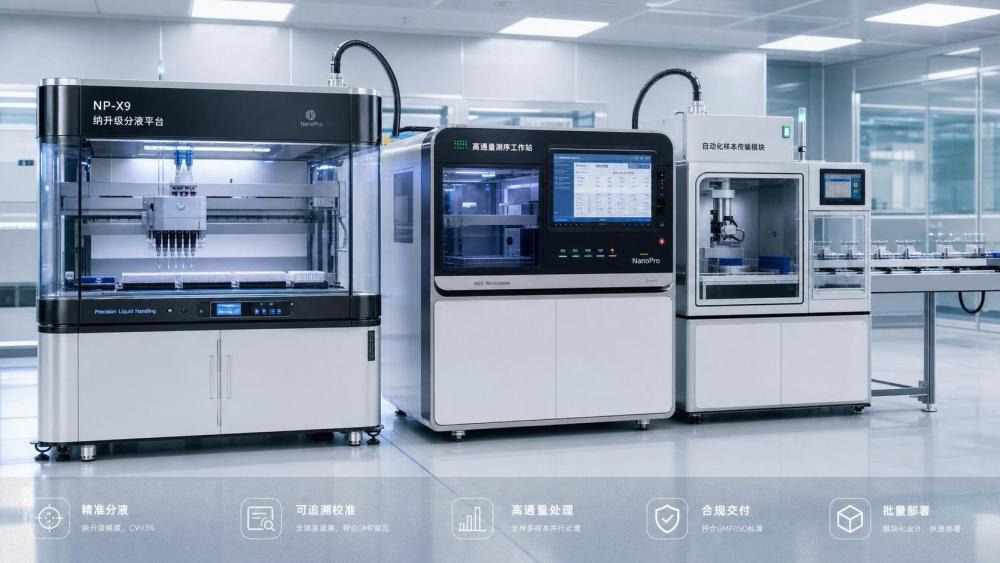
According to the provided event information, BioPrecision AG formally delivered the first batch of Nanoliter Dispensers NP-X9 systems on July 12, 2026. The recipients were three CXO companies located in Japan, South Korea, and the UAE.
The platform is described as the first nanoliter dispensing platform to enter volume delivery after obtaining EMA pre-qualification. The equipment has passed validation under EMA Annex 11, includes an ISO/IEC 17025 calibration chain, and incorporates a microliter-scale liquid fingerprint tracking module.
The supplied description also states that the NP-X9 can connect directly with the Illumina NovaSeq X Plus platform, enabling closed-loop automation across the full NGS library construction workflow. The delivered units are intended for immediate deployment in GMP environments.
Why Different Parts of the Workflow May Pay Attention
NGS service operators are likely to focus on workflow control
From an industry perspective, CXOs and other sequencing service providers may be affected first because the delivered systems are positioned around full-process automation in NGS library construction. The practical point of attention is not only throughput, but also whether liquid handling, traceability, and deployment into GMP settings can be managed within one connected workflow. What deserves closer attention is how these features change internal validation, SOP design, and client-facing quality documentation.
GMP laboratory operators may watch compliance integration more closely
Laboratories running under GMP conditions may see this event as relevant because the platform is described as deployable immediately after delivery into GMP environments. The potential impact is concentrated in system qualification, documentation readiness, and how Annex 11-related validation expectations interact with day-to-day automated library preparation. Teams in this position should watch how compliance claims are expressed in procurement and implementation discussions, especially where automation and regulated data handling intersect.
Procurement and technical integration teams may reassess equipment criteria
Procurement teams, platform managers, and technical buyers may also be affected because the event combines several decision points that are often reviewed separately: pre-qualification status, calibration traceability, workflow connectivity, and compatibility with an installed sequencing platform. Analysis shows that purchasing criteria may shift from stand-alone dispensing performance toward a broader evaluation of integration risk, validation burden, and deployment timing.
What Companies Should Track in the Near Term
How qualification language is presented in commercial and technical documents
Companies evaluating similar systems should pay close attention to how EMA pre-qualification and Annex 11 validation are described in official materials and deployment documents. The distinction between a platform feature, a validation status, and the user site's own implementation responsibility matters in regulated workflows.
Whether traceability features can be operationalized in real workflows
The inclusion of an ISO/IEC 17025 calibration chain and a liquid fingerprint tracking module will likely draw attention from QA, QC, and lab operations teams. The key practical issue is not the presence of these features alone, but how they are incorporated into routine records, deviation handling, and customer audit communication.
Integration assumptions around NovaSeq X Plus workflows
Because the platform is described as connecting seamlessly to Illumina NovaSeq X Plus for full closed-loop library construction automation, companies using that sequencing environment should review where integration starts and ends in their own process. Current attention should center on handoff points, data continuity, and whether internal process controls align with the claimed closed-loop setup.
Delivery-readiness versus scale-readiness
The fact that the first batch has been delivered is a concrete milestone, but companies should distinguish between initial deployment readiness and broader multi-site operational maturity. For procurement and program teams, this means preparing for questions around rollout timing, qualification support, and supplier documentation rather than treating first delivery as proof of universal fit across all regulated workflows.
How This Signal Should Be Read
Observably, this event is more than a routine equipment shipment because it combines three elements that are often evaluated separately in the NGS automation market: regulatory alignment, traceable calibration, and end-to-end workflow integration. At the same time, it is more appropriate to understand this as an early operational signal rather than a finalized market outcome. The confirmed fact is first-batch delivery to three CXO recipients; broader adoption patterns, implementation depth, and cross-market replication still require continued observation.
Analysis also shows that the event is relevant beyond one product model. It highlights where buyer scrutiny may be moving: toward systems that can support automated library preparation without separating instrument performance from compliance documentation and deployment conditions. That does not establish a new industry standard by itself, but it does indicate what technical and regulatory combinations are gaining attention.
What the Development Suggests at This Stage
At this stage, the most balanced reading is that the delivery of an EMA pre-qualified nanoliter dispensing platform into CXO settings marks a concrete step in the convergence of NGS workflow automation and regulated laboratory deployment. The event should not be overstated as a completed market shift, but it should not be dismissed as a simple shipment update either. It is better understood as a short-term operational milestone with longer-term signaling value for sequencing service providers, GMP laboratories, and procurement teams evaluating automation pathways.
Basis of This Article and What Still Needs Verification
This article is based on the user-provided news title, event date, and event summary. For developments of this kind, commonly relevant source categories may include official company announcements, corporate product notices, industry association information, authoritative media coverage, and standards-related documentation.
No specific official source link was provided in the input, so the underlying claims should continue to be verified against subsequent official disclosures. Areas that still warrant follow-up include how the qualification status is described in formal documents, how GMP deployment is documented in practice, and whether additional deliveries or implementation details are later disclosed through official channels.
Related News
- How to prevent carryover in automated low-volume liquid handlingSep 28, 2026Lab Automation Architect
- TUV Validation Marks First Scaled Nanoliter Dispensing DeliveryJul 14, 2026Lab Automation Architect
- EMA-Qualified Nanoliter Platform Enters Volume DeliveryJul 13, 2026Lab Automation Architect
- NanoPipette Pro Moves to Volume Delivery After EMA Pre-CertificationJul 10, 2026Lab Automation Architect
Related News
- 00
0000-00
What CSV documentation should a laboratory systems supplier provide? - 00
0000-00
SCIEX Begins Construction of High-End Mass Spectrometer Plant in Beijing - 00
0000-00
Which design features make cleanroom benches easier to clean? - 00
0000-00
IndexBox Forecasts 12% CAGR for Global Microbioreactor Market Through 2035 - 00
0000-00
When do hazardous compound labs need isolators for containment?
Lab Automation Architect
Weekly Insights
Stay ahead with our curated technology reports delivered every Monday.