





On 30 May 2026, the European Medical Device Coordination Group (MDCG) issued guidance introducing a six-month transition period for the validation of ultra-high-performance liquid chromatography (UHPLC) systems incorporating artificial intelligence algorithms—directly impacting manufacturers and exporters of analytical instrumentation serving the EU medical device market.
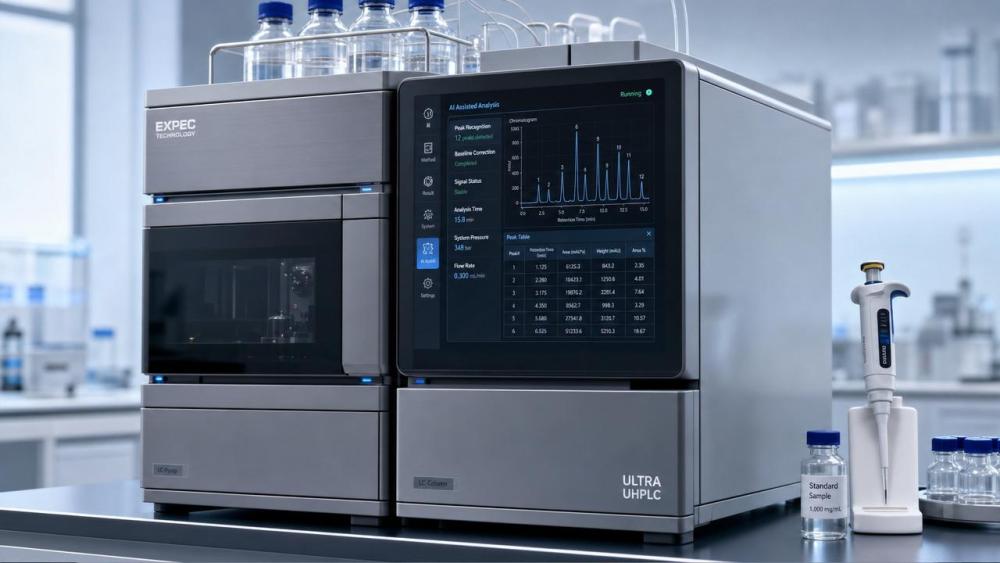
MDCG Guidance Establishes Temporary Validation Pathway
The MDCG published Guidance Document MDCG 2026-11 on AI-Enabled Chromatography Systems on 30 May 2026. It specifies a transitional period ending 30 November 2026 for UHPLC systems integrating AI components. During this window, manufacturers may apply a Quality by Design (QbD)-based validation approach endorsed by the European Medicines Agency (EMA), provided they fully comply with Computer System Validation (CSV) and ALCOA+ data integrity principles. This measure addresses implementation challenges related to Annex I, Section 17.2 of the EU Medical Device Regulation (MDR).
Impact Across the Instrumentation Supply Chain
Export-Oriented Instrument Manufacturers
Companies exporting UHPLC systems from China—and other third countries—to the EU face immediate implications for technical documentation and conformity assessment. The transition alleviates pressure to complete full AI model retraining cycles before placing devices on the EU market, but shifts focus toward robust QbD evidence packages and CSV-aligned system lifecycle records.
Component and Subsystem Suppliers
Suppliers of AI inference engines, sensor modules, or chromatographic hardware integrated into UHPLC platforms must ensure traceability and audit readiness for their contributions. Their deliverables now require alignment with ALCOA+ data governance expectations—not only for raw output but also for algorithmic decision logs and parameter drift monitoring.
Contract Manufacturing and Validation Service Providers
Organisations offering validation support must adapt service offerings to include QbD-based risk assessments for AI functions, rather than relying solely on traditional IQ/OQ/PQ protocols. Demonstrating control over AI input variability, training data provenance, and performance degradation thresholds becomes critical.
Regulatory and Compliance Consultancies
Firms advising clients on EU MDR pathways must update internal checklists to reflect the conditional acceptability of EMA-endorsed QbD validation during the transition. They are increasingly required to interpret how CSV+ALCOA+ applies specifically to AI-augmented analytical workflows—not just standalone software.
Key Actions for Exporters and Technical Teams
Validate Against the MDCG 2026-11 Framework—Not Just MDR Annex I
Compliance teams should treat MDCG 2026-11 as an active regulatory reference, not supplementary advice. Documentation must explicitly map UHPLC AI functionality to the guidance’s defined scope—e.g., peak integration, baseline correction, or retention time prediction—and justify the selected QbD pathway against EMA-recognized methodologies.
Reassess CSV Implementation for AI-Augmented Modules
Traditional CSV protocols often omit dynamic AI behavior. Firms must extend validation to cover model versioning, input data boundaries, uncertainty quantification outputs, and fallback mechanisms—while ensuring all metadata satisfies ALCOA+ criteria (Attributable, Legible, Contemporaneous, Original, Accurate, plus Complete, Consistent, Enduring, Available).
Align Technical Specifications with Transitional Acceptance Criteria
Technical bids, tender submissions, and product datasheets targeting EU healthcare institutions or notified bodies must now reference MDCG 2026-11 compliance—not only CE marking under MDR. Claims about AI capabilities must be bounded by validated use cases and supported by QbD evidence, not general-purpose algorithm certifications.
Strategic Implications Beyond the Transition Period
Analysis shows that this six-month window is less a reprieve and more a calibration phase for AI validation expectations across regulated life sciences analytics. Observably, the MDCG is signaling convergence between pharmaceutical quality systems (ICH Q5A–Q9) and medical device software assurance (IEC 62304, MDR Annex I). From an industry perspective, the emphasis on QbD—rather than prescriptive retraining mandates—suggests a longer-term shift toward outcome-based AI governance. What deserves closer attention is how notified bodies will assess the sufficiency of EMA-aligned QbD dossiers post-30 November 2026, particularly where AI models evolve through continuous learning in deployed systems.
Why This Transition Matters for Global Analytical Instrument Markets
This guidance marks the first formal EU regulatory accommodation for AI in analytical instrumentation used in medical device testing and quality control. It acknowledges that rigid application of legacy software validation rules risks stifling innovation without proportionally improving patient safety. While the transition does not relax core safety or performance requirements, it introduces flexibility grounded in scientific risk assessment—setting a precedent likely to influence future AI-related updates to ISO 13485, IEC 62304, and global pharmacopoeial standards.
Source Information and Ongoing Monitoring
This article was generated based solely on the provided title, event date (30 May 2026), and summary. No external sources or URLs were supplied. Specific official source links were not provided in the input and should be verified continuously. Stakeholders are advised to monitor upcoming MDCG working documents, notified body position papers, and updates from the European Commission’s Joint Research Centre (JRC) on AI validation benchmarks for analytical instrumentation.
Related News
- What CSV documentation should a laboratory systems supplier provide?Oct 26, 2026Dr. Elara Sterling
- SCIEX Begins Construction of High-End Mass Spectrometer Plant in BeijingOct 26, 2026Analytical Metrology Expert
- Which design features make cleanroom benches easier to clean?Oct 25, 2026Bio-containment Strategist
- IndexBox Forecasts 12% CAGR for Global Microbioreactor Market Through 2035Oct 25, 2026Bioprocess Scientist
Related News
- 00
0000-00
What CSV documentation should a laboratory systems supplier provide? - 00
0000-00
SCIEX Begins Construction of High-End Mass Spectrometer Plant in Beijing - 00
0000-00
Which design features make cleanroom benches easier to clean? - 00
0000-00
IndexBox Forecasts 12% CAGR for Global Microbioreactor Market Through 2035 - 00
0000-00
When do hazardous compound labs need isolators for containment?
Industry Global
Weekly Insights
Stay ahead with our curated technology reports delivered every Monday.