





FDA updated mandatory air-tightness testing requirements for cytotoxic isolators entering the U.S. market, effective July 1, 2026. The change directly affects manufacturers and exporters of Class III cytotoxic isolators—particularly those based in China—and impacts regulatory compliance, customs clearance, and end-customer acceptance processes. Stakeholders in medical device manufacturing, life sciences infrastructure, and pharmaceutical containment equipment supply chains should monitor this closely.
Event Overview
On May 30, 2026, the U.S. Food and Drug Administration (FDA) issued Cytotoxic Isolator Import Compliance Bulletin No. 2026-05. It mandates that, starting July 1, 2026, all Class III cytotoxic isolators imported into the United States must pass third-party air-tightness verification per ISO 10648-2:2025, with a maximum allowable leakage rate of ≤0.05% per hour. Test reports must be issued by laboratories certified under USP <1090> and recognized by the FDA.
Industries Affected
Direct Exporters (U.S.-bound Device Manufacturers)
Manufacturers exporting Class III cytotoxic isolators to the U.S. will face immediate compliance gateways at entry. Non-compliant units risk detention, retesting delays, or refusal of entry. Since ISO 10648-2:2025 is newly referenced—and includes stricter pass/fail thresholds than prior versions—existing test protocols may no longer suffice.
OEM/ODM Suppliers (Contract Manufacturers)
Suppliers producing isolators on behalf of U.S.-based brand owners must now align production validation with the new standard. This affects design verification, factory-level leak testing setup, and documentation traceability. OEMs lacking in-house ISO 10648-2:2025–capable testing infrastructure may need to engage external labs earlier in the product release cycle.
Regulatory Affairs & Quality Assurance Teams
These teams are responsible for maintaining technical files and import declarations. The requirement introduces a new documentation dependency: USP <1090>-certified lab reports tied specifically to ISO 10648-2:2025—not earlier editions. Retrospective validation or equivalency arguments will not satisfy the bulletin’s explicit standard reference.
Distribution & Logistics Providers
Third-party logistics providers handling cytotoxic isolator shipments must verify that accompanying test reports meet both the laboratory accreditation and standard version criteria *before* customs submission. Incomplete or outdated documentation may trigger FDA Import Alert 73-02 escalation procedures, leading to extended hold times at port of entry.
Key Actions for Affected Enterprises
Confirm Lab Accreditation Status Against USP <1090> and FDA Recognition
Verify whether current testing partners hold active USP <1090> certification *and* appear on the FDA’s publicly listed roster of recognized laboratories. Note: USP <1090> certification alone does not guarantee FDA recognition—only labs explicitly acknowledged by FDA in writing qualify.
Validate Test Protocols Against ISO 10648-2:2025—Not Earlier Editions
Review test method descriptions, pressure differential settings, duration, and environmental controls against the 2025 edition. ISO 10648-2:2025 introduces revised calculation methods for leakage rate normalization and updated ambient temperature/humidity tolerances—minor deviations may invalidate results.
Update Technical Documentation and Labeling for New Shipments
Revise Declaration of Conformity, Device Master Records, and accompanying commercial invoices to cite ISO 10648-2:2025 (not ISO 10648-2:2015 or other versions). Include full lab report identifiers—including certificate number, issue date, and scope of accreditation—in shipping documentation packages.
Engage FDA-Certified Labs Early for Pre-Shipment Verification
Given limited capacity at USP <1090>-certified labs serving international clients, schedule pre-shipment verification tests at least six weeks ahead of planned U.S. arrival. Prioritize batch-level testing over unit-level unless customer contracts require it—batch verification suffices if statistical sampling meets ISO 10648-2:2025 Annex B requirements.
Editorial Perspective / Industry Observation
Observably, this bulletin signals a tightening of enforcement focus on containment integrity—not just as a quality attribute, but as a non-negotiable precondition for market access. Analysis shows the FDA is shifting from post-market surveillance toward pre-entry technical gatekeeping for high-risk containment devices. While the bulletin itself is narrowly scoped to Class III cytotoxic isolators, it reflects a broader regulatory trend: increased reliance on harmonized, version-specific international standards as enforceable compliance benchmarks. From an industry perspective, this is less a one-off update and more a procedural precedent—one likely to inform future requirements for other ISO 10648–governed equipment (e.g., aseptic isolators or radiopharmaceutical workstations). Current monitoring should therefore extend beyond immediate compliance to anticipate similar alignment in adjacent product categories.
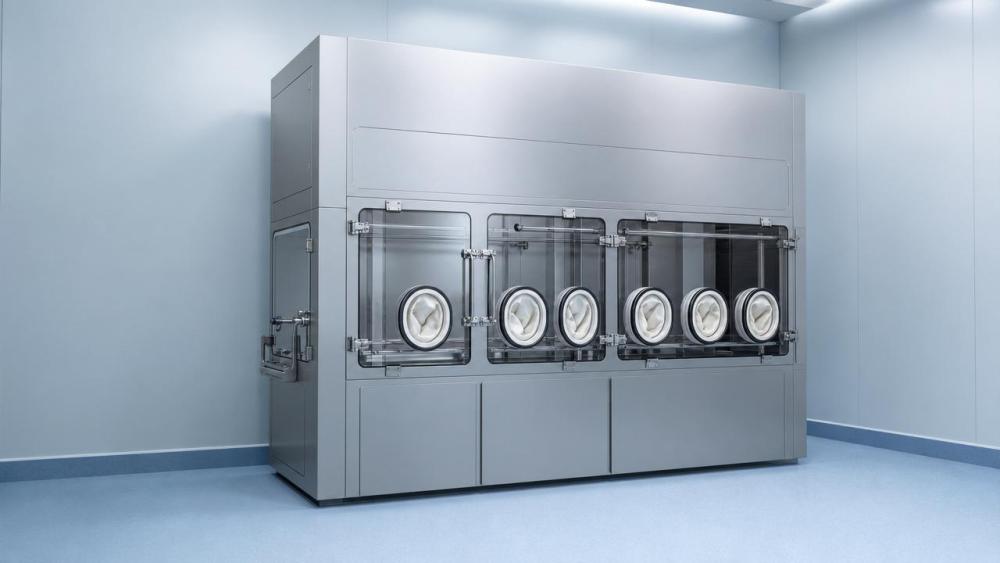
Conclusion: This requirement establishes a clear, time-bound technical threshold for U.S. market access—not a guidance suggestion or phased recommendation. It is operationally binding as of July 1, 2026, and applies uniformly across all import entries. For affected enterprises, the bulletin is best understood not as a future risk, but as an active compliance obligation requiring documented, verifiable action before shipment. Continued adherence depends on precise standard version alignment, accredited lab engagement, and traceable documentation—not general quality system maturity alone.
Source: U.S. Food and Drug Administration (FDA), Cytotoxic Isolator Import Compliance Bulletin No. 2026-05, issued May 30, 2026.
Further updates or clarifications from FDA regarding lab recognition status or transitional provisions remain under observation.
Related News
- What CSV documentation should a laboratory systems supplier provide?Oct 26, 2026Dr. Elara Sterling
- SCIEX Begins Construction of High-End Mass Spectrometer Plant in BeijingOct 26, 2026Analytical Metrology Expert
- Which design features make cleanroom benches easier to clean?Oct 25, 2026Bio-containment Strategist
- IndexBox Forecasts 12% CAGR for Global Microbioreactor Market Through 2035Oct 25, 2026Bioprocess Scientist
Related News
- 00
0000-00
What CSV documentation should a laboratory systems supplier provide? - 00
0000-00
SCIEX Begins Construction of High-End Mass Spectrometer Plant in Beijing - 00
0000-00
Which design features make cleanroom benches easier to clean? - 00
0000-00
IndexBox Forecasts 12% CAGR for Global Microbioreactor Market Through 2035 - 00
0000-00
When do hazardous compound labs need isolators for containment?
Industry Global
Weekly Insights
Stay ahead with our curated technology reports delivered every Monday.