





On May 11, 2026, China’s National Medical Products Administration (NMPA) issued Notice No. 16, rejecting 44 batches of cosmetics — 31 of which failed due to quantitative component deviation exceeding limits. Root-cause analysis traced repeated failures to non-compliance with USP <621> System Suitability Testing (SST) on domestically manufactured gas chromatography (GC) analyzers. This development is particularly relevant for international pharmaceutical, cosmetic, and analytical instrument procurement stakeholders — especially those sourcing GC systems from China for regulated quality control workflows.
Event Overview
On May 11, 2026, the NMPA published its 16th official notice, identifying 44 non-compliant cosmetic products. Of these, 31 batches were rejected specifically for quantitative analytical results falling outside acceptable tolerance thresholds. The NMPA’s public statement confirmed that multiple instances were linked to inadequate chromatographic system validation — namely, failure to perform or document USP <621> System Suitability Testing on GC analyzers used in testing laboratories. No further technical details (e.g., model numbers, manufacturer names, or laboratory affiliations) were disclosed in the notice.
Industries Affected by This Development
Direct Trade Enterprises (Exporters/Importers of Analytical Instruments)
These entities may face increased scrutiny when exporting Chinese-made GC analyzers into regulated markets (e.g., U.S., EU, Japan), as regulatory authorities may reference this notice during pre-market reviews or post-import audits. Impact manifests in heightened documentation requirements — particularly proof of built-in SST automation and 21 CFR Part 11-compliant audit trails.
Raw Material Suppliers & Contract Testing Laboratories
Suppliers relying on third-party labs for compliance testing — especially those serving global cosmetic brands — risk delayed release or rejection of batches if their testing partners use GC systems lacking validated SST execution. The notice signals growing enforcement emphasis on instrument-level data integrity, not just method validation.
Contract Manufacturing Organizations (CMOs) & Cosmetic Brands
Brands outsourcing manufacturing or QC testing must now assess whether their CMOs’ analytical infrastructure meets evolving expectations for automated system suitability assurance. Failure to verify SST capability could lead to unexplained assay variability, batch holds, or regulatory queries during inspections.
What Relevant Enterprises or Practitioners Should Focus On Now
Monitor official follow-up guidance from NMPA and provincial drug administrations
The notice does not specify whether upcoming inspection checklists or GMP annexes will formally require SST automation or electronic audit trails for GC systems. Observably, this notice functions as a de facto signal — not yet codified regulation — but may presage formal updates to China’s Good Laboratory Practice (GLP) or cosmetic GMP guidelines.
Review current GC analyzer specifications in procurement pipelines
For any pending or planned purchases of GC systems from Chinese manufacturers, confirm in writing whether the device includes: (i) programmable, user-configurable SST execution per USP <621>; (ii) immutable, time-stamped audit trails meeting 21 CFR Part 11 criteria; and (iii) documented IQ/OQ/PQ protocols covering SST functionality.
Distinguish between policy signal and operational requirement
Analysis shows this notice reflects an enforcement observation — not a newly enacted standard. It does not retroactively invalidate existing instruments, nor does it mandate immediate hardware upgrades. However, it clearly elevates SST verification from a ‘best practice’ to a documented expectation in regulatory decision-making.
Prepare documentation packages for cross-border instrument validation
Exporters should compile vendor-supplied evidence of SST automation and audit trail compliance — including software version logs, configuration screenshots, and validation summary reports — to proactively address potential questions from overseas regulators or customers.
Editorial Perspective / Industry Observation
This notice is best understood not as a sudden regulatory shift, but as a concrete illustration of how instrument-level data integrity is becoming inseparable from product compliance in highly regulated sectors. Observably, it marks a transition where analytical hardware capabilities — previously treated as background infrastructure — are now being assessed as active contributors to final product quality determinations. Analysis suggests this reflects broader global trends (e.g., FDA’s increasing focus on data reliability in lab systems), rather than an isolated domestic action. It is currently more indicative of an emerging expectation than an enforceable rule — yet one that is already shaping purchasing behavior and validation planning among forward-looking stakeholders.
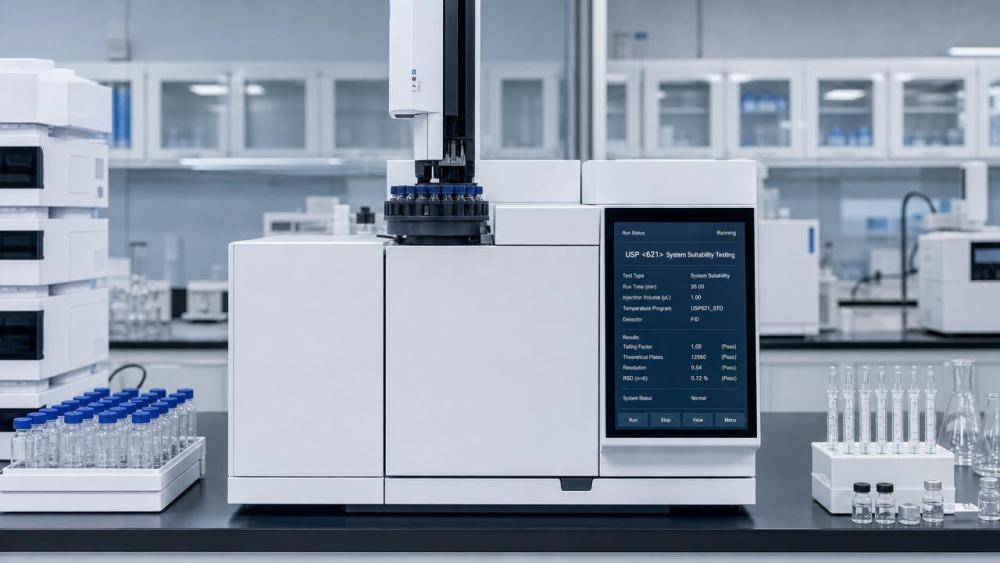
Conclusion: The NMPA’s May 2026 notice underscores that GC analyzer performance — specifically its ability to execute and record system suitability tests — is no longer a technical footnote in cosmetic quality assurance. It signals growing alignment between instrument qualification standards and final product release decisions. Current understanding should emphasize vigilance over urgency: enterprises need not overhaul systems immediately, but should treat SST capability and audit trail completeness as material criteria in procurement, validation, and supplier assessment — especially when operating across international regulatory boundaries.
Source: National Medical Products Administration (NMPA) Notice No. 16, issued May 11, 2026.
Note: Further implementation details, such as updated inspection checklists or technical guidance documents, remain under observation and have not yet been published.
Related News
- What CSV documentation should a laboratory systems supplier provide?Oct 26, 2026Dr. Elara Sterling
- SCIEX Begins Construction of High-End Mass Spectrometer Plant in BeijingOct 26, 2026Analytical Metrology Expert
- Which design features make cleanroom benches easier to clean?Oct 25, 2026Bio-containment Strategist
- IndexBox Forecasts 12% CAGR for Global Microbioreactor Market Through 2035Oct 25, 2026Bioprocess Scientist
Related News
- 00
0000-00
What CSV documentation should a laboratory systems supplier provide? - 00
0000-00
SCIEX Begins Construction of High-End Mass Spectrometer Plant in Beijing - 00
0000-00
Which design features make cleanroom benches easier to clean? - 00
0000-00
IndexBox Forecasts 12% CAGR for Global Microbioreactor Market Through 2035 - 00
0000-00
When do hazardous compound labs need isolators for containment?
Industry Global
Weekly Insights
Stay ahead with our curated technology reports delivered every Monday.