





Innovative drug development is entering a more disciplined growth phase
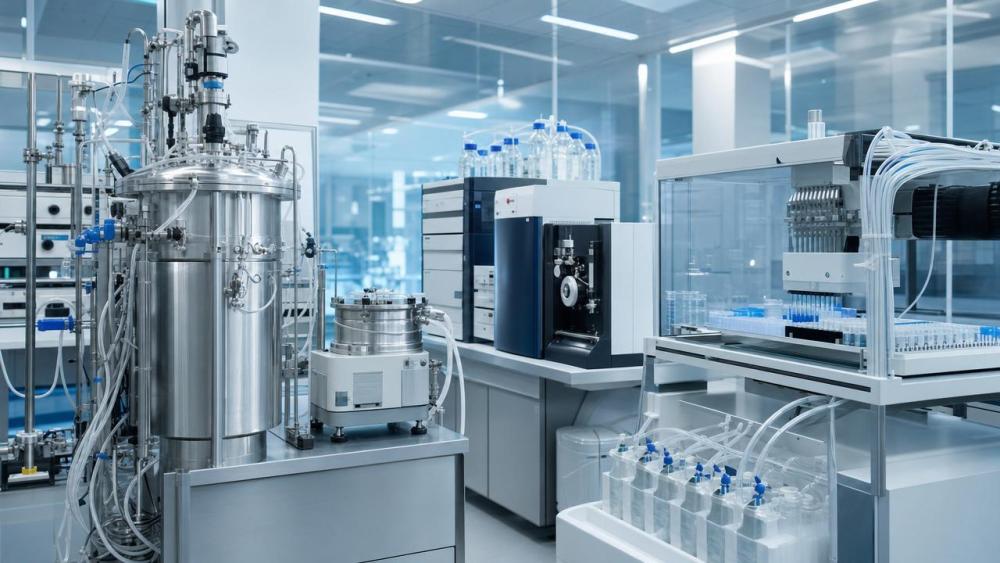
In 2026, innovative drug development looks less like a sprint and more like a systems test.
Speed still matters, but investors and strategy teams now ask a tougher question.
Can a promising molecule survive scale-up, documentation scrutiny, and commercial manufacturing reality?
That shift is reshaping biotech far beyond discovery labs.
Innovative drug development now depends on how well data, process control, purification, analytics, and compliance work together.
This is especially visible in Cell & Gene Therapies, complex biologics, and precision oncology programs.
Here, weak process design can erase scientific value faster than clinical delays.
A useful way to read the market is through operating signals rather than headlines alone.
Those signals include automation intensity, LC-MS dependence, single-use adoption, separation efficiency, and GMP-ready digital traceability.
BLES has been closely tracking this intersection.
Its lens on bioreactors, centrifuges, LC-MS systems, biosafety infrastructure, and liquid handling reveals where innovative drug development is becoming commercially credible.
The strongest signal is that platform quality now shapes pipeline value
A few years ago, market attention centered on target novelty and clinical promise.
Now the conversation has widened to platform reliability.
Innovative drug development is increasingly judged by whether upstream and downstream systems can deliver repeatable outcomes.
For biologics, this starts in bioreactors and fermenters.
Tighter control of DO, pH, shear, and temperature is no longer a technical luxury.
It is directly linked to yield stability, glycosylation consistency, and batch release confidence.
Further downstream, centrifuges and membrane separation systems are gaining strategic importance.
As pipelines become more molecule-diverse, purification bottlenecks can distort cost projections and delay transfer to manufacturing partners.
The same pattern appears in analytical workflows.
LC-MS is moving from a specialist instrument to a decision engine for innovative drug development.
Its role in identity confirmation, impurity mapping, and molecular consistency has become central to both science and valuation.
Why this shift became more visible in 2026
- Funding pressure is forcing programs to prove manufacturability earlier.
- Regulators expect stronger data integrity across computerized systems.
- CGT and advanced biologics carry narrower process tolerances.
- Global outsourcing requires cleaner tech transfer packages.
- Commercial planning now starts closer to preclinical and Phase I stages.
Taken together, these forces reward programs built on robust operating architecture.
Automation is no longer about labor savings alone
Another clear change is the way automation is being evaluated.
In earlier cycles, automated liquid handling was often framed as a productivity upgrade.
In 2026, it sits much closer to risk control.
High-throughput screening, NGS library preparation, and assay reproducibility all benefit from robotic precision.
Yet the bigger value lies in reducing hidden variability before it contaminates development decisions.
This matters because innovative drug development now runs on denser datasets and tighter milestone logic.
A weak assay pipeline can misrank candidates, inflate follow-up costs, and slow portfolio prioritization.
Biosafety cabinets and clean benches are also being reassessed in this context.
They are not passive background equipment.
For viral vectors, cytotoxic compounds, and sensitive cell workflows, containment quality supports both operator protection and sample integrity.
That directly affects whether innovative drug development can scale without introducing operational fragility.
Where automation now creates business relevance
This is why automation spending is being judged less by headcount reduction and more by decision quality.
The real bottleneck has moved from discovery volume to scale-up credibility
One of the most important changes in innovative drug development is where risk accumulates.
Many programs can generate promising early data.
Far fewer can preserve product quality when they move toward pilot or commercial scale.
This is why single-use technology keeps gaining traction.
Flexible systems support faster line changeovers and lower contamination risk.
They also fit the capital discipline now shaping biotech strategy.
But flexible manufacturing is only useful when process understanding is deep enough.
Gas-liquid transfer behavior, mixing dynamics, hold times, and filtration performance still define scale-up success.
This is where the intelligence model used by BLES becomes relevant.
Its focus on fluid mechanics, GMP compliance, and R&D economics reflects how innovative drug development is actually being stress-tested.
The market is rewarding programs that connect cell culture behavior with downstream recovery and digital traceability.
That connection often decides whether a platform can attract partners, licensing interest, or manufacturing confidence.
Data integrity is becoming a commercial filter, not just a regulatory checkbox
More executives now recognize that data architecture influences asset value.
Innovative drug development generates evidence across instruments, assays, batches, and software environments.
If those records are fragmented, trust erodes quickly.
This is especially sensitive when programs rely on exported systems or cross-border manufacturing networks.
FDA and EMA expectations around computerized system validation are pushing companies to think earlier about audit trails, user control, and electronic data consistency.
The practical implication is straightforward.
Innovative drug development cannot be separated from digital governance anymore.
Strong science with weak traceability now carries a discount.
That discount shows up in diligence, tech transfer friction, and delayed readiness for pivotal stages.
What deserves closer attention now
- Whether instrument outputs can be compared across sites without manual rework.
- Whether assay records support full traceability during scale-up and validation.
- Whether purification and analytical data align with release-critical attributes.
- Whether automated workflows reduce variability without creating software blind spots.
These are not narrow technical concerns.
They shape the realism of revenue timing and partnership execution.
The next read on innovative drug development should be more operational
Looking ahead, the most resilient biotech stories will likely combine scientific novelty with process maturity.
That does not mean every company needs massive infrastructure.
It means innovative drug development must be examined through a wider lens.
Watch how organizations manage bioprocessing depth, downstream recovery logic, analytical certainty, laboratory automation, and GMP-aligned traceability.
The strongest opportunities often emerge where these functions reinforce each other.
That is why sector intelligence from platforms such as BLES is becoming more useful.
Not because equipment alone defines success, but because equipment performance reveals operational truth.
In practical terms, the next step is to review programs with a sharper checklist.
- Map where scientific promise depends on unstable process assumptions.
- Compare platform flexibility against expected molecule diversity.
- Track whether LC-MS, separation, and liquid handling are strategic or merely supportive.
- Assess whether compliance readiness is built in or deferred.
- Revisit ROI using scale-up friction, not discovery speed alone.
In 2026, innovative drug development is becoming more selective, more data-conscious, and more operationally transparent.
Those who read that shift early will make better judgments on biotech durability and long-term market fit.
Related News
- Zylidac Bio and Prolific Machines Partner to Scale Optogenetics for GMP ProductionOct 23, 2026Prof. Alistair Thorne
- How to prevent oxygen limitation in process scale-up for biologicsOct 18, 2026Prof. Alistair Thorne
- How to maintain product quality when scaling up a bioprocessOct 09, 2026Prof. Alistair Thorne
- What should you verify before choosing a bioprocessing equipment exporter?Oct 08, 2026Prof. Alistair Thorne
Related News
- 00
0000-00
What CSV documentation should a laboratory systems supplier provide? - 00
0000-00
SCIEX Begins Construction of High-End Mass Spectrometer Plant in Beijing - 00
0000-00
Which design features make cleanroom benches easier to clean? - 00
0000-00
IndexBox Forecasts 12% CAGR for Global Microbioreactor Market Through 2035 - 00
0000-00
When do hazardous compound labs need isolators for containment?
Prof. Alistair Thorne
Weekly Insights
Stay ahead with our curated technology reports delivered every Monday.