





Scale-up control often fails at the point where lab knowledge meets production reality. Bioprocessing intelligence closes that gap by turning scattered process signals, equipment data, and compliance records into a practical control framework.
In biopharma and adjacent life science operations, that shift matters because scale does not simply enlarge volume. It changes oxygen transfer, mixing, shear exposure, sampling speed, deviation risk, and the timing of every decision.
What bioprocessing intelligence improves in scale-up control is not one isolated metric. It improves how teams interpret process behavior, manage uncertainty, and protect product quality while moving toward commercial readiness.
Why scale-up control now depends on better intelligence
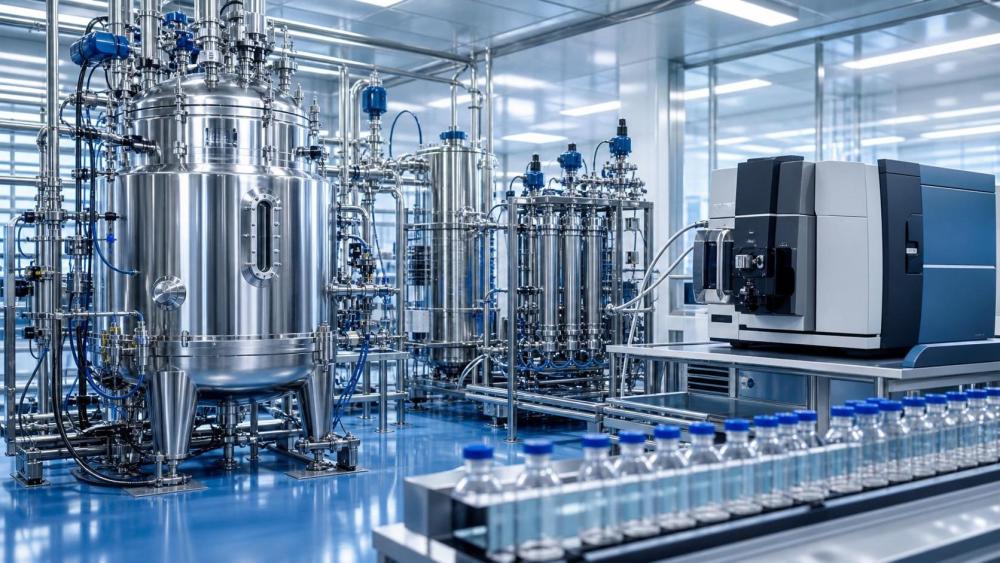
Bioprocess scale-up used to rely heavily on experience, fixed recipes, and post-batch review. That approach still has value, but it struggles when processes become more sensitive, global timelines become tighter, and audit expectations become stricter.
A modern process may involve CHO culture, single-use systems, automated liquid handling, analytical release support, and downstream separation decisions that interact in subtle ways.
Bioprocessing intelligence connects those layers. It brings together historian data, sensor trends, analytical results, equipment context, and GMP-oriented traceability, so control decisions are made on evidence rather than assumption.
For a platform such as BLES, this is the strategic center of value. The point is not only to observe cell culture dynamics or purification performance, but to stitch them into decisions that survive tech transfer and regulatory review.
What bioprocessing intelligence really means in practice
In practical terms, bioprocessing intelligence is the structured use of process data, analytical insight, engineering models, and compliance-ready documentation to guide scale-up control.
It is broader than dashboarding. It also includes context. A dissolved oxygen excursion means little by itself unless it is linked to agitation limits, gas flow strategy, cell density, probe performance, and batch stage.
It is also broader than automation. A liquid handling workstation can remove manual variability, but bioprocessing intelligence explains whether the data it produces is comparable across methods, sites, and process versions.
That is why the concept matters across the five BLES pillars. Bioreactors, centrifuges, LC-MS systems, biosafety environments, and liquid handling platforms all generate signals. Intelligence makes those signals decision-grade.
From raw data to control logic
Useful intelligence usually answers a control question. Which parameter is drifting first. Which deviation is noise. Which scale-up change is acceptable. Which action protects both yield and compliance.
Without that layer, teams collect more data but gain little clarity. With it, scale-up control becomes more predictable and faster to defend internally.
The improvements that matter most during scale-up
The strongest value of bioprocessing intelligence appears when a process moves from promising development results to larger, less forgiving production environments.
These improvements are practical, not abstract. A better oxygen transfer model can prevent wasted runs. Stronger analytical comparability can stop a false alarm. Better traceability can shorten an investigation by days.
Where the impact shows up across equipment and process stages
Bioprocessing intelligence is most useful when viewed across the full process chain rather than inside one unit operation.
Upstream bioreactors and fermenters
In upstream operations, scale-up control often hinges on mixing, mass transfer, pH stability, and cell response to local stress. Intelligence helps compare what the vessel reports against what the cells actually experience.
That matters when moving from bench vessels to 2000L systems, where sparger design, sensor lag, and feed distribution can reshape culture performance.
Downstream separation and purification
Industrial centrifuges and filtration systems introduce another control challenge. Flow, solids loading, and hold-up effects may shift purity or recovery faster than routine trend review can catch.
Bioprocessing intelligence helps teams understand where upstream variability becomes downstream burden, which is critical when antibody recovery margins are narrow.
Analytical metrology and LC-MS
High-molecular analytical metrology turns process events into molecular evidence. LC-MS data can confirm whether a scale-up adjustment changed impurity profiles, product heterogeneity, or comparability risk.
That creates a stronger bridge between process control and product understanding, which is often where late-stage decisions become more defensible.
Controlled environments and liquid handling
Biosafety cabinets, clean benches, and automated liquid handling do not sit outside scale-up strategy. They shape sample integrity, method repeatability, and the reliability of development data feeding commercial decisions.
If sample handling is inconsistent, the intelligence layer becomes weaker no matter how advanced the software appears.
What deserves closer attention during evaluation
Not every intelligence initiative improves scale-up control equally. The useful question is whether it strengthens judgment at the moments where process risk actually concentrates.
- Check whether data from bioreactors, downstream systems, and analytics can be interpreted together rather than reviewed in separate silos.
- Look for contextualized alerts, not only threshold alarms, because scale-up deviations often emerge as patterns rather than single out-of-limit values.
- Assess whether the system supports CSV expectations, audit trails, and decision traceability from development through GMP operations.
- Verify how well it handles single-use technology, site transfers, and process version control.
- Measure whether insights are actionable at batch speed, not only useful in retrospective reports.
This is where BLES-style intelligence is especially relevant. The combination of scale-up science, GMP interpretation, and ROI awareness reflects how real decisions are made in life science operations.
A grounded way to apply bioprocessing intelligence
A practical rollout does not start with a promise of total digital transformation. It starts with a narrow control problem that repeatedly slows transfer, creates deviations, or obscures comparability.
That problem might be unstable DO behavior during scale-up, inconsistent harvest timing, unclear LC-MS interpretation after process changes, or incomplete traceability across automated sample preparation.
Once that use case is clear, bioprocessing intelligence can be applied in stages:
- Map the critical signals linked to the issue.
- Define which decisions those signals should support.
- Align analytical evidence with engineering interpretation.
- Add traceability that can survive audit review.
- Expand only after the first control gain is proven.
Usually, the strongest early wins come from reduced variability, cleaner investigations, and faster agreement on process changes. Those gains create the foundation for broader digital and operational maturity.
The next decision is not whether intelligence matters
The more useful question is where bioprocessing intelligence can remove the most uncertainty from scale-up control today. In many organizations, that answer sits at the junction of upstream behavior, downstream consequences, analytical proof, and GMP accountability.
A focused review of current bottlenecks, data gaps, and handoff risks usually reveals where the first intelligence layer should be built. From there, it becomes easier to compare platforms, define success criteria, and support scale-up with fewer assumptions.
When the goal is seamless process scale-up, better control rarely comes from more data alone. It comes from data that is connected, interpretable, and ready to support the next critical decision.
Related News
- When does a single use manufacturing platform reduce scale-up risk?Sep 20, 2026Prof. Alistair Thorne
- How to evaluate a bioprocessing intelligence platform for scale-upSep 07, 2026Prof. Alistair Thorne
- How can a cell therapy bioprocessing manufacturer support GMP scale-up?Sep 07, 2026Prof. Alistair Thorne
- What drives CGT bioprocessing cost at commercial scale?Aug 31, 2026Prof. Alistair Thorne
Related News
- 00
0000-00
When does a single use manufacturing platform reduce scale-up risk? - 00
0000-00
When digital laboratory workflow solutions reduce GMP data integrity risk - 00
0000-00
How biopharma teams can prepare audit trails for GMP inspections - 00
0000-00
How electronic analytical data integrity supports GMP audit readiness - 00
0000-00
How to build a system lifecycle validation strategy for GMP compliance
Prof. Alistair Thorne
Weekly Insights
Stay ahead with our curated technology reports delivered every Monday.