





On May 27, 2026, the American Society of Clinical Oncology (ASCO) Annual Meeting unveiled multiple companion diagnostic breakthroughs based on liquid biopsy assays (LBA), triggering a notable uptick in global demand for next-generation sequencing (NGS) library preparation workstations. This development is particularly relevant for manufacturers of automated library prep systems, suppliers to contract research organizations (CROs), and distributors serving oncology-focused clinical labs in North America and Europe.
Event Overview
On May 27, 2026, ASCO announced several LBA-based companion diagnostic advances during its annual meeting. According to a recent survey by BioPlan Associates, global orders for NGS library prep stations rose 102% year-on-year in Q2 2026. High-throughput, fully automated systems capable of handling input DNA as low as 5 ng were reported as most sought-after—especially by CROs in North America and Europe.
Industries Affected by This Development
Manufacturers of Automated Library Prep Workstations
These companies face increased order volume and heightened specification expectations. The surge reflects direct demand for platforms meeting stringent performance criteria—including low-input compatibility and full automation—rather than general-purpose instruments.
Suppliers to Contract Research Organizations (CROs)
CROs are scaling LBA assay development and validation workflows, increasing procurement of integrated library prep solutions. As a result, upstream suppliers of consumables (e.g., adapter oligos, enzymatic reagents, quality-controlled beads) and validated kits face tighter delivery timelines and more frequent qualification requests.
Distributors and Channel Partners Serving Oncology Labs
Distributors report rising inquiries for turnkey library prep packages, especially those bundled with LBA-specific QC tools and bioinformatics support. Regional logistics planning and local technical service capacity are now under greater scrutiny due to accelerated deployment timelines.
Supply Chain and Logistics Service Providers
With order volumes doubling year-on-year in Q2 2026, providers managing instrument import/export compliance, calibration scheduling, and field service dispatch must adjust capacity planning—particularly for shipments into regulated markets such as the U.S. (FDA-cleared devices) and EU (IVDR-certified systems).
What Relevant Enterprises or Practitioners Should Monitor and Do Now
Track regulatory and reimbursement signals tied to LBA-based diagnostics
ASCO 2026 highlighted clinical utility data—not just analytical validity. Observably, payers and health technology assessment bodies may soon prioritize reimbursement pathways for assays requiring robust, standardized library prep. Enterprises should monitor FDA draft guidance updates and EMA scientific advice outcomes released post-ASCO.
Assess exposure to high-demand platform specifications
Current procurement momentum centers on systems supporting ≤5 ng input and end-to-end automation. Analysis shows that vendors whose platforms lack either capability—or lack documented validation for low-input LBA applications—are seeing slower adoption in target CRO segments. Inventory and roadmap alignment should reflect this specificity.
Review lead times and component sourcing for critical subsystems
Orders for library prep stations rose 102% YoY—but manufacturing lead times for precision fluidics modules and certified thermal cyclers have lengthened. From industry perspective, firms relying on single-source components should verify alternative supplier readiness ahead of Q3 2026 production planning cycles.
Prepare technical documentation aligned with LBA workflow validation requirements
European CROs increasingly require ISO 13485-aligned installation qualification (IQ) and operational qualification (OQ) packages for library prep systems used in IVD-grade LBA development. Current more appropriate action is to audit existing documentation against IVDR Annex II requirements—not only for instruments but also for associated software and consumables traceability.
Editorial Perspective / Industry Observation
This ASCO-driven demand spike is best understood not as a sustained market expansion signal, but as a near-term inflection point reflecting accelerated adoption of LBA in late-phase clinical trials. Analysis shows the 102% order growth is concentrated among systems deployed in biomarker discovery and trial-enabling labs—not routine diagnostic settings. It signals growing reliance on standardized, auditable library prep as a prerequisite for regulatory-grade LBA data—not yet broad commercialization. Continued observation is warranted for whether Q3–Q4 2026 order trends sustain beyond current trial-cycle peaks.
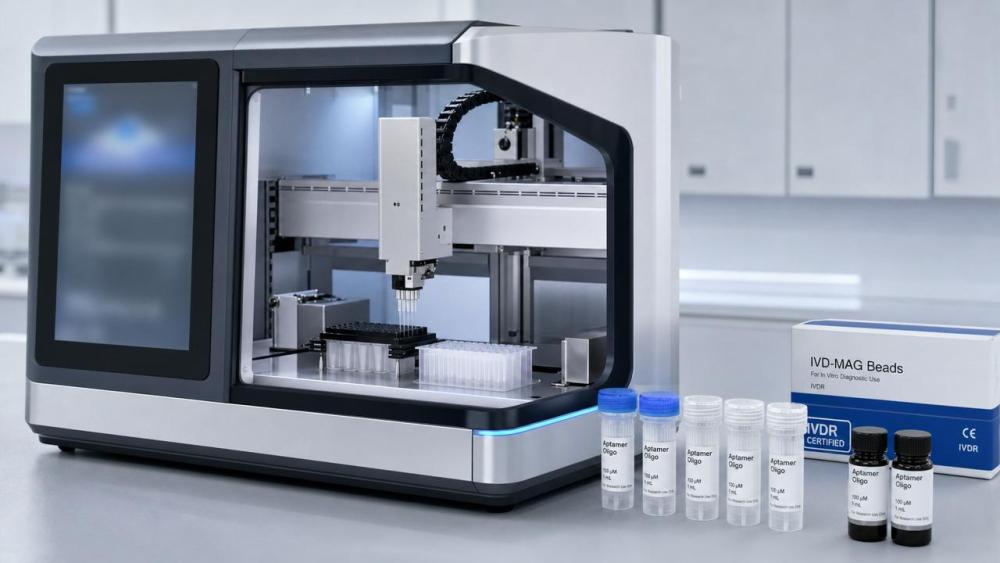
In summary, the ASCO 2026 announcements have intensified short-term demand for high-performance NGS library prep infrastructure—particularly within R&D-facing segments of the oncology diagnostics value chain. However, this remains a workflow-driven procurement wave rather than evidence of structural market shift. A measured, specification-aware response—grounded in current regulatory and trial deployment patterns—is more suitable than broad capacity expansion at this stage.
Source: BioPlan Associates survey data (Q2 2026); ASCO 2026 Annual Meeting official program (released May 27, 2026). Note: Ongoing monitoring is recommended for FDA/EU regulatory updates related to LBA assay validation standards and associated instrumentation requirements.
Related News
- What CSV documentation should a laboratory systems supplier provide?Oct 26, 2026Dr. Elara Sterling
- SCIEX Begins Construction of High-End Mass Spectrometer Plant in BeijingOct 26, 2026Analytical Metrology Expert
- Which design features make cleanroom benches easier to clean?Oct 25, 2026Bio-containment Strategist
- IndexBox Forecasts 12% CAGR for Global Microbioreactor Market Through 2035Oct 25, 2026Bioprocess Scientist
Related News
- 00
0000-00
What CSV documentation should a laboratory systems supplier provide? - 00
0000-00
SCIEX Begins Construction of High-End Mass Spectrometer Plant in Beijing - 00
0000-00
Which design features make cleanroom benches easier to clean? - 00
0000-00
IndexBox Forecasts 12% CAGR for Global Microbioreactor Market Through 2035 - 00
0000-00
When do hazardous compound labs need isolators for containment?
Industry Global
Weekly Insights
Stay ahead with our curated technology reports delivered every Monday.