





Lab Automation Systems: Avoid Costly Fit Gaps Before Deployment
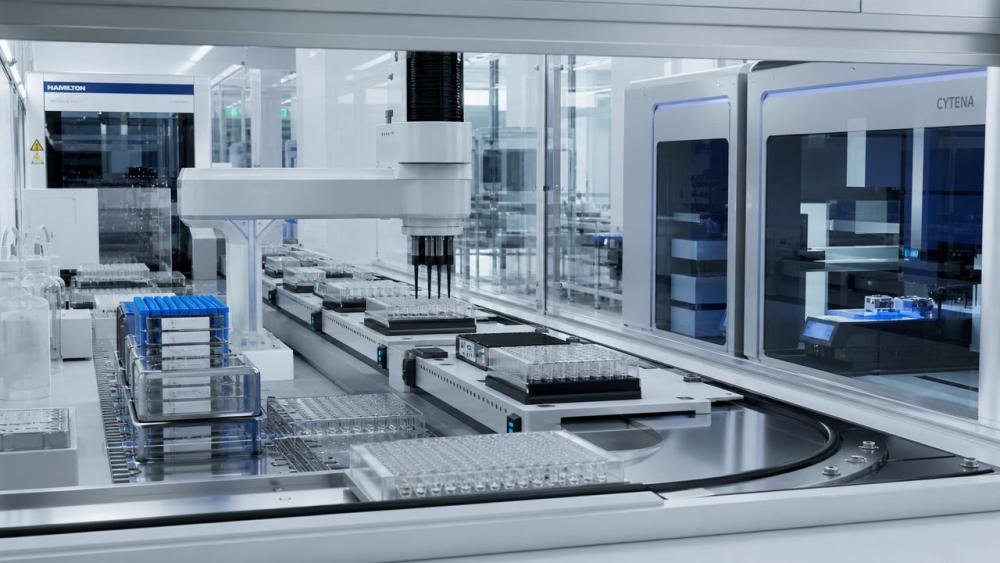
Lab automation systems can accelerate throughput, strengthen data integrity, and reduce manual variability when they match the real operating environment.
A missed interface, unstable sample flow, or vague validation expectation can turn automation into expensive rework.
The practical goal is not maximum robotics. It is a reliable fit between workflow, facility, software, compliance, and future scale.
For BLES, this fit is central to laboratory robotization, GMP traceability, and scalable biopharmaceutical process intelligence.
Scenario Fit Comes Before Automation Scope
Lab automation systems fail most often when selection starts with instrument features instead of operational scenarios.
A discovery laboratory values flexibility, assay changeover, and rapid method iteration. A GMP laboratory values control, auditability, and locked procedures.
A high-throughput screening room may need 384-well plate speed. A CGT workflow may need gentle handling and chain-of-identity security.
Therefore, lab automation systems should be assessed through sample type, batch rhythm, data pathway, contamination risk, and validation burden.
Early scenario mapping prevents overspecified platforms, undersized storage, software dead ends, and facility conflicts.
Scenario One: High-Throughput Screening Needs Flexible Liquid Handling
In compound screening, lab automation systems must support fast plate movement, precise microliter dispensing, and robust scheduling.
The core judgment is whether throughput remains stable when assay formats, incubation times, and reagent viscosities change.
Fit gaps often appear around dead volume, tip compatibility, plate stacking height, and inconsistent barcode reads.
A liquid handling workstation should be tested with actual plates, real reagents, and realistic daily run plans.
Lab automation systems in this scenario need modularity more than rigid end-to-end automation.
Scenario Two: NGS Library Preparation Needs Error-Proof Traceability
NGS workflows depend on precise transfers, contamination control, and reliable identity tracking across many small-volume steps.
Lab automation systems should reduce pipetting variation without creating hidden sample mix-up risks.
The key judgment is whether the system records every transfer, reagent lot, deck position, and operator intervention.
Integration with LIMS, electronic batch records, and sequencing data pipelines becomes critical.
A fit gap here may not appear as downtime. It may appear as uncertain data lineage.
Scenario Three: GMP Quality Control Needs Validated Data Integrity
In GMP quality control, lab automation systems must support inspection readiness from the first design decision.
CSV requirements should define user roles, audit trails, electronic signatures, backup rules, and change control.
The core judgment is whether automation can be validated without excessive customization.
Custom scripts may solve local workflow problems but increase validation workload and lifecycle risk.
Lab automation systems used in regulated environments need stable software versions, documented interfaces, and supplier validation support.
Scenario Four: Bioprocess Analytics Needs Timely Process Feedback
Bioreactor development depends on fast, reliable feedback from cell culture and downstream purification analytics.
Lab automation systems can connect sampling, centrifugation, LC-MS analysis, and reporting into a controlled process loop.
The key judgment is whether automation shortens decision time without compromising sample stability.
Temperature exposure, hold time, carryover, and dilution accuracy must be evaluated together.
A system that runs quickly but changes critical quality attributes is not a true process improvement.
Scenario Five: Biosafety Workflows Need Containment-Aware Design
Automation inside biosafety cabinets or clean benches requires different thinking from open-bench laboratory automation.
Lab automation systems must fit airflow, cleaning access, waste handling, and operator protection requirements.
The core judgment is whether robotic movement disrupts containment performance or aseptic technique.
Cable routing, heat output, vibration, and decontamination compatibility should be checked before purchase.
Containment fit gaps are expensive because they may require facility redesign, not only instrument adjustment.
How Scenario Requirements Differ Across Lab Automation Systems
This comparison shows why lab automation systems cannot be selected by brochure specifications alone.
The same robot may be excellent in screening but difficult to validate in GMP release testing.
Practical Adaptation Steps Before Final Selection
A reliable adaptation plan converts user expectations into measurable acceptance criteria.
- Map the current workflow, including exceptions, pauses, repeats, and manual decisions.
- Define sample volumes, containers, labels, reagents, and daily peak workload.
- Confirm facility limits for footprint, utilities, airflow, noise, and maintenance access.
- Document software interfaces with LIMS, ELN, CDS, MES, and data lakes.
- Separate standard configuration from customization before CSV planning begins.
- Run a proof-of-concept using real samples and expected failure conditions.
These steps make lab automation systems easier to compare and easier to defend during budget review.
Common Misjudgments That Create Expensive Rework
The first misjudgment is assuming nominal throughput equals usable throughput.
Real throughput includes loading, unloading, calibration, error recovery, cleaning, and data review.
The second misjudgment is ignoring sample diversity.
Viscous media, fragile cells, volatile solvents, and magnetic beads may require different automation behavior.
The third misjudgment is underestimating software governance.
Lab automation systems depend on permissions, version control, audit trails, and recoverable data flows.
The fourth misjudgment is treating validation as a final documentation task.
Validation strategy should shape user requirements, supplier evaluation, testing scripts, and change control from the start.
Decision Criteria for Future-Ready Lab Automation Systems
Future-ready lab automation systems support expansion without forcing a full redesign.
They should allow additional modules, new assays, updated data standards, and stronger compliance controls.
Supplier maturity also matters.
Look for documented service response, spare part strategy, software lifecycle policy, and validation templates.
For global biopharma operations, the best lab automation systems combine precision mechanics with process intelligence.
They should help every microliter, chromatogram peak, and sample record remain traceable within controlled operations.
Action Path: Build the Fit Gap Review Before Procurement
Before committing capital, create a fit gap review that links scenarios, requirements, risks, and acceptance tests.
Start with workflow evidence, not assumptions. Then translate every critical step into measurable automation criteria.
Use the review to compare lab automation systems across performance, compliance, integration, serviceability, and scalability.
BLES supports this decision logic through intelligence on bioprocessing, analytical metrology, liquid handling, and GMP validation.
The next practical step is a scenario-based requirement workshop, followed by vendor demonstrations using real workflow conditions.
When fit gaps are exposed early, lab automation systems become a platform for precision, compliance, and scalable laboratory growth.
Related News
- How to calculate payback for automated process equipment in labsOct 21, 2026Mr. Julian Vane
- When do high-throughput screening platforms pay for themselves?Oct 20, 2026Mr. Julian Vane
- When does high throughput drug development equipment pay off for a lab?Oct 02, 2026Mr. Julian Vane
- When sample prep automation improves throughput without adding bottlenecksOct 08, 2026Mr. Julian Vane
Related News
- 00
0000-00
What CSV documentation should a laboratory systems supplier provide? - 00
0000-00
SCIEX Begins Construction of High-End Mass Spectrometer Plant in Beijing - 00
0000-00
Which design features make cleanroom benches easier to clean? - 00
0000-00
IndexBox Forecasts 12% CAGR for Global Microbioreactor Market Through 2035 - 00
0000-00
When do hazardous compound labs need isolators for containment?
Mr. Julian Vane
Weekly Insights
Stay ahead with our curated technology reports delivered every Monday.