





Life Science Automation ROI: What to Measure
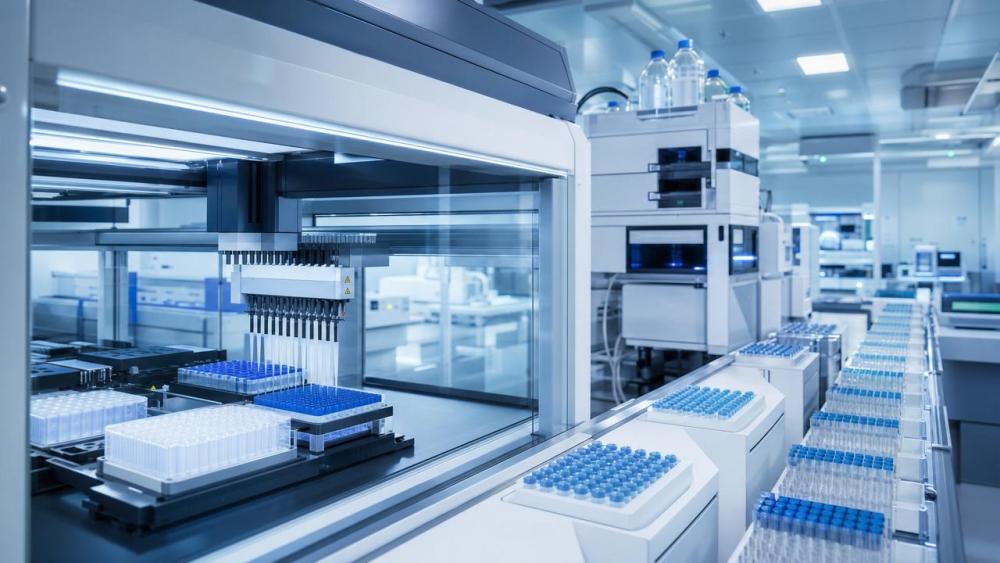
Investment in life science automation is not justified by faster pipetting alone.
It must prove measurable impact on throughput, compliance risk, labor utilization, assay reproducibility, and time-to-decision.
As laboratories and biopharma teams adopt liquid handling workstations, analytical platforms, and GMP-ready workflows, ROI signals need sharper definition.
The real question is not whether life science automation works.
The question is which metrics deserve budget approval and long-term executive attention.
This guide explains the measurements that separate attractive technology claims from scalable, compliant, and financially sound automation programs.
What does ROI mean in life science automation?
ROI is not a single payback number.
In life science automation, ROI is a portfolio of operational, scientific, compliance, and strategic returns.
A liquid handler may reduce hands-on time, but its greater value may be fewer failed assay plates.
An LC-MS workflow may cost more upfront, yet shorten method confirmation cycles and prevent costly decision delays.
A GMP-ready data system may not increase sample volume directly, but it can reduce audit exposure.
Strong ROI models treat life science automation as a process investment, not merely an equipment purchase.
Which ROI layers should be separated?
- Direct savings from labor, reagent use, repeat testing, and downtime reduction.
- Productivity gains from higher throughput, longer walkaway time, and parallelized workflows.
- Quality gains from reproducibility, traceability, and lower deviation rates.
- Strategic gains from faster development cycles and scalable technology transfer.
This layered view prevents one-dimensional evaluations.
It also makes life science automation easier to defend when capital budgets tighten.
Which throughput metrics matter most?
Throughput is often the first promised benefit.
However, counting samples per day is not enough for life science automation ROI.
The better question is how much validated output the process produces per controlled hour.
That distinction matters in drug discovery, QC release, NGS preparation, and downstream process analytics.
How should throughput be measured?
- Samples completed per shift, excluding reruns and invalid results.
- Plates, batches, or chromatographic sequences released per validated method.
- Instrument utilization rate across planned operating windows.
- Queue time before sample preparation, incubation, measurement, or review.
- Walkaway time gained without increasing deviation risk.
Life science automation should remove bottlenecks, not simply move them downstream.
For example, automated pipetting may flood an LC-MS queue if analytical capacity remains unchanged.
A mature ROI assessment maps the whole workflow before approving automation.
How can compliance risk be converted into ROI?
Compliance value is often underestimated because it is not always visible in daily output.
Yet in regulated laboratories, avoided risk can be one of the largest returns.
Life science automation improves ROI when it strengthens data integrity, method control, and audit readiness.
Relevant frameworks include GMP, GLP, 21 CFR Part 11, EU Annex 11, and computerized system validation.
Which compliance indicators deserve tracking?
- Manual transcription events removed from the workflow.
- Audit trail completeness across sample, method, operator, and result records.
- Deviation frequency linked to handling errors or undocumented interventions.
- Review-by-exception adoption for compliant data review.
- Validation effort required for installation, operation, and performance qualification.
A system that reduces deviations can protect batch timelines and inspection confidence.
That benefit should be monetized using historical deviation costs, investigation hours, and delayed release impact.
For BLES, this is where life science automation connects instrument intelligence with absolute data integrity.
Does labor savings alone justify automation?
Labor savings matter, but they rarely tell the complete story.
Life science automation often reallocates skilled staff from repetitive handling to scientific interpretation.
That shift is especially important in high-throughput screening, cell culture monitoring, and analytical method development.
What labor metrics are more useful?
- Hands-on minutes per sample, plate, batch, or chromatographic run.
- Staff hours spent on repetitive pipetting, labeling, transfer, and documentation.
- Scientist time redirected to design, troubleshooting, review, and decision-making.
- Training time required for consistent execution across shifts.
- Error rates associated with fatigue, complexity, and high sample volume.
The strongest case appears when labor savings combine with higher scientific capacity.
If automation only replaces manual motion, the ROI may be fragile.
If it enables better experimental design and faster decisions, ROI becomes more durable.
How should reproducibility and assay quality be measured?
Reproducibility is a central ROI signal for life science automation.
Manual variation can distort screening results, cell-based assays, library preparation, and impurity profiling.
Automated systems can reduce that variation when methods are well-designed and properly validated.
Which quality metrics are actionable?
- Coefficient of variation across replicates, operators, plates, and days.
- Assay Z-prime performance before and after automation.
- Sample carryover, contamination events, and failed negative controls.
- Rerun rates caused by preparation error, mixing inconsistency, or timing drift.
- Lot-to-lot comparability during process scale-up or method transfer.
This is where automated liquid handling becomes more than a speed tool.
It becomes a reproducibility platform for better scientific confidence.
In downstream purification and analytical metrology, stable results can prevent expensive false conclusions.
What hidden costs can weaken life science automation ROI?
The purchase price is only the visible portion of automation cost.
A realistic life science automation ROI model includes implementation, validation, maintenance, consumables, software, and change management.
Ignoring these elements can turn a promising business case into an operational burden.
Which costs should be included?
- Instrument qualification, CSV documentation, and method validation work.
- Consumables such as tips, plates, tubing, cartridges, and single-use assemblies.
- Service contracts, calibration, spare parts, and emergency support.
- Software licenses, data storage, cybersecurity controls, and integration effort.
- Training, SOP updates, workflow redesign, and temporary productivity dips.
These costs are not reasons to avoid automation.
They are reasons to build a complete cost model before implementation.
Well-planned life science automation protects ROI by reducing surprises during scale-up.
FAQ table: which ROI metrics should be reviewed first?
This table should be adapted to each workflow.
Discovery laboratories, GMP QC teams, and bioprocess scale-up groups will weigh metrics differently.
The common requirement is disciplined measurement before and after life science automation deployment.
How can ROI be proven after implementation?
ROI should be tracked through a baseline, pilot, validation, and steady-state measurement sequence.
Without a baseline, automation teams can only claim improvement, not prove it.
A practical approach begins with selecting one workflow and documenting current performance.
- Define the current process, sample volume, error profile, and decision timeline.
- Identify the bottleneck that life science automation is expected to remove.
- Set target metrics for throughput, quality, compliance, and labor utilization.
- Run a controlled pilot using representative samples and realistic scheduling.
- Compare post-deployment performance against the baseline and planned assumptions.
- Review hidden costs, maintenance burden, and integration gaps after stabilization.
The strongest ROI evidence combines financial calculations with operational proof.
That includes reduced reruns, fewer deviations, shorter review cycles, and better equipment utilization.
It also includes qualitative evidence from smoother method transfer and easier audit preparation.
What mistakes should be avoided when building the business case?
The first mistake is treating life science automation as a standalone machine decision.
Automation changes sample flow, documentation behavior, data review, staffing patterns, and maintenance expectations.
The second mistake is overvaluing theoretical throughput.
Manufacturer specifications rarely reflect full workflow realities, including setup, cleaning, review, and exceptions.
The third mistake is underestimating validation and integration effort.
In regulated environments, a poorly documented system can create more risk than it removes.
The fourth mistake is ignoring scalability.
A system suitable for one assay may fail when sample diversity, batch complexity, or multi-site transfer increases.
Conclusion: measure automation like a growth system
Life science automation creates value when it improves more than speed.
The most useful ROI signals include validated throughput, compliance resilience, labor redeployment, reproducibility, and time-to-decision.
A credible business case should connect equipment performance with data integrity and scalable scientific output.
BLES views this measurement discipline as essential to modern bioprocessing, pharmaceutical purification, analytical metrology, and automated liquid handling.
Before approving the next automation project, build a baseline and select measurable targets.
Then compare claims against evidence from the workflow, not the brochure.
That is how life science automation becomes a defensible engine for productivity, compliance, and sustainable growth.
Related News
- How to calculate payback for automated process equipment in labsOct 21, 2026Mr. Julian Vane
- When do high-throughput screening platforms pay for themselves?Oct 20, 2026Mr. Julian Vane
- When does high throughput drug development equipment pay off for a lab?Oct 02, 2026Mr. Julian Vane
- When sample prep automation improves throughput without adding bottlenecksOct 08, 2026Mr. Julian Vane
Related News
- 00
0000-00
What CSV documentation should a laboratory systems supplier provide? - 00
0000-00
SCIEX Begins Construction of High-End Mass Spectrometer Plant in Beijing - 00
0000-00
Which design features make cleanroom benches easier to clean? - 00
0000-00
IndexBox Forecasts 12% CAGR for Global Microbioreactor Market Through 2035 - 00
0000-00
When do hazardous compound labs need isolators for containment?
Mr. Julian Vane
Weekly Insights
Stay ahead with our curated technology reports delivered every Monday.