





For finance leaders, pharmaceutical R&D equipment is not just a capital expense—it is a productivity lever that shapes throughput, compliance risk, data integrity, and time-to-decision. From bioreactors and LC-MS platforms to automated liquid handling and biosafety systems, each investment carries hidden cost drivers: validation burden, maintenance intensity, consumables, downtime, operator training, and scalability. Understanding these factors helps approval teams move beyond purchase price and evaluate total value, ensuring every budget decision supports faster development, stronger GMP readiness, and more resilient laboratory performance.
In biopharmaceutical environments, the lowest quotation is rarely the lowest cost. A discounted instrument may require 6–12 weeks of validation, specialized consumables, or frequent service interventions that dilute laboratory capacity. For budget owners, the central question is not “What does it cost to buy?” but “What does it cost to operate, defend, and scale?”
BLES evaluates pharmaceutical R&D equipment through the lens of process productivity, GMP traceability, and lifecycle economics. This approach helps finance teams compare platforms such as bioreactors, centrifuges, LC-MS systems, biosafety cabinets, and liquid handling workstations with the same commercial discipline used for strategic manufacturing assets.
Capital Price Is Only the First Cost Driver
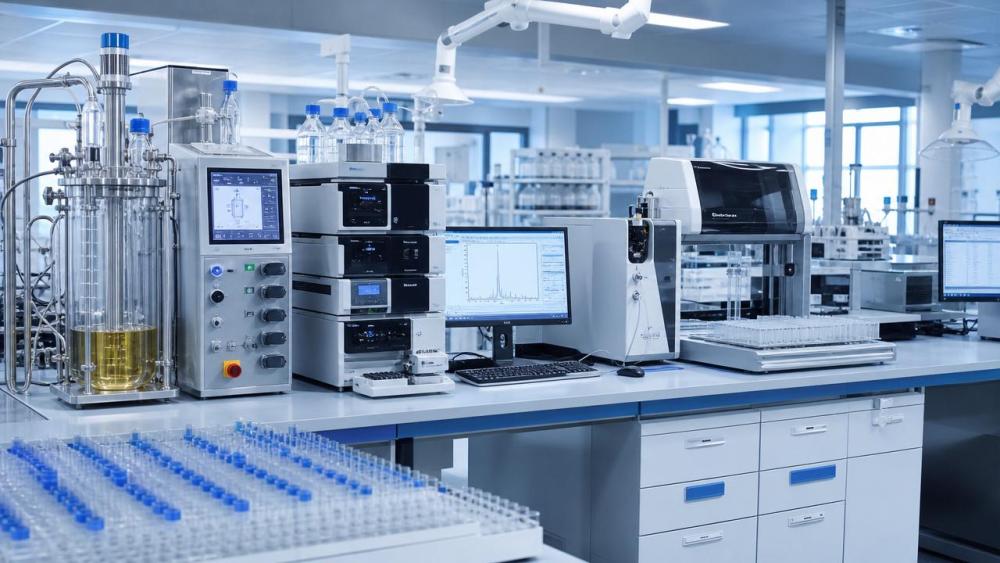
The purchase price of pharmaceutical R&D equipment typically represents only one layer of the investment. Installation, commissioning, software configuration, validation documentation, utilities, accessories, and user training can materially affect the first-year budget.
For finance approvers, a practical model should separate visible capital expenditure from recurring operational expense. This distinction is especially important when instruments support regulated workflows, high-throughput screening, or preclinical decision-making under time pressure.
The 6 Cost Buckets Behind a Laboratory Asset
A useful budget review should cover at least 6 cost buckets before approval. These include acquisition, qualification, consumables, labor, service, and downtime exposure across the expected 5–10 year asset lifecycle.
- Acquisition cost: instrument base price, modules, probes, rotors, pumps, detectors, or robotic decks.
- Qualification cost: IQ, OQ, PQ, software validation, audit trail review, and controlled documentation.
- Consumables cost: single-use bags, columns, pipette tips, solvents, filters, vials, plates, and HEPA filters.
- Labor cost: operator training, method transfer, data review, cleaning, calibration, and troubleshooting.
- Service cost: preventive maintenance, spare parts, emergency repairs, and application support.
- Downtime cost: delayed runs, batch repetition, missed milestones, and extended project cycle time.
When these buckets are evaluated together, pharmaceutical R&D equipment becomes easier to compare across vendors and technologies. The most productive choice may have a higher purchase price but a shorter qualification path or lower error rate.
The table below shows how common equipment categories create different financial pressures. It is designed for budget committees that need to translate technical specifications into approval risks and productivity outcomes.
The key conclusion is simple: each equipment class has its own economic profile. A universal discount target can distort decisions unless it is linked to throughput, compliance burden, and the cost of scientific delay.
Why Approval Teams Should Model First-Year Cost Separately
First-year cost often peaks because validation, training, method migration, and facility readiness occur together. A platform delivered in 8 weeks may still require another 2–6 weeks before routine operation.
For pharmaceutical R&D equipment used in GMP-adjacent workflows, approval teams should request a year-one readiness plan. This plan should include installation prerequisites, acceptance criteria, data backup rules, and responsibility for unresolved deviations.
Budget Questions That Reveal Hidden Costs
- How many days are expected between delivery, IQ/OQ completion, and first qualified run?
- Which consumables are proprietary, and what is the expected monthly burn rate?
- What service response time is contractually available: 24 hours, 48 hours, or 5 business days?
- Can the platform export audit-ready data without manual transcription?
- Will the system support future scale-up or require replacement within 3 years?
These questions help finance leaders avoid fragmented approvals. Instead of approving the instrument, then later approving missing accessories or validation services, the team can evaluate a complete operational package.
Productivity Loss: The Cost Most Budgets Underestimate
Laboratory productivity is shaped by small operational frictions that accumulate over hundreds of runs. A 30-minute manual setup delay repeated twice daily can consume more than 20 working days per year.
This is why pharmaceutical R&D equipment should be evaluated against workflow capacity, not only technical specification. Throughput, uptime, method reproducibility, and data review time directly influence R&D velocity.
Throughput, Downtime, and Decision Speed
In discovery and process development, time-to-decision can be financially decisive. Delayed LC-MS confirmation, failed centrifuge separation, or manual liquid handling bottlenecks may push project milestones by 1–3 weeks.
For finance teams, downtime should be treated as a measurable risk. Even a 95% uptime target still allows roughly 18 downtime days per year if calculated against continuous calendar availability.
- Bioreactor downtime can interrupt cell growth curves and force repeated seed train preparation.
- LC-MS downtime can delay impurity profiling, metabolite identification, and analytical release decisions.
- Liquid handler errors can compromise 96-well or 384-well plate layouts and invalidate screening data.
- Biosafety cabinet failures can suspend work with viral vectors, cytotoxic materials, or sensitive cultures.
The financial value of pharmaceutical R&D equipment is therefore connected to resilience. Redundant modules, preventive maintenance, and remote diagnostics may look optional but often protect expensive scientific campaigns.
Automation Changes the Labor Equation
Automated liquid handling workstations are a clear example. Their ROI is not limited to headcount reduction. They also reduce pipetting variability, improve plate consistency, and create traceable electronic records.
A workstation configured for 384-well plates can replace thousands of manual pipetting actions in a single day. If error-driven repeats fall by even a modest level, consumable and labor savings become visible quickly.
When Automation Is Financially Justified
Automation usually deserves serious review when a workflow runs more than 3 times per week, involves more than 4 manual transfer steps, or requires consistent microliter-level dispensing.
Finance leaders should ask whether the automation platform can handle both current assays and future applications such as NGS library preparation, high-throughput screening, or sample normalization.
Compliance and Data Integrity as Financial Controls
Compliance costs are often treated as quality department concerns, but they have direct budget implications. Rework, audit remediation, documentation gaps, and delayed qualification can all consume approved capital.
For regulated or GMP-adjacent laboratories, pharmaceutical R&D equipment must support traceable workflows. Electronic records, access control, audit trails, and validated software behavior reduce financial exposure during inspections.
CSV Burden and Software Ownership
Computerized System Validation can require a structured package of user requirements, risk assessments, test scripts, deviation handling, and release approval. Depending on complexity, this may take 2–8 weeks.
The hidden cost appears when vendor documentation is incomplete. Finance teams should verify whether the supplier provides validation templates, software lifecycle records, change control notices, and cybersecurity guidance.
The following checklist converts compliance requirements into budget review items. It helps approval teams compare pharmaceutical R&D equipment beyond headline specifications and align technical selection with audit readiness.
The strongest financial signal is not the thickest compliance binder. It is the ability to reduce uncertainty: fewer undefined responsibilities, fewer manual controls, and fewer future remediation costs.
GMP Readiness Without Overbuying
Not every R&D laboratory needs full production-grade infrastructure. However, teams developing CGT, monoclonal antibodies, recombinant proteins, or high-risk analytical methods should avoid equipment that blocks future GMP transfer.
A balanced procurement policy can classify assets into 3 levels: exploratory use, regulated development use, and GMP-transfer critical use. Each level should have different documentation and service requirements.
Practical Classification for Budget Committees
- Level 1: exploratory systems, where flexibility and low setup burden matter most.
- Level 2: development systems, where audit trail, method repeatability, and service stability become necessary.
- Level 3: GMP-transfer critical systems, where validation depth, change control, and data integrity are non-negotiable.
This 3-level framework prevents overengineering while protecting critical programs. It also helps finance teams challenge vague requests and approve higher-cost assets when the compliance rationale is clear.
A Finance-Led Framework for Better Equipment Decisions
A strong approval process brings scientists, quality teams, procurement, IT, and finance into the same evaluation. Pharmaceutical R&D equipment should be justified by a shared operating model, not isolated preference.
The most useful business case combines technical need, capacity demand, compliance exposure, and lifecycle cost. It should also define what happens if the equipment is not purchased within the required timeline.
The 5-Step Approval Model
- Define the workflow: sample volume, run frequency, assay type, operator count, and current bottleneck.
- Map lifecycle costs: acquisition, validation, consumables, service, training, software, and decommissioning.
- Quantify productivity value: saved labor hours, reduced repeats, shorter turnaround, and higher throughput.
- Test compliance fit: data integrity, CSV scope, documentation quality, and audit readiness.
- Confirm scalability: future assays, larger volumes, integration options, and 3–5 year relevance.
This process does not slow procurement; it prevents avoidable re-approval cycles. A disciplined review can reduce late-stage surprises such as missing software licenses, incompatible utilities, or underestimated training time.
How BLES Supports Approval-Ready Intelligence
BLES focuses on the equipment pillars that determine development success and commercial scale-up efficiency. These include bioreactors, downstream separation, LC-MS platforms, biosafety systems, and automated liquid handling.
For finance stakeholders, BLES translates technical complexity into decision intelligence. The objective is to connect microscopic process control with macro-level budget logic, compliance planning, and global R&D competitiveness.
What Finance Teams Should Request Before Final Approval
- A total cost estimate covering at least 36 months of operation.
- A validation and implementation schedule with owner responsibilities.
- A consumables forecast based on expected weekly run volume.
- A downtime response plan with service level expectations.
- A scalability statement linking the system to future R&D or GMP-transfer needs.
These documents give approval teams a defensible basis for investment. They also encourage vendors to present pharmaceutical R&D equipment as an operating solution rather than a standalone machine.
Common Procurement Mistakes and Better Alternatives
Many costly equipment decisions begin with reasonable intentions: reduce capital spending, standardize vendors, or accelerate ordering. The problem arises when these goals are not balanced against laboratory operating reality.
For pharmaceutical R&D equipment, a small mismatch can create a large drag. An undersized centrifuge, a poorly supported LC-MS platform, or an inflexible automation deck may constrain multiple programs.
Mistake 1: Comparing Quotes Without Comparing Scope
Two quotes may differ by 15%, but one may include installation, training, validation templates, and a 12-month service plan. The other may shift those costs into later purchase orders.
Finance teams should normalize all proposals into the same scope. This includes accessories, software seats, consumables starter kits, utility modifications, and service response commitments.
Mistake 2: Ignoring Facility and Utility Constraints
Some instruments require specific power, ventilation, gas supply, exhaust, floor loading, or environmental control. A biosafety cabinet or LC-MS installation may fail schedule targets if facilities are assessed too late.
A pre-installation checklist should be completed before purchase order release. Even a 7-day facility review can prevent weeks of commissioning delay and unplanned contractor spending.
Mistake 3: Treating Service as Optional Insurance
Service is not merely a protection plan. For high-utilization pharmaceutical R&D equipment, service determines uptime, calibration confidence, spare part access, and method continuity.
A sensible contract should define preventive maintenance frequency, response time, remote diagnostics, escalation rules, and excluded parts. For critical systems, annual review is usually insufficient.
A Better Procurement Rule
Approve the equipment only when the operating model is visible. If the team cannot explain who runs it, who validates it, who maintains it, and how it scales, the budget case is incomplete.
Turning Equipment Budgets Into R&D Productivity
The best pharmaceutical R&D equipment decisions connect financial discipline with scientific urgency. Capital approval should support faster experiments, cleaner data, lower compliance risk, and stronger scale-up readiness.
For finance leaders, the winning approach is to evaluate total value over 3–5 years. This includes lifecycle cost, utilization, validation effort, consumables exposure, service coverage, and strategic relevance.
BLES helps equipment suppliers, laboratories, and approval stakeholders interpret complex bioprocessing and analytical decisions with commercial clarity. From cell culture control to chromatographic evidence, every investment should strengthen traceability and resilience.
If your team is reviewing pharmaceutical R&D equipment for a new laboratory, CGT workflow, downstream purification upgrade, or automated screening platform, engage BLES for structured intelligence and decision support. Contact us to explore tailored evaluation frameworks, compare equipment strategies, and learn more solutions for productivity-focused R&D investment.
Related News
- Automated Liquid Handling ROI: When Automation Pays OffJun 04, 2026Mr. Julian Vane
- High-Throughput Screening: Speed vs Data QualityJun 04, 2026Mr. Julian Vane
- Life Science Instruments Cost Control in Growing LabsJun 03, 2026Mr. Julian Vane
- Life Science Automation ROI: What to Measure FirstJun 02, 2026Mr. Julian Vane
Related News
- 00
0000-00
US-China Smart Clearance Opens for Bioprocess Equipment - 00
0000-00
EU EN 12469:2026+A1 Tightens Entry Rules for Class II/III Biosafety Cabinets - 00
0000-00
FDA Rule Raises Import Requirements for Q-TOF MS - 00
0000-00
Life Science Instruments and Data Integrity: What to Check First - 00
0000-00
Innovative Drug Development Trends Shaping Biotech in 2026
Mr. Julian Vane
Weekly Insights
Stay ahead with our curated technology reports delivered every Monday.