





For quality and safety leaders, cleanroom technology is more than infrastructure—it is a frontline control for GMP readiness. Yet small design, airflow, monitoring, or contamination-control mistakes can trigger costly delays, failed audits, and operational risk. This article explores the most common cleanroom technology pitfalls that slow compliance progress and shows how to align facility performance with stricter biopharma quality expectations.
Why does cleanroom technology often become a hidden GMP delay point?
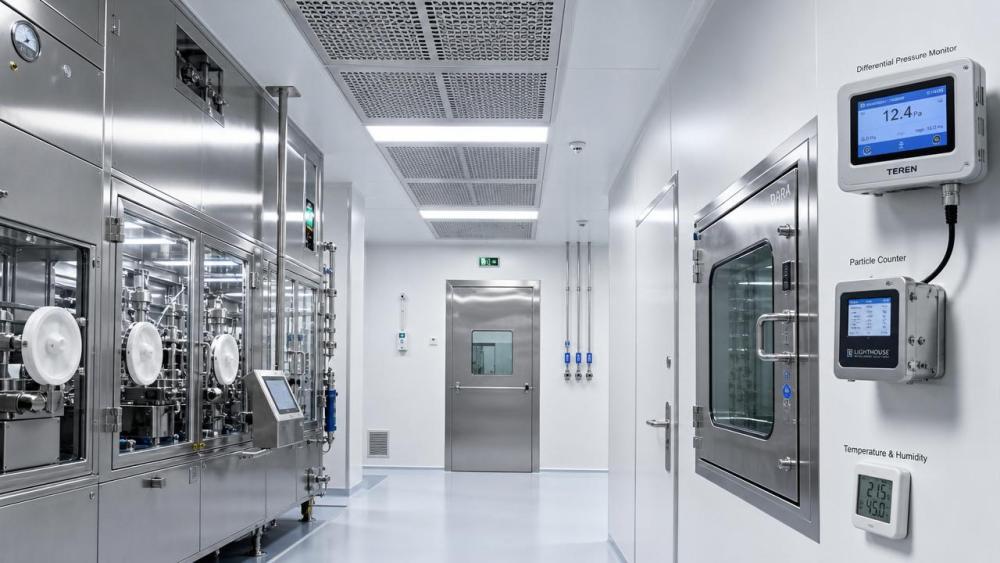
In biopharma and laboratory operations, cleanroom technology sits at the intersection of contamination control, personnel safety, process repeatability, and documentation discipline. A room may look clean, yet still fail to support GMP readiness if airflow patterns, zoning logic, recovery performance, or environmental monitoring are poorly matched to the actual process.
This risk is especially visible in facilities supporting cell culture, downstream purification, LC-MS sample preparation, biosafety workflows, and automated liquid handling. These environments demand far more than basic HVAC installation. They require a system that can protect samples, operators, and data integrity at the same time.
For quality control teams and safety managers, delays usually begin when cleanroom technology is treated as a construction package instead of a validated process-control asset. The audit question is not whether the room was built to a drawing. The question is whether it consistently supports the intended GMP state.
- Design teams may optimize capital cost, while QC teams need contamination trend visibility and deviation traceability.
- Operations may focus on throughput, while safety leaders need pressure cascade reliability and personnel flow discipline.
- Engineering may deliver equipment installation, while GMP readiness requires qualification, SOP alignment, and ongoing performance review.
Typical signals that readiness is slipping
Most delays appear before the formal audit. Environmental monitoring excursions increase. Room recovery after interventions becomes inconsistent. Cleaning records do not align with contamination maps. Differential pressure alarms occur without root-cause closure. These are not isolated issues. They usually point to cleanroom technology decisions made too early, with too little process input.
Which cleanroom technology mistakes create the biggest compliance risk?
The most expensive mistakes are rarely dramatic. They are usually small mismatches between facility performance and process reality. For GMP readiness, the following issues repeatedly delay approval, startup, or scale-up.
1. Designing by room classification only
A common error is selecting cleanroom technology based only on ISO class or EU GMP grade targets, without mapping interventions, material exposure, open handling duration, and operator density. A nominally compliant room can still perform poorly if the process introduces localized contamination stress.
2. Ignoring airflow behavior around real equipment
Bioreactors, centrifuge feed stations, biosafety cabinets, LC-MS benches, and liquid handling workstations all affect air movement. Turbulence near doors, heat loads from instruments, or poorly placed returns can break first-air protection. Smoke studies and airflow visualization should reflect actual installed conditions, not empty-room assumptions.
3. Weak zoning and poor personnel-material segregation
Cross-traffic is one of the fastest ways to undermine cleanroom technology. If raw materials, waste, maintenance tools, and personnel share ambiguous routes, contamination control becomes procedural rather than engineered. Auditors often question these layouts because they create preventable risk.
4. Treating monitoring as an afterthought
Many sites install particle counters, pressure sensors, and viable monitoring points late in the project. That can lead to inaccessible sampling locations, weak alarm logic, and poor data review workflows. GMP readiness depends not only on having data, but on proving that the data are meaningful, timely, and reviewable.
5. Underestimating cleanability and surface behavior
Corners, joints, utility penetrations, and equipment interfaces can create microbial harborage or make disinfection inconsistent. In high-control environments, cleanroom technology must support rapid, repeatable cleaning with compatible agents and documented contact times.
6. Delaying qualification strategy
When IQ, OQ, PQ planning starts after installation, teams often discover missing calibration paths, incomplete turnover packages, or gaps between user requirements and final execution. This is one of the clearest causes of delayed GMP readiness.
How should quality and safety teams assess cleanroom technology before approval?
The table below helps QC and safety leaders review cleanroom technology from a risk-based GMP perspective, not just a facilities checklist. It can be used during design review, FAT/SAT preparation, or pre-qualification walkthroughs.
This review framework matters because cleanroom technology failures are often systemic. A room can pass one test and still fail as an integrated control environment. Quality teams should therefore challenge the operating logic, not only the construction finish.
What changes when the process involves bioprocessing, analytics, and automated lab workflows?
Not all cleanroom technology risks are equal. The control strategy should reflect process type. Environments supporting upstream cell culture differ from those used for analytical sample preparation or high-throughput liquid handling. BLES closely tracks these distinctions because process details drive facility demands.
Bioreactors and fermenters
Cell expansion and microbial fermentation areas are sensitive to operator intervention, media transfer, and utility continuity. Here, cleanroom technology must support stable differential pressure, controlled access, and cleaning compatibility with frequent process contact surfaces.
Downstream purification and separation systems
Centrifugation and filtration workflows can generate splash, residue, and maintenance exposure risks. In these areas, containment logic, drainage planning, and turnover cleaning become as important as airborne control.
LC-MS and analytical metrology zones
These rooms may not always require the same classification as aseptic processing, but they still rely on controlled temperature, vibration stability, particulate discipline, and documented housekeeping. Poor cleanroom technology can compromise analytical repeatability long before it becomes a formal deviation.
Biosafety cabinets and clean benches
A frequent mistake is assuming local protection devices can compensate for weak room design. They cannot. Cabinet performance depends on surrounding airflow, operator movement, and room pressure behavior. Cleanroom technology must be planned as a layered system.
Automated liquid handling workstations
Robotic systems increase throughput but add heat, motion, and layout complexity. They also raise expectations for data integrity, change control, and maintenance access. Cleanroom technology must support robotic operation without introducing shadowed airflow zones or obstructed cleaning paths.
Comparison: fast installation versus audit-ready cleanroom technology
Procurement teams are often offered seemingly similar cleanroom packages. The difference usually appears later, during qualification, deviation review, and audit response. The comparison below highlights why low-friction delivery does not always equal GMP readiness.
For quality and safety leaders, the second path usually reduces total delay cost, even if the initial project effort is higher. In regulated environments, weak cleanroom technology is not a savings strategy. It is a deferred compliance expense.
How to build a practical procurement and implementation checklist
A strong cleanroom technology decision process should bring engineering, QA, QC, EHS, and operations into one review sequence. This reduces rework and improves qualification speed.
- Define the process risk first. List open handling points, intervention frequency, contamination sensitivity, and cleaning chemistry.
- Translate that risk into user requirements. Include airflow expectations, zoning logic, monitoring points, and documentation deliverables.
- Review equipment interactions early. Map biosafety cabinets, fermenters, purification skids, and robotic platforms into the airflow concept.
- Request qualification-minded vendor support. Turnover dossiers, calibration evidence, and test protocols should not be left undefined.
- Confirm data and alarm handling. For modern cleanroom technology, monitoring data review is part of GMP control, not just facility maintenance.
- Stress-test the room under realistic use. Include maintenance access, shift change behavior, cleaning routines, and worst-case traffic patterns.
Where many buyers go wrong
Buyers often compare only unit cost, lead time, and target classification. For GMP readiness, that is too narrow. The better decision is to compare how each cleanroom technology proposal handles qualification evidence, operational drift, monitoring integration, and process-specific contamination risk.
Standards, documentation, and CSV-linked expectations
Cleanroom technology does not operate in isolation from quality systems. In many facilities, environmental monitoring, alarms, trend dashboards, and electronic records intersect with computerized system expectations. That means GMP readiness may depend on both physical performance and data governance.
- Use recognized cleanroom classification and monitoring concepts appropriate to the product and process.
- Ensure SOPs match actual room behavior, not ideal-state drawings.
- Verify that alarm handling, audit trails, and data retention support investigation and review.
- Align qualification protocols with the facility’s change control and deviation system from the start.
This is where BLES provides strategic value. Its focus on GMP compliance logic, scale-up science, and instrument workflow realities helps bridge the common gap between facility engineering and regulated process execution. For exporters, advanced manufacturers, and growth-stage biopharma suppliers, that integration can reduce both approval friction and post-installation surprises.
FAQ: what do quality and safety leaders ask most about cleanroom technology?
How early should cleanroom technology be reviewed for GMP readiness?
Ideally at the user requirement stage, before layout freeze. Once equipment positions, air returns, and traffic routes are fixed, correcting cleanroom technology weaknesses becomes slower and more expensive. Early review should involve QA, QC, EHS, operations, and engineering together.
Is room classification enough to prove compliance?
No. Classification is only one component. GMP readiness also depends on airflow visualization, pressure stability, recovery performance, monitoring strategy, cleaning validation support, and the ability to investigate deviations with traceable records.
What should be prioritized when budget is limited?
Prioritize risk-critical controls: airflow behavior at exposed operations, pressure cascade reliability, cleanable surfaces, and monitoring points that generate actionable data. Cutting these elements often creates downstream delay cost that exceeds the initial savings.
Can local devices like biosafety cabinets compensate for room weaknesses?
Only to a limited extent. Cabinets and clean benches depend on surrounding room conditions. If cleanroom technology creates unstable drafts, excessive traffic disturbance, or poor pressure control, local protection performance can degrade.
What documents should buyers request from suppliers?
Request user requirement alignment records, layout and airflow rationale, equipment interaction assumptions, commissioning and qualification support documents, sensor lists, calibration information, alarm logic descriptions, material specifications, and cleaning compatibility data. These records help accelerate review and reduce ambiguity during validation.
Why choose us for cleanroom technology intelligence and project support?
BLES supports quality and safety decision-makers who cannot afford a disconnect between process science, facility control, and GMP execution. Our perspective is built around the real operating environments behind bioreactors, downstream purification systems, LC-MS workflows, biosafety equipment, and automated liquid handling platforms.
If you are assessing cleanroom technology for a new site, a retrofit, or a scale-up program, you can consult us on practical issues that directly affect readiness and purchasing decisions.
- Parameter confirmation for room classification, airflow concept, and monitoring architecture.
- Product and solution selection for biosafety areas, clean benches, robotic workflows, and contamination-sensitive process zones.
- Delivery-cycle review, implementation sequencing, and qualification preparation for time-sensitive GMP programs.
- Customized recommendations for process-specific layouts involving cell culture, purification, analytical metrology, or automated dispensing.
- Compliance consultation covering documentation expectations, monitoring data logic, and CSV-related interfaces where applicable.
- Budget and quotation discussions that compare short-term installation savings against long-term audit and deviation risk.
When cleanroom technology decisions are aligned with process reality, GMP readiness becomes faster, more defensible, and easier to sustain. That is the point where infrastructure starts working as a quality system, not just a facility asset.
Related News
- What CSV documentation should a laboratory systems supplier provide?Oct 26, 2026Dr. Elara Sterling
- GenScript ProBio’s Nanjing Biologics Facility Passes NMPA Pre-Approval InspectionOct 22, 2026Dr. Elara Sterling
- How to assess audit trails in analytical data integrity solutionsOct 16, 2026Dr. Elara Sterling
- How user licensing affects laboratory validation system pricingOct 14, 2026Dr. Elara Sterling
Related News
- 00
0000-00
What CSV documentation should a laboratory systems supplier provide? - 00
0000-00
SCIEX Begins Construction of High-End Mass Spectrometer Plant in Beijing - 00
0000-00
Which design features make cleanroom benches easier to clean? - 00
0000-00
IndexBox Forecasts 12% CAGR for Global Microbioreactor Market Through 2035 - 00
0000-00
When do hazardous compound labs need isolators for containment?
Dr. Elara Sterling
Weekly Insights
Stay ahead with our curated technology reports delivered every Monday.