





In 2026, high-molecular analytical metrology is no longer a narrow laboratory specialty. It is becoming a control layer for biopharma quality, biosafety discipline, and release confidence across complex development and manufacturing environments.
That shift matters because large molecules are harder to characterize, more sensitive to process variation, and more exposed to data integrity pressure under GMP. Faster pipelines for biologics and CGT also leave less room for uncertain measurements.
From a practical perspective, high-molecular analytical metrology now connects upstream cell behavior, downstream purification, instrument validation, and documentation quality. It turns scattered test results into evidence that a process is stable, traceable, and defensible.
Why measurement strategy is becoming a QC priority
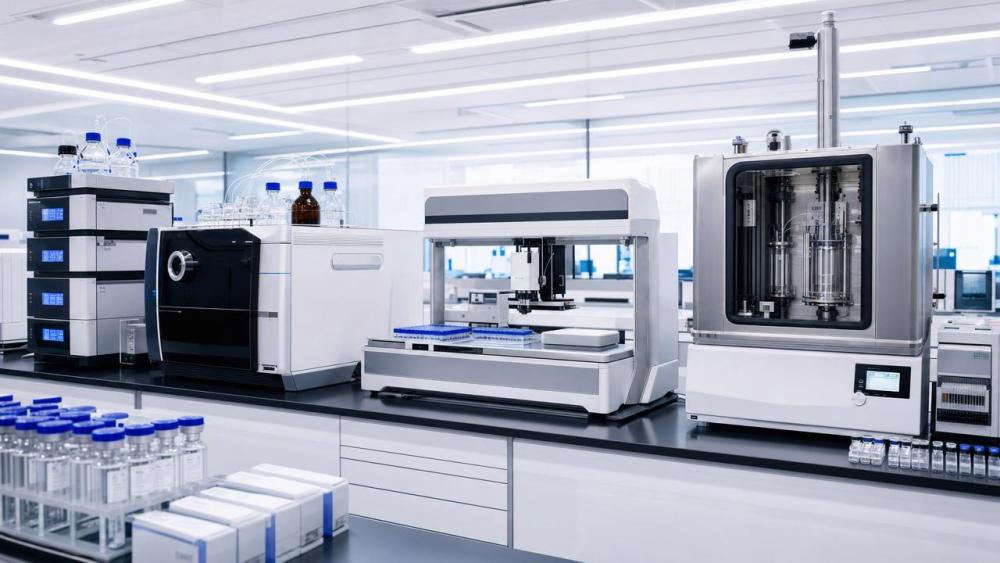
The challenge with proteins, viral vectors, plasmids, conjugates, and other high-molecular products is not simply detecting them. The real issue is proving identity, structure, purity, potency relevance, and batch consistency under changing process conditions.
A minor shift in culture media, shear stress, centrifugation force, filtration behavior, or storage conditions can alter aggregation, fragmentation, glycosylation, or contamination patterns. Those changes may stay hidden if measurement systems are fragmented.
This is why high-molecular analytical metrology is drawing attention across the broader life science equipment landscape. It supports not only release testing, but also deviation analysis, scale-up comparability, and audit readiness.
BLES reflects this broader view well. Its focus on bioreactors, separation systems, LC-MS, biosafety infrastructure, and automated liquid handling mirrors the fact that metrology quality depends on the entire workflow, not a single instrument result.
What high-molecular analytical metrology means in 2026
In simple terms, high-molecular analytical metrology is the discipline of generating reliable, traceable, and decision-ready measurements for large and structurally complex biological or bio-derived materials.
It goes beyond testing method availability. It includes calibration logic, sample handling control, software validation, metadata capture, chain of custody, and fit-for-purpose interpretation.
In 2026, the field is increasingly defined by integrated measurement ecosystems. LC-MS, multi-attribute methods, size-based separation, particle analysis, automated liquid handling, and digital review systems are expected to work as one evidence framework.
That framework matters because a result is only useful when it can answer an operational question. Is the batch comparable? Is the impurity profile acceptable? Is the deviation product-related or method-related? Is the dataset inspection-ready?
The trends shaping quality control decisions
1. Multi-attribute testing becomes routine
Single-parameter release logic is losing ground. QC programs increasingly rely on multi-attribute approaches that evaluate charge variants, post-translational modification patterns, sequence confirmation, and critical impurity signals within one analytical strategy.
This reduces blind spots and improves comparability across development stages.
2. Data integrity moves closer to the instrument edge
Audit trails, electronic records, user permissions, and CSV expectations are no longer separate compliance topics. They are becoming part of everyday high-molecular analytical metrology design.
Systems that capture raw data, processing logic, and review steps automatically are gaining preference because they reduce manual exposure and simplify investigations.
3. Sample preparation is treated as a metrology variable
Many inconsistent results originate before detection. Automated liquid handling is therefore becoming strategically important, especially for high-throughput assays, NGS preparation, and reproducible dilution or derivatization workflows.
The measurement result is only as stable as the microliter step that produced it.
4. Process and analytics are converging
High-molecular analytical metrology now supports earlier process decisions. Signals from cell culture, purification, and final characterization are being compared more closely to identify root causes before a deviation reaches late-stage review.
That is especially relevant when scaling from pilot to commercial volume.
Where these trends show up in real operations
Different facilities experience the value of high-molecular analytical metrology in different ways. The common thread is better confidence under pressure.
This cross-functional view is increasingly important for biologics, recombinant proteins, antibody programs, and CGT pipelines, where one weak link can distort the entire analytical story.
How to evaluate a strong metrology setup
A mature high-molecular analytical metrology program is not defined by instrument count. It is defined by whether measurement output is credible, connected, and usable during review.
- Check whether critical quality attributes are linked to specific analytical controls, not broad testing claims.
- Review sample preparation discipline, especially for dilution, transfer, storage, and contamination-sensitive steps.
- Confirm software validation status, audit trail completeness, and data processing transparency.
- Compare raw signal stability across batches, operators, and instruments before trusting trend reports.
- Examine whether process data from upstream and downstream operations can explain analytical deviations.
- Assess whether biosafety controls protect both personnel and analytical sample integrity.
These points sound basic, yet they often separate a compliant-looking lab from a genuinely reliable one.
Why BLES-aligned intelligence matters here
One reason this topic is gaining strategic value is that analytical questions now overlap with equipment, digital validation, scale-up economics, and operational safety. High-molecular analytical metrology cannot be judged in isolation.
That is where the BLES perspective becomes useful. Its coverage of bioprocessing hardware, purification systems, LC-MS capability, biosafety control, and robotic liquid handling reflects how quality decisions are actually made inside regulated workflows.
The same applies to its emphasis on absolute data integrity and seamless process scale-up. In 2026, these are not separate ambitions. They are two sides of the same metrology problem.
What deserves attention next
The most useful next step is not chasing every new platform. It is mapping where high-molecular analytical metrology has the biggest impact on risk, release confidence, and investigation speed inside existing workflows.
Start by identifying which measurements support critical decisions, where manual handling still creates uncertainty, and which digital records would need to stand up during an audit or deviation review.
From there, it becomes easier to compare analytical options, prioritize automation, and build a metrology framework that supports both compliance and scale. In 2026, that balance is quickly becoming the real benchmark for quality control maturity.
Related News
- What CSV documentation should a laboratory systems supplier provide?Oct 26, 2026Dr. Elara Sterling
- GenScript ProBio’s Nanjing Biologics Facility Passes NMPA Pre-Approval InspectionOct 22, 2026Dr. Elara Sterling
- How to assess audit trails in analytical data integrity solutionsOct 16, 2026Dr. Elara Sterling
- How user licensing affects laboratory validation system pricingOct 14, 2026Dr. Elara Sterling
Related News
- 00
0000-00
What CSV documentation should a laboratory systems supplier provide? - 00
0000-00
SCIEX Begins Construction of High-End Mass Spectrometer Plant in Beijing - 00
0000-00
Which design features make cleanroom benches easier to clean? - 00
0000-00
IndexBox Forecasts 12% CAGR for Global Microbioreactor Market Through 2035 - 00
0000-00
When do hazardous compound labs need isolators for containment?
Dr. Elara Sterling
Weekly Insights
Stay ahead with our curated technology reports delivered every Monday.