





In UHPLC workflows, faster runs do not always mean better results. For quality control and safety teams, pushing speed too far can compromise resolution, reproducibility, and data integrity—especially when results must align with liquid chromatography mass spectrometry requirements. Understanding where efficiency begins to weaken analytical confidence is essential for maintaining compliance, product quality, and reliable decision-making.
Why a Checklist Matters in High-Speed UHPLC
UHPLC promises shorter cycle times, higher throughput, and lower solvent use. Yet every reduction in run time changes pressure, peak shape, dwell behavior, and detector response.
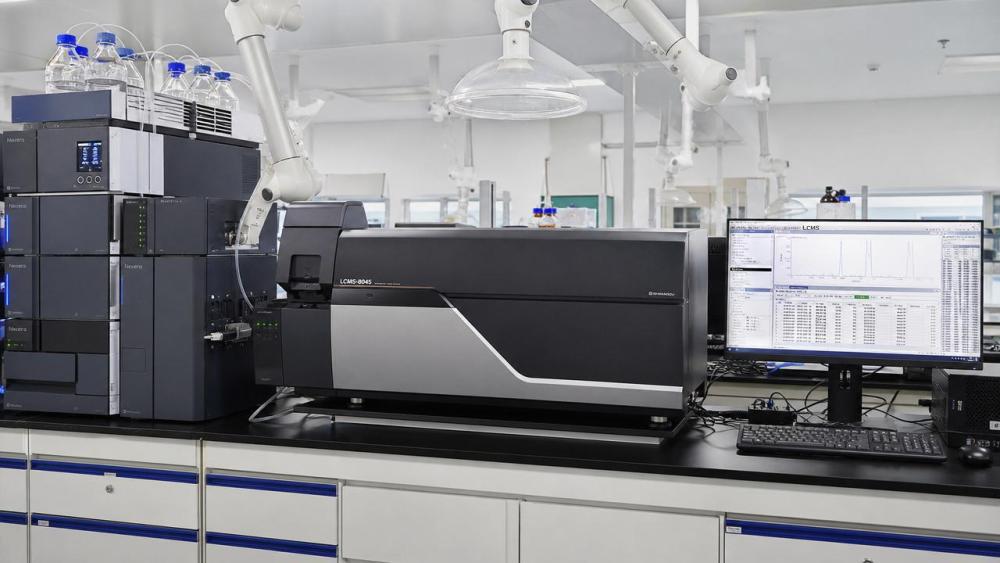
That tradeoff becomes more critical when methods support release testing, impurity profiling, stability studies, or liquid chromatography mass spectrometry confirmation.
A checklist-based review helps separate justified acceleration from risky compression. It also supports method transfer, GMP consistency, and defensible data integrity across laboratories.
Core Checklist: Signs That Faster UHPLC Runs Are Hurting Data Quality
Use the following checkpoints before approving a shortened method or tightening an existing UHPLC program.
- Check peak resolution first. If adjacent compounds trend below validated separation targets, faster gradients may create hidden co-elution and false purity conclusions.
- Measure system backpressure across the full gradient. Elevated pressure can stress seals, reduce column life, and shift retention behavior over long production sequences.
- Review peak capacity, not just total run time. Narrow peaks look efficient, but insufficient capacity weakens impurity discrimination and trace-level detection reliability.
- Confirm injection precision under speed-focused settings. Fast methods magnify carryover, sample solvent mismatch, and autosampler timing errors that distort reproducibility.
- Compare signal-to-noise ratios at the final method speed. Shorter residence time in the detector can reduce sensitivity for low-abundance analytes.
- Evaluate gradient dwell volume effects. A fast method on one instrument may shift selectivity on another, especially during method transfer or multi-site validation.
- Test column temperature stability. High-throughput UHPLC often depends on tight thermal control, and small deviations can alter selectivity and retention.
- Inspect mass spectrometry compatibility. Mobile phase additives, flow rate, and desolvation behavior must still support robust liquid chromatography mass spectrometry performance.
- Monitor data system sampling rate. Extremely narrow peaks require enough detector acquisition points, or quantitative integration becomes unstable and misleading.
- Verify column re-equilibration time. Saving seconds between injections can introduce retention drift and undermine sequence-level consistency in regulated studies.
Where Speed Creates Different Risks
QC Release and Stability Testing
In release testing, the cost of a misleading fast result is high. A compressed UHPLC run may pass system suitability while still masking degradants or late-eluting contaminants.
For stability programs, trend consistency matters more than headline speed. If retention windows drift across months, comparability weakens and investigations multiply.
Method Development for Liquid Chromatography Mass Spectrometry
When UHPLC feeds liquid chromatography mass spectrometry, faster is only useful if ionization remains stable. Excessive flow or poorly optimized gradients can suppress signal and reduce identification confidence.
This is especially relevant in peptide mapping, impurity characterization, and biomolecule profiling, where co-elution directly affects spectral clarity and downstream interpretation.
Multi-Site or Contract Laboratory Transfer
A method that works on one high-performance platform may fail after transfer. Small differences in pump design, mixer volume, tubing geometry, and detector settings become larger in very fast UHPLC methods.
For transferable methods, robustness often outranks absolute speed. A slightly longer run can reduce deviations, rework, and cross-site troubleshooting.
Commonly Overlooked Warning Signs
Apparent Precision That Hides Poor Separation
Repeatable retention times do not guarantee valid chemistry. Two partially merged peaks can look consistent while still producing incorrect area percentages.
Instrument Stress Misread as Normal Operation
Fast UHPLC methods may remain within pressure limits yet accelerate wear. Frequent seal replacement, rising baseline noise, or drifting pressure profiles are practical warning signals.
MS Readiness Assumed from UV Success
A method that performs well by UV detection may still fail in liquid chromatography mass spectrometry. Ion suppression, source contamination, and poor desolvation often appear only after coupling.
Data Acquisition Settings Left Unchanged
If peaks become narrower after optimization, detector rate and integration parameters must be updated. Otherwise, quantitative accuracy can decline even while chromatograms look clean.
A Practical Decision Framework
Use a simple sequence before locking a faster UHPLC method into routine use.
- Define the analytical objective clearly, including critical pairs, reporting threshold, detector type, and whether liquid chromatography mass spectrometry confirmation is required.
- Reduce run time stepwise rather than aggressively. Compare each change against resolution, precision, backpressure, carryover, and sensitivity benchmarks.
- Run stress samples, degradants, and difficult matrices. Fast methods often fail first on real samples rather than system suitability solutions.
- Document the acceptable speed boundary. Capture the point where cycle-time gains begin to erode robustness or interpretability.
- Reconfirm method transferability on secondary instruments. Include sequence length, column age, and environmental variation in the assessment.
Execution Tips for Reliable High-Throughput Performance
Select column chemistry for selectivity first, then optimize particle size and dimensions. Speed alone should never replace chemical separation strength.
Balance flow rate with detector demands. In liquid chromatography mass spectrometry workflows, source efficiency may improve more from smarter flow management than from shorter gradients.
Standardize re-equilibration rules, acquisition settings, and acceptance criteria in the data system. This reduces analyst-to-analyst variation and supports audit-ready traceability.
Trend pressure, retention, and peak width over time. Operational history often reveals that a “fast” method becomes expensive when maintenance, repeat runs, and investigations increase.
Conclusion and Next Action
The best UHPLC method is not the shortest one. It is the fastest method that still protects separation quality, reproducibility, instrument health, and liquid chromatography mass spectrometry compatibility.
Apply the checklist to one active method this week. Review critical pairs, detector settings, pressure trend, and transfer risk. A small validation effort now can prevent larger data integrity issues later.
Related News
- How to prevent carryover errors in UHPLC proceduresOct 08, 2026Analytical Metrology Expert
- How to choose triple quadrupole LC-MS systems for routine quantitationSep 01, 2026Analytical Metrology Expert
- EMA CSV Update Tightens Records for Imported UHPLC SystemsAug 02, 2026Analytical Metrology Expert
- FDA Tightens Data Integrity Checks for Imported UHPLCJul 22, 2026Analytical Metrology Expert
Related News
- 00
0000-00
What CSV documentation should a laboratory systems supplier provide? - 00
0000-00
SCIEX Begins Construction of High-End Mass Spectrometer Plant in Beijing - 00
0000-00
Which design features make cleanroom benches easier to clean? - 00
0000-00
IndexBox Forecasts 12% CAGR for Global Microbioreactor Market Through 2035 - 00
0000-00
When do hazardous compound labs need isolators for containment?
Analytical Metrology Expert
Weekly Insights
Stay ahead with our curated technology reports delivered every Monday.