





As 2026 scale-up plans take shape, biopharmaceutical intelligence is moving from a helpful reference to a core operating input. Expansion decisions now depend on more than capacity targets. They depend on how well process data, GMP expectations, automation readiness, and equipment economics are connected before capital is committed.
For bioprocessing groups, analytical laboratories, and integrated equipment ecosystems, strong biopharmaceutical intelligence reduces uncertainty across scale-up, tech transfer, validation, and commercial preparation. It helps compare options faster, spot hidden bottlenecks earlier, and protect timelines when funding, regulatory scrutiny, and product complexity all increase at once.
Why 2026 Scale-Up Plans Need a Checklist Mindset
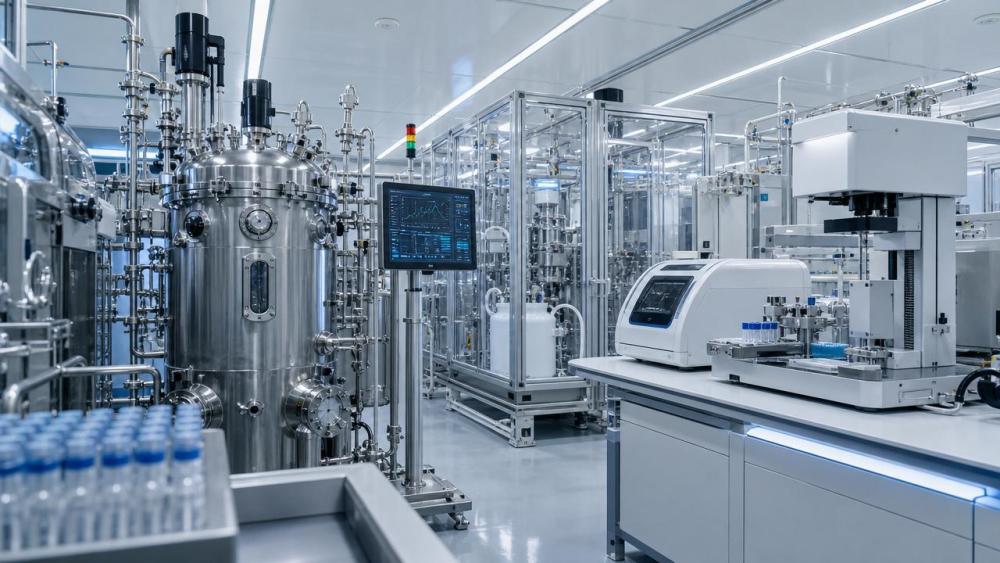
Scale-up failure rarely comes from one dramatic mistake. It usually comes from several small misses across upstream performance, downstream recovery, analytical comparability, and digital traceability. A checklist approach turns scattered assumptions into visible decision points.
This matters even more in biologics and CGT programs, where media shifts, shear sensitivity, contamination control, and release testing can reshape economics quickly. Practical biopharmaceutical intelligence supports teams that need to align speed, compliance, and flexibility without overbuilding capacity.
Core Biopharmaceutical Intelligence Checklist for 2026
Use the following checklist to evaluate whether a 2026 expansion plan is operationally sound, financially defensible, and audit-ready.
- Map critical quality attributes early, then connect them to upstream controls, purification thresholds, and release methods before selecting new equipment or approving any scale-up sequence.
- Validate bioreactor scale assumptions by comparing oxygen transfer, mixing time, shear exposure, and pH drift across bench, pilot, and commercial vessel geometries.
- Benchmark downstream recovery with realistic feed variability, not ideal batches, so centrifugation, filtration, and polishing steps reflect true process stress.
- Check single-use versus stainless decisions against campaign frequency, changeover speed, extractables data, and long-term utility consumption rather than purchase price alone.
- Align LC-MS, chromatography, and metrology methods with comparability goals, ensuring analytical sensitivity supports process transfer and future regulatory review.
- Audit data integrity pathways from instrument output to reporting layer, confirming audit trails, user control, backup logic, and CSV expectations are already defined.
- Assess biosafety cabinet, clean bench, and airflow strategy together, especially where potent materials, viral vectors, or cytotoxic compounds alter room behavior.
- Quantify automation value by measuring error reduction, walk-away time, plate throughput, and integration effort across liquid handling and sample preparation tasks.
- Review supply continuity for filters, bags, sensors, resins, and specialty consumables because scale-up risk often sits in vendor dependency, not engineering design.
- Model capital efficiency with multiple demand scenarios, including delayed approval, batch failure, and rapid indication expansion, to avoid stranded capacity.
Key Trends Reshaping Biopharmaceutical Intelligence
1. Process data is becoming a scale-up asset
In 2026 planning, biopharmaceutical intelligence increasingly starts with contextualized process data. Raw sensor output is not enough. What matters is whether dissolved oxygen shifts, feed timing, metabolite buildup, and harvest variability can be linked to yield and quality outcomes.
This trend favors platforms that combine bioreactor history, purification performance, and analytical evidence into one decision stream. BLES-style intelligence models are valuable here because they connect equipment behavior with compliance and scale economics.
2. Downstream bottlenecks are receiving earlier attention
Many facilities still design around upstream output, then discover purification cannot keep pace. Current biopharmaceutical intelligence gives more weight to clarification loads, resin utilization, membrane fouling, and hold-step stability before scale decisions are finalized.
That shift is important for monoclonal antibodies, recombinant proteins, and advanced therapies. Scale-up success now depends on balancing the whole process, not maximizing one unit operation.
3. GMP readiness is moving upstream in project design
Regulatory expectations are influencing architecture sooner. Computerized System Validation, electronic records, audit trails, and controlled access are no longer late-stage add-ons. Effective biopharmaceutical intelligence identifies these requirements while systems are still being selected.
This reduces rework and protects launch schedules. It also helps avoid a common failure point: technically capable equipment that lacks a clean validation path.
4. Automation is judged by integration, not novelty
Automated liquid handling, sample preparation, and robotic workflows continue to expand. However, 2026 scale-up planning is less interested in standalone automation and more focused on integrated execution. The best biopharmaceutical intelligence now tests whether automation reduces deviations and supports traceability across workflows.
Application Scenarios That Change the Intelligence Priority
Mammalian cell culture expansion
For CHO and related systems, biopharmaceutical intelligence should focus on oxygen transfer, foam behavior, nutrient strategy, and glycosylation consistency. Vessel geometry and sparger design can alter performance significantly during transfer from pilot to production scale.
Analytical comparability must be built alongside process design. Without it, a seemingly successful scale-up may fail when product quality drifts under commercial conditions.
Microbial fermentation and recombinant production
Microbial systems place stronger pressure on heat removal, oxygen demand, and high-solids separation. Here, biopharmaceutical intelligence should compare centrifuge performance, cell disruption impact, and filtration robustness under realistic biomass loads.
Fast cycle times can hide weak data discipline. Process acceleration only helps when electronic records and method controls remain defensible.
Cell and gene therapy operations
CGT programs require a different lens. Smaller batch sizes, chain-of-identity sensitivity, closed processing, and biosafety considerations make biopharmaceutical intelligence especially valuable. Flexibility often matters more than maximum throughput.
Single-use systems, clean handling zones, and digital traceability should be evaluated as one operating model, not separate investments.
Often Overlooked Risks in 2026 Planning
Ignoring method transfer difficulty can delay scale-up even when core equipment is installed on time. Biopharmaceutical intelligence must include whether analytical teams can reproduce results across sites and systems.
Underestimating consumable constraints creates false confidence. Bags, membranes, specialty sensors, and chromatography materials can become the true production limiter during expansion.
Separating compliance planning from engineering design increases validation friction. CSV, access control, and audit trail logic should be specified before procurement is finalized.
Treating automation as labor reduction only misses larger value. The stronger case often lies in repeatability, contamination control, and data consistency.
Practical Execution Recommendations
- Build a single review table linking each unit operation to its technical risk, compliance burden, capacity constraint, and capital implication.
- Run a pilot intelligence review before approving equipment lists, using real process history and at least one stressed production scenario.
- Prioritize instrumentation and software that support data integrity from day one, especially where release testing and batch records intersect.
- Stress-test single-use and automation strategies against supply risk, maintenance support, and validation workload before scaling adoption.
- Revisit the scale-up model quarterly as development data changes, rather than locking assumptions too early in the capital cycle.
Conclusion and Next-Step Action Guide
The most useful biopharmaceutical intelligence for 2026 is not just technical information. It is decision-ready insight that ties bioreactors, downstream purification, LC-MS capability, biosafety controls, automation, and GMP readiness into one scale-up logic.
A strong next step is to convert current expansion assumptions into a formal checklist, then test each point against process evidence, validation requirements, and supply resilience. That approach improves capital discipline, reduces transfer risk, and creates a more resilient path to commercial scale.
For organizations tracking high-end bioprocessing and laboratory systems, disciplined biopharmaceutical intelligence is becoming the clearest advantage in scaling up hope with precision.
Related News
- Zylidac Bio and Prolific Machines Partner to Scale Optogenetics for GMP ProductionOct 23, 2026Prof. Alistair Thorne
- How to prevent oxygen limitation in process scale-up for biologicsOct 18, 2026Prof. Alistair Thorne
- How to maintain product quality when scaling up a bioprocessOct 09, 2026Prof. Alistair Thorne
- What should you verify before choosing a bioprocessing equipment exporter?Oct 08, 2026Prof. Alistair Thorne
Related News
- 00
0000-00
What CSV documentation should a laboratory systems supplier provide? - 00
0000-00
SCIEX Begins Construction of High-End Mass Spectrometer Plant in Beijing - 00
0000-00
Which design features make cleanroom benches easier to clean? - 00
0000-00
IndexBox Forecasts 12% CAGR for Global Microbioreactor Market Through 2035 - 00
0000-00
When do hazardous compound labs need isolators for containment?
Prof. Alistair Thorne
Weekly Insights
Stay ahead with our curated technology reports delivered every Monday.