





GMP audit compliance is often tested not by dramatic failures, but by routine control gaps that slowly weaken data integrity, traceability, and process consistency. In biopharma, laboratory operations, and equipment-driven quality systems, these gaps frequently trigger CAPAs because they reveal weak execution rather than isolated mistakes. Understanding where auditors look first helps reduce inspection risk and protect regulatory confidence.
Why a checklist approach strengthens GMP audit compliance
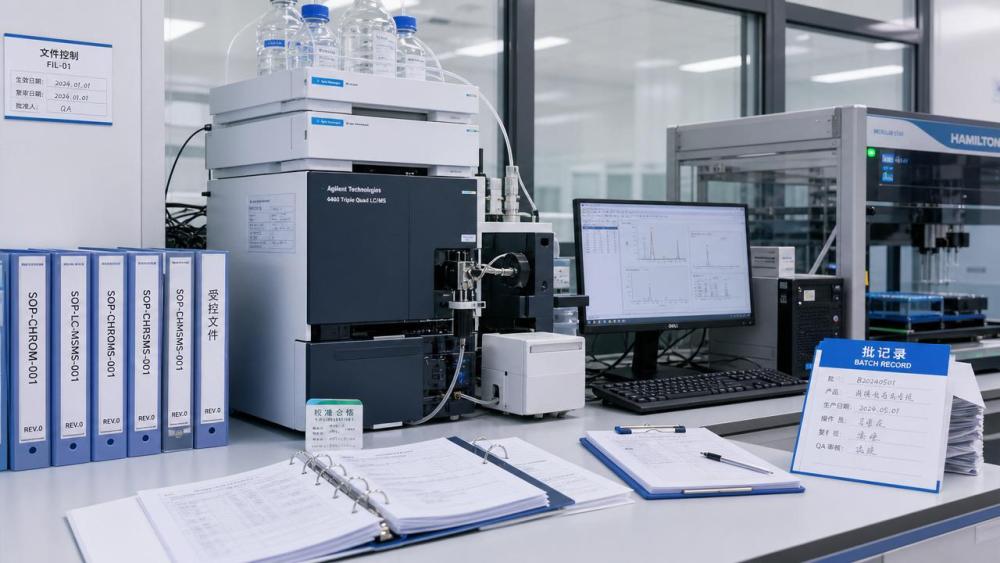
A checklist works because GMP audit compliance depends on repeatable evidence. Teams may believe controls exist, yet audits test whether those controls are documented, current, followed, and reviewable under pressure.
This matters across integrated environments such as bioreactors, centrifugation trains, LC-MS platforms, biosafety cabinets, and liquid handling workstations. In each case, small documentation or execution failures can cascade into broader quality concerns.
For BLES-focused operations, GMP audit compliance is not only a quality issue. It also affects scale-up readiness, computerized system reliability, batch release confidence, and the credibility of scientific conclusions.
7 gaps that most often trigger CAPAs
- Control document versions rigorously, and remove obsolete SOPs from points of use before operators follow superseded instructions during production, testing, cleaning, or maintenance activities.
- Verify training effectiveness, not just completion, by linking role-based qualification to actual tasks, exceptions handled, and recent procedural revisions affecting GMP audit compliance.
- Review audit trails routinely, especially in computerized systems, to detect deleted data, repeated retries, backdated entries, or unexplained changes in critical parameters.
- Calibrate and maintain instruments on schedule, then confirm out-of-tolerance events trigger impact assessments for batches, analytical runs, environmental monitoring, and released reports.
- Reconcile raw data to final records so chromatograms, printouts, logbooks, electronic files, and calculations support the same conclusion without undocumented adjustments.
- Investigate deviations to true root cause, avoiding superficial conclusions like human error when process design, workload, interface design, or unclear procedures contributed.
- Close CAPAs with effectiveness checks that measure sustained control, rather than treating closure as an administrative step completed after document updates or retraining alone.
1. Weak document control signals unstable execution
Auditors often begin with SOPs, forms, logbooks, and batch records because document control reveals whether the quality system is alive. If two versions exist in parallel, GMP audit compliance is already at risk.
This problem appears in cleaning records, preventive maintenance instructions, and method revisions for LC-MS or automated liquid handling. Even correct work becomes noncompliant when unsupported by current approved documents.
2. Incomplete training creates hidden operational gaps
A signed training record does not prove competence. During interviews, auditors compare operator responses with procedure details, exception handling, and escalation expectations. Mismatch quickly leads to CAPA findings.
Training is especially critical where complex equipment is used. Bioreactor control changes, biosafety cabinet decontamination steps, or CSV-related user access rules must be understood, not merely acknowledged.
3. Poor audit trail review undermines data integrity
Data integrity remains central to GMP audit compliance. If audit trails are enabled but never reviewed, the control exists only on paper. Inspectors view that as a governance failure, not a technical oversight.
This is common in chromatography systems, balance software, standalone analytical instruments, and environmental monitoring platforms. Reprocessing, overwritten values, and repeated injections need documented scientific justification.
4. Calibration drift exposes broad product impact
Missed calibration dates are obvious findings, but deeper issues trigger stronger CAPAs. The bigger question is whether the organization assessed product, sample, or data impact when instrument accuracy was uncertain.
In life science settings, this may affect pH probes in fermenters, temperature sensors in incubators, pipetting accuracy in liquid handlers, or mass accuracy in LC-MS systems. One drift event can touch multiple records.
5. Unreconciled raw data weakens traceability
GMP audit compliance requires a clear path from original observation to final decision. If printed summaries exist without source files, or calculations cannot be reconstructed, traceability is considered broken.
This gap appears when analysts transcribe values manually, store files locally, or fail to retain failed runs. Auditors expect contemporaneous, attributable, legible, original, and accurate records throughout the lifecycle.
6. Shallow investigations invite repeat deviations
Repeated CAPAs often come from poor investigations. When every event is blamed on carelessness, auditors suspect the system is avoiding root causes such as unclear workflows, poor interfaces, or unrealistic turnaround pressure.
A stronger investigation maps sequence, equipment state, user actions, alarms, and review approvals. That level of analysis supports meaningful corrections and strengthens overall GMP audit compliance.
7. CAPA closure without effectiveness is a common failure
Closing a CAPA after revising an SOP or retraining staff is not enough. Auditors expect evidence that the issue stopped recurring and that the revised control actually works in routine conditions.
Effectiveness checks may include targeted record review, repeat observation, trend analysis, or follow-up internal audits. Without that proof, GMP audit compliance remains fragile.
How these gaps appear in different operating scenarios
Bioprocessing and scale-up environments
In upstream and downstream operations, minor gaps often surface around parameter changes, sensor calibration, batch record completion, and deviation review during time-sensitive production windows.
Because scale-up multiplies complexity, weak GMP audit compliance at pilot scale can become a major CAPA source in commercial transfer, especially when change control and process justification are inconsistent.
Analytical laboratories and digital systems
Labs face recurring risk in user access control, audit trail review, sample chain-of-custody, and data backup practices. CSV weaknesses become highly visible when records cannot prove who did what, and when.
For LC-MS and other high-complexity platforms, inspectors also examine method changes, integration practices, sequence edits, and metadata retention. These areas directly affect GMP audit compliance and scientific defensibility.
Commonly overlooked risk signals
- Temporary workarounds becoming normal practice without formal approval, risk assessment, or document revision.
- Shared user accounts that blur attribution across instruments, software, and electronic review steps.
- Late entries in logbooks without explanation, signature linkage, or contemporaneous correction method.
- Recurring minor deviations trended separately, even though together they indicate a systemic control weakness.
- Vendor service reports filed away without evaluating product impact, requalification needs, or reopened change control.
Practical steps to improve GMP audit compliance
Start with a focused internal walkthrough using the seven-gap checklist above. Pull one recent deviation, one CAPA, one instrument record, and one electronic dataset, then test traceability end to end.
Next, align quality, engineering, validation, and laboratory documentation reviews. GMP audit compliance improves when document control, training, calibration, and digital governance are reviewed as one connected system.
Then, trend small failures before they become findings. Repeated late reviews, recurring transcription corrections, or repeated out-of-tolerance events are early indicators that a future CAPA is already forming.
Finally, make effectiveness checks measurable. Define what success looks like, how long control must hold, which records will be sampled, and who independently confirms sustained compliance.
Summary and next action
Strong GMP audit compliance is built through disciplined execution of ordinary controls. The seven most common CAPA triggers are rarely surprising, but they are frequently underestimated until an inspection exposes them.
Use this checklist to review document control, training effectiveness, audit trails, calibration impact, raw data traceability, root cause depth, and CAPA effectiveness. That single exercise can sharply improve inspection readiness.
In advanced biopharma and laboratory environments, regulatory strength depends on linking every cell culture action, every instrument event, and every data point to defensible evidence. That is the foundation of durable GMP audit compliance.
Related News
- What CSV documentation should a laboratory systems supplier provide?Oct 26, 2026Dr. Elara Sterling
- GenScript ProBio’s Nanjing Biologics Facility Passes NMPA Pre-Approval InspectionOct 22, 2026Dr. Elara Sterling
- How to assess audit trails in analytical data integrity solutionsOct 16, 2026Dr. Elara Sterling
- How user licensing affects laboratory validation system pricingOct 14, 2026Dr. Elara Sterling
Related News
- 00
0000-00
What CSV documentation should a laboratory systems supplier provide? - 00
0000-00
SCIEX Begins Construction of High-End Mass Spectrometer Plant in Beijing - 00
0000-00
Which design features make cleanroom benches easier to clean? - 00
0000-00
IndexBox Forecasts 12% CAGR for Global Microbioreactor Market Through 2035 - 00
0000-00
When do hazardous compound labs need isolators for containment?
Dr. Elara Sterling
Weekly Insights
Stay ahead with our curated technology reports delivered every Monday.