




In a market where every batch record, instrument log, and digital workflow can determine audit outcomes, pharmaceutical compliance solutions have become essential for safeguarding data integrity and operational trust. For biopharma equipment leaders and laboratory decision-makers, the right strategy is no longer just about meeting GMP expectations. It is about enabling scalable innovation, reducing regulatory exposure, and converting compliant data systems into a measurable operational advantage.
Across bioreactors, LC-MS platforms, centrifuges, biosafety cabinets, and automated liquid handling systems, data integrity now connects process performance with regulatory credibility. In integrated life science environments, weak audit trails, uncontrolled user access, and fragmented records can compromise both product quality and market confidence. That is why pharmaceutical compliance solutions must be evaluated through a clear, checklist-based framework.
Why a Checklist Approach Improves Data Integrity Control
Compliance failures rarely begin with one dramatic event. They usually start with small gaps: an undocumented configuration change, shared passwords, missing metadata, or incomplete review workflows. A checklist converts broad GMP expectations into repeatable control points that can be verified, assigned, and improved.
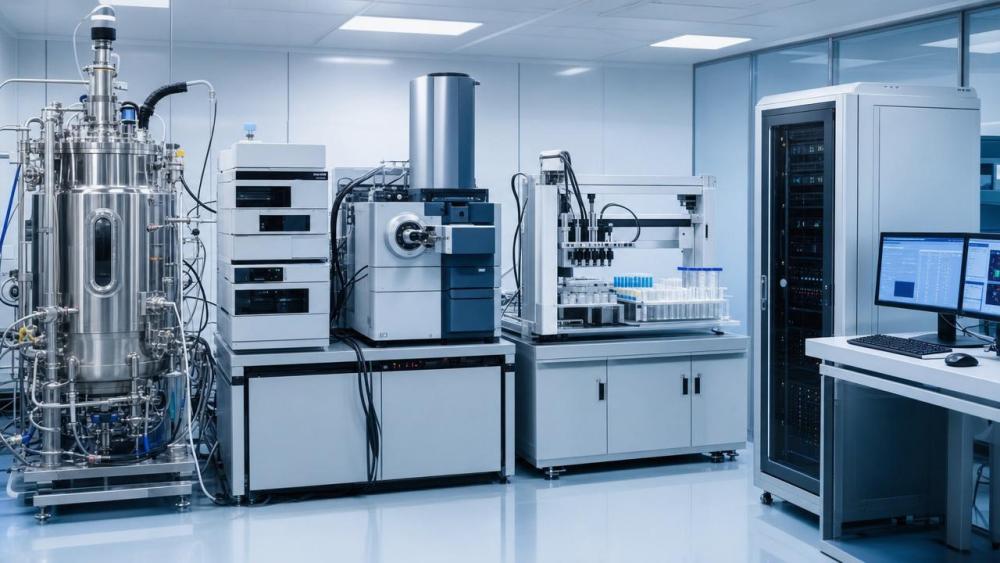
For complex laboratory and biopharma operations, pharmaceutical compliance solutions must support ALCOA+ principles, computerized system validation, equipment lifecycle governance, and cross-functional accountability. A structured review also helps align engineering, quality, IT, and laboratory operations around the same risk language.
Core Checklist for Pharmaceutical Compliance Solutions
- Map every critical data flow from instrument generation to archival, including manual entries, middleware transfers, electronic signatures, and quality review checkpoints.
- Verify role-based access controls, unique user IDs, password rules, and administrator oversight for all GMP-relevant software and connected devices.
- Confirm audit trails are enabled, reviewable, time-stamped, and protected from alteration across chromatography systems, balances, bioreactors, and liquid handlers.
- Validate computerized systems using documented risk assessment, user requirements, functional testing, and change control before production or release activities begin.
- Review data backup frequency, disaster recovery procedures, and restoration testing to ensure records remain complete, accurate, and retrievable.
- Assess interface controls between instruments, LIMS, MES, ERP, and document systems so that no critical result is lost or overwritten.
- Check metadata capture for method versions, sample IDs, analyst actions, calibration status, and processing parameters linked to each regulated record.
- Standardize review-by-exception workflows so quality teams can identify unauthorized changes, deleted runs, incomplete sequences, or repeated injections quickly.
- Inspect supplier documentation for software maintenance, patch history, cybersecurity controls, and support readiness for regulated environments.
- Train users on practical data integrity behaviors, not only policies, including contemporaneous recording, secure logins, exception handling, and deviation escalation.
Application Scenarios Across Biopharma and Laboratory Operations
Bioreactors and Fermentation Systems
In upstream processing, sensor readings for temperature, pH, dissolved oxygen, and agitation shape batch consistency. Pharmaceutical compliance solutions should ensure these values are continuously recorded, historically traceable, and linked to recipe changes and alarm acknowledgments.
When scaling from development to commercial production, configuration drift becomes a hidden risk. System baselines, calibration histories, and change approvals must remain synchronized across pilot and production assets.
LC-MS and Analytical Platforms
Analytical laboratories depend on trustworthy raw data, processing methods, and result interpretation. Effective pharmaceutical compliance solutions should control integration events, reprocessing actions, sequence edits, and user privileges within the full analytical workflow.
For high-molecular characterization and impurity profiling, even small undocumented changes can distort release decisions. Traceable method lifecycle management is therefore as important as instrument performance.
Automated Liquid Handling and Digital Workflows
In NGS preparation, assay development, and high-throughput screening, robotic systems generate vast procedural data. Pharmaceutical compliance solutions should capture script versions, deck layouts, exception logs, and execution timestamps without relying on manual reconstruction.
This is especially important when automated actions feed regulated studies or manufacturing support activities. Reliable digital traceability reduces reruns, strengthens reproducibility, and supports inspection readiness.
Commonly Missed Risks in Pharmaceutical Compliance Solutions
Shared Accounts Hidden as Convenience
Shared logins often survive because they simplify shift operations. In reality, they break accountability, weaken investigations, and undermine any claim of attributable data.
Validated Systems That Drift After Go-Live
A validated state is not permanent. Unreviewed patches, local configuration edits, disabled audit trails, or replaced hardware can silently invalidate earlier compliance evidence.
Backup Without Recovery Proof
Many organizations perform backups but never test restoration under realistic conditions. Data is only protected when it can be recovered completely and within required timelines.
Paper Printouts Treated as Primary Evidence
Printed reports may support review, but they rarely preserve the full context of electronic records. Metadata, audit trail events, and processing history must remain accessible in native systems.
Practical Execution Steps That Strengthen Compliance
- Start with a ranked inventory of GMP-relevant systems, instruments, software modules, and interfaces.
- Score each item by data criticality, manual intervention level, and inspection exposure.
- Prioritize remediation for access control, audit trail review, backup recovery, and change management.
- Align SOPs with actual workflows so procedures match daily laboratory and production behavior.
- Schedule periodic data integrity reviews using predefined evidence sets, not ad hoc interviews alone.
- Engage qualified compliance intelligence partners when internal teams need deeper CSV or GMP interpretation.
For organizations operating in fast-moving biopharma and laboratory equipment ecosystems, the best pharmaceutical compliance solutions combine governance, technology, and execution discipline. They do not treat compliance as a final documentation step. They build traceability into the operational fabric from method creation to archival retention.
Conclusion and Next Action
Strong pharmaceutical compliance solutions reduce audit risk because they make data integrity visible, testable, and sustainable. In sectors shaped by advanced bioprocessing, analytical metrology, and automated laboratory workflows, that discipline also protects speed, scale-up confidence, and product quality.
Begin with one controlled step: perform a checklist-based review of the most critical digital systems supporting regulated data. Identify where records are created, who can change them, how they are reviewed, and whether recovery has been proven. From there, pharmaceutical compliance solutions become more than a regulatory safeguard. They become a strategic foundation for reliable growth.
Related News
- What CSV documentation should a laboratory systems supplier provide?Oct 26, 2026Dr. Elara Sterling
- GenScript ProBio’s Nanjing Biologics Facility Passes NMPA Pre-Approval InspectionOct 22, 2026Dr. Elara Sterling
- How to assess audit trails in analytical data integrity solutionsOct 16, 2026Dr. Elara Sterling
- How user licensing affects laboratory validation system pricingOct 14, 2026Dr. Elara Sterling
Related News
- 00
0000-00
What CSV documentation should a laboratory systems supplier provide? - 00
0000-00
SCIEX Begins Construction of High-End Mass Spectrometer Plant in Beijing - 00
0000-00
Which design features make cleanroom benches easier to clean? - 00
0000-00
IndexBox Forecasts 12% CAGR for Global Microbioreactor Market Through 2035 - 00
0000-00
When do hazardous compound labs need isolators for containment?
Dr. Elara Sterling
Weekly Insights
Stay ahead with our curated technology reports delivered every Monday.