





Automated laboratories promise faster throughput, tighter reproducibility, and fewer manual errors, but they also introduce hidden GMP compliance risks.
As robotics, LC-MS platforms, bioreactors, and liquid handling systems become connected, every action must remain controlled, traceable, and inspection-ready.
The central challenge is no longer automation alone. It is proving that automated decisions still protect data integrity, process consistency, and patient safety.
Automation Is Raising the Bar for GMP Compliance Evidence
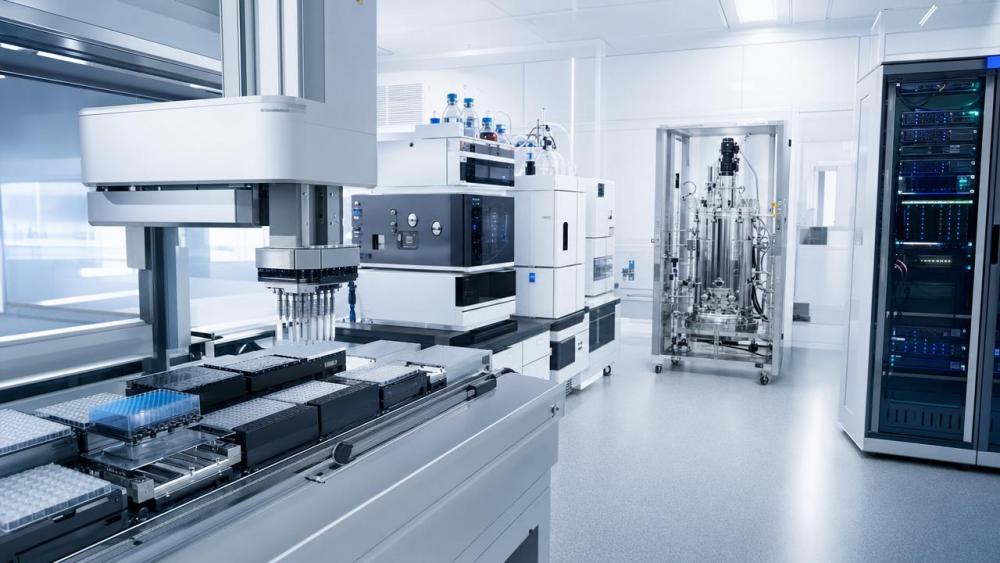
Laboratory automation has moved from isolated instruments to integrated ecosystems. Robotic workstations now exchange data with LIMS, ELN, MES, and cloud analytics.
This connectivity increases efficiency, yet it expands the inspection surface. GMP compliance now depends on software behavior, network security, and electronic records.
Regulators expect automated labs to show control across the complete lifecycle. Installation, configuration, operation, maintenance, and retirement all require documented evidence.
For BLES-focused environments, this matters across bioreactors, centrifuges, LC-MS systems, biosafety cabinets, and automated liquid handling platforms.
Each system may generate regulated data. Therefore, GMP compliance must be embedded into instrument selection, validation strategy, and routine monitoring.
Trend Signals Showing Where Compliance Pressure Is Growing
Several signals show why GMP compliance risk is increasing in automated labs. The first is the growing dependence on computerized workflows.
The second is inspection focus on ALCOA+ principles. Data must remain attributable, legible, contemporaneous, original, accurate, complete, consistent, enduring, and available.
The third is global regulatory alignment. FDA, EMA, MHRA, and PIC/S expectations increasingly converge around computerized system validation and data integrity.
The fourth signal comes from complex therapies. Cell and gene therapy workflows require rapid processing, strict chain of identity, and exceptional traceability.
In these settings, GMP compliance failures may not appear as dramatic breakdowns. They often begin as configuration drift, missing metadata, or weak access control.
Key Drivers Behind the New GMP Compliance Risk Pattern
Automation changes the nature of laboratory risk. Manual mistakes decline, but systemic errors can spread faster across repeated runs.
These drivers make GMP compliance a cross-functional discipline. Quality, engineering, IT, validation, and laboratory operations must share one control model.
Computerized System Validation Remains the Critical Gate
Computerized system validation is often the first visible weakness in automated labs. It defines whether technology can be trusted for regulated work.
Effective GMP compliance starts with intended use. A robot used for research has different risk than one preparing GMP release samples.
Validation should follow a risk-based approach. Critical functions need deeper testing, while low-impact features require proportionate evidence.
- Define intended use before configuration.
- Map user requirements to functional tests.
- Verify audit trails, calculations, and reports.
- Document deviations and justified resolutions.
- Control changes after release.
Validation is not a one-time event. GMP compliance requires periodic review when software patches, method changes, or instrument upgrades occur.
Data Integrity Is the Most Common Inspection Fault Line
Automated laboratories create large volumes of electronic records. Without strong governance, data integrity weaknesses can hide inside normal operations.
Common issues include shared logins, disabled audit trails, uncontrolled exports, overwritten files, and incomplete review of electronic metadata.
GMP compliance requires every critical record to show who did what, when, why, and under which approved method.
For LC-MS systems, this includes raw data, integration parameters, calibration curves, processing methods, sequence files, and final reports.
For liquid handling workstations, this includes deck layouts, pipetting scripts, tip usage, sample maps, error logs, and run completion records.
Strong GMP compliance also demands review by exception. Teams should identify alarms, aborted runs, manual overrides, and unusual access events.
Robotic Liquid Handling Creates New Control Questions
Robotic liquid handling reduces fatigue and variability. Yet it creates compliance questions around method control, carryover, dead volume, and tip performance.
A validated script can still fail if labware changes without assessment. Plate geometry, liquid class, viscosity, and evaporation can affect accuracy.
GMP compliance requires documented control of scripts and consumables. Unauthorized edits to pipetting parameters are a serious data integrity risk.
Critical checks for automated pipetting workflows
- Confirm gravimetric or photometric liquid handling performance.
- Challenge minimum and maximum volume ranges.
- Qualify critical labware and tip combinations.
- Lock validated methods with role-based permissions.
- Review error recovery and paused-run decisions.
These controls transform automation from convenience into defensible GMP compliance evidence.
Environmental Monitoring Must Keep Pace with Automated Operations
Automated labs still depend on controlled environments. Biosafety cabinets, clean benches, incubators, and isolators must remain qualified and monitored.
Automation can create false confidence. A robotic system inside a weak airflow zone may still compromise sample protection.
GMP compliance requires linkage between equipment events and environmental data. Temperature excursions, pressure shifts, and particle counts need timely assessment.
For bioprocessing, this linkage becomes critical. Cell culture conditions, single-use assemblies, and contamination controls affect both quality and batch disposition.
Business Impact Across Laboratory and Manufacturing Interfaces
GMP compliance gaps affect more than the laboratory. They can delay batch release, trigger investigation overload, or weaken regulatory submissions.
In downstream purification, weak traceability can disrupt links between centrifugation, filtration, chromatography, and final analytical confirmation.
In high-throughput screening, poor method governance may create unreliable candidate selection. That risk can move downstream into costly development decisions.
In CGT workflows, missing chain-of-identity records can become a direct patient safety concern. Automation must support identity protection at every step.
- Quality systems face more complex deviation assessment.
- Engineering teams manage more validated assets.
- IT teams become part of regulated control.
- Laboratory operations need stronger procedural discipline.
The strongest organizations treat GMP compliance as an operating design principle, not an audit preparation exercise.
Priority Controls That Reduce Regulatory Exposure
A practical control framework should focus on the points where automation can hide risk or multiply error.
Core focus areas
- Maintain a complete computerized system inventory.
- Classify systems by GxP impact and data criticality.
- Use role-based access with unique user accounts.
- Enable secure, reviewable audit trails.
- Define backup, restore, and archival responsibilities.
- Establish periodic review for validated systems.
- Qualify vendors supporting regulated functions.
These measures help preserve GMP compliance when laboratories scale from manual operations to fully automated workflows.
How to Judge Readiness Before the Next Inspection
Inspection readiness should be tested through evidence, not confidence. A system that works technically may still fail under regulatory questioning.
If evidence is scattered, incomplete, or dependent on individual memory, GMP compliance risk remains high.
Forward Strategy for Automated GMP Laboratories
The next stage of automation will bring AI-assisted analysis, predictive maintenance, digital twins, and more remote instrument support.
These tools can strengthen GMP compliance if they are governed through transparent models, validated outputs, and controlled implementation.
A phased approach is often most effective. Start with high-risk workflows, then extend standards across connected systems.
- Map automated workflows from sample receipt to report approval.
- Identify regulated data and critical decision points.
- Close gaps in validation, access control, and audit trail review.
- Build supplier expectations into quality agreements.
- Review performance indicators before deviations accumulate.
This approach supports efficiency while keeping GMP compliance aligned with inspection expectations and scientific risk.
From Automation Promise to Inspection-Ready Control
Automated laboratories can improve speed, precision, and reproducibility. Yet those benefits only matter when records remain trustworthy and processes remain controlled.
GMP compliance should be designed into software, hardware, methods, training, and environmental monitoring from the beginning.
The most resilient labs connect automation strategy with data integrity, validation lifecycle management, and patient safety expectations.
A practical next step is to audit one automated workflow end to end. Follow the sample, the data, and every decision.
That exercise quickly reveals whether GMP compliance is documented, defensible, and ready for the next regulatory challenge.
Related News
- What CSV documentation should a laboratory systems supplier provide?Oct 26, 2026Dr. Elara Sterling
- GenScript ProBio’s Nanjing Biologics Facility Passes NMPA Pre-Approval InspectionOct 22, 2026Dr. Elara Sterling
- How to assess audit trails in analytical data integrity solutionsOct 16, 2026Dr. Elara Sterling
- How user licensing affects laboratory validation system pricingOct 14, 2026Dr. Elara Sterling
Related News
- 00
0000-00
What CSV documentation should a laboratory systems supplier provide? - 00
0000-00
SCIEX Begins Construction of High-End Mass Spectrometer Plant in Beijing - 00
0000-00
Which design features make cleanroom benches easier to clean? - 00
0000-00
IndexBox Forecasts 12% CAGR for Global Microbioreactor Market Through 2035 - 00
0000-00
When do hazardous compound labs need isolators for containment?
Dr. Elara Sterling
Weekly Insights
Stay ahead with our curated technology reports delivered every Monday.