





In biopharmaceutical manufacturing, a single missing audit trail, unvalidated instrument interface, or incomplete batch record can delay approvals and expose enterprises to severe regulatory and financial risk.
Pharmaceutical compliance solutions help decision-makers close these costly data gaps by aligning GMP expectations, computerized system validation, laboratory automation, and process-scale intelligence into one traceable framework.
For companies competing in biologics, CGT, and advanced analytical workflows, compliance is no longer a back-office obligation. It is a strategic capability.
Why Pharmaceutical Compliance Solutions Need a Checklist Mindset
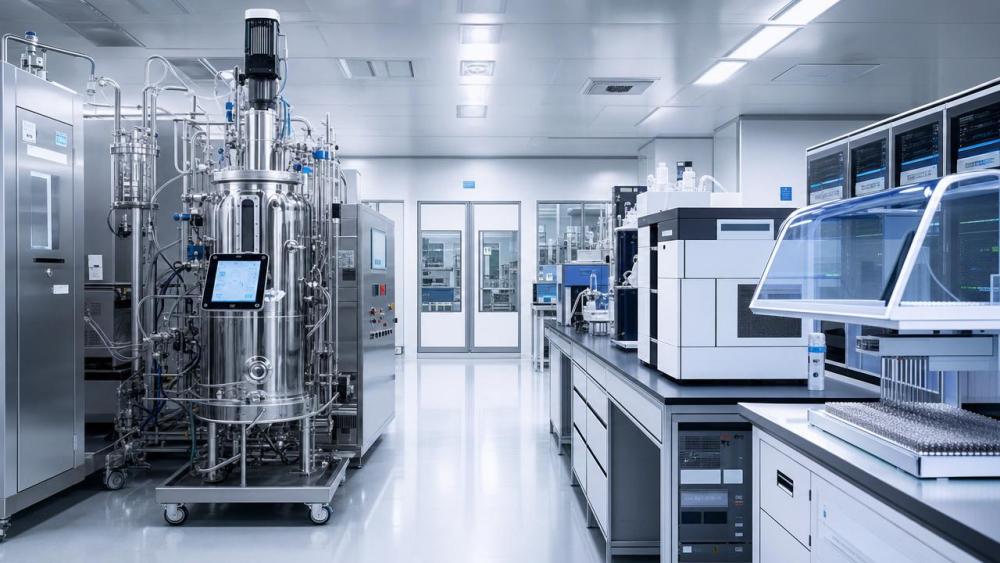
Modern GMP environments depend on connected instruments, automated liquid handling, LC-MS data streams, bioreactor control loops, and electronic batch records.
Each connection can create a data gap if ownership, validation scope, user access, and lifecycle controls are not clearly defined.
A checklist approach makes pharmaceutical compliance solutions practical. It converts broad regulatory expectations into repeatable actions that can be reviewed, tested, and defended.
This matters across integrated laboratories, pilot plants, CDMO facilities, and commercial bioprocessing suites where speed must not weaken data integrity.
Core Checklist for Pharmaceutical Compliance Solutions
Use the following checklist to evaluate whether pharmaceutical compliance solutions can prevent missing records, fragmented evidence, and avoidable inspection findings.
- Map every GMP-critical data source, including instruments, middleware, spreadsheets, historian databases, LIMS, MES, and cloud platforms before validation begins.
- Define data ownership for each workflow, especially where laboratory automation, process engineering, quality assurance, and external service providers share responsibility.
- Classify computerized systems by patient risk, product quality impact, process complexity, and the likelihood of undocumented manual intervention.
- Validate interfaces between bioreactors, centrifuges, LC-MS platforms, robotic pipetting systems, and electronic batch record environments.
- Confirm audit trails are enabled, secure, time-synchronized, reviewable, and protected from deletion by routine users or local administrators.
- Test role-based access controls against real operating scenarios, including shift changes, emergency maintenance, method updates, and failed login attempts.
- Document user requirement specifications in plain operational language that links each requirement to verification evidence and GMP risk.
- Review supplier documentation for validation support, cybersecurity controls, change history, service procedures, backup methods, and electronic record capabilities.
- Verify backup and restore procedures using actual recovery tests, not assumptions based only on vendor statements or IT policy.
- Control spreadsheets with locked formulas, version history, access restrictions, independent checks, and retirement rules for obsolete templates.
- Align deviation handling with electronic evidence so investigations can connect process events, analytical results, alarms, and operator actions.
- Schedule periodic reviews for validated systems, focusing on access lists, incidents, configuration drift, unresolved CAPA, and pending software patches.
Checklist Focus Areas for GMP Data Integrity
Electronic Records and Audit Trails
Pharmaceutical compliance solutions must prove that electronic records are complete, accurate, attributable, legible, contemporaneous, original, and available.
Audit trail review should not be a ceremonial step. It should detect unexpected edits, repeated reprocessing, time changes, aborted runs, and privilege misuse.
Computerized System Validation
CSV should be risk-based, not document-heavy without purpose. Validation depth should match product impact, system complexity, and intended use.
Strong pharmaceutical compliance solutions connect URS, functional specifications, configuration records, test scripts, traceability matrices, and release approvals.
Instrument Qualification and Calibration
LC-MS systems, balances, biosafety cabinets, centrifuges, and liquid handlers require qualification evidence aligned with their role in GMP decisions.
Calibration failures should trigger impact assessments that review affected batches, analytical sequences, environmental records, and historical trend behavior.
Application Scenarios Where Data Gaps Become Expensive
Bioreactors and Fermentation Suites
Bioreactor data includes pH, dissolved oxygen, agitation, gas flow, temperature, feed profiles, alarms, and operator interventions.
Pharmaceutical compliance solutions should link these parameters to batch context, recipe versions, sensor calibration, and approved process ranges.
Downstream Purification and Separation
Industrial centrifuges, chromatography skids, ultrafiltration systems, and buffer preparation units generate process evidence that supports yield and purity claims.
Missing linkage between equipment runs and batch records can weaken deviation investigations and delay lot disposition decisions.
Analytical Metrology and LC-MS Workflows
High-molecular analytical metrology depends on validated methods, controlled processing parameters, secured raw data, and scientifically justified integrations.
Pharmaceutical compliance solutions should preserve raw spectra, method versions, system suitability evidence, reviewer comments, and final reported values.
Automated Liquid Handling
Robotic liquid handling workstations improve repeatability, but scripts, deck layouts, tip tracking, and plate maps must remain controlled.
When automation supports NGS preparation or screening, pharmaceutical compliance solutions must verify transfer accuracy and prevent silent method drift.
Commonly Ignored Risks in Pharmaceutical Compliance Solutions
Unvalidated interfaces: A qualified instrument can still create compliance risk if its export file, middleware connector, or database transfer remains untested.
Shared user accounts: Shared credentials destroy attribution. Every GMP action should identify the actual person, system, or service account involved.
Incomplete audit trail reviews: Reviewing only final results ignores the process history that inspectors often examine during data integrity investigations.
Weak change control: Software patches, recipe edits, firmware updates, and method changes can invalidate previous assumptions if impact assessments are superficial.
Poor supplier oversight: Vendor certificates do not replace internal accountability. Pharmaceutical compliance solutions still require local verification and documented acceptance.
Execution Guide for Closing Costly Data Gaps
- Start with a data flow diagram that follows each critical record from generation to archival, retrieval, review, and final disposition.
- Prioritize systems that directly influence batch release, sterility assurance, potency, impurity profiles, identity testing, or contamination control.
- Build a validation plan that separates configurable functions, custom code, interfaces, reports, security settings, and disaster recovery testing.
- Train operators on compliant behavior, not only software navigation, so routine shortcuts do not become hidden regulatory liabilities.
- Use periodic review meetings to compare system performance, deviations, CAPA trends, audit observations, and upcoming process changes.
Effective pharmaceutical compliance solutions work best when quality, automation, IT, engineering, and process science share the same evidence model.
The goal is not to create more documents. The goal is to make every critical decision traceable, reviewable, and scientifically defensible.
Practical Evaluation Criteria Before Selecting a Solution
These criteria help distinguish mature pharmaceutical compliance solutions from tools that only digitize paperwork without improving control.
BLES Perspective: Compliance as Process Intelligence
BLES views compliance as part of the biopharmaceutical process architecture, not an isolated quality function.
In high-end bioprocessing, every cell culture trend, purification parameter, chromatographic peak, and microliter transfer can become regulatory evidence.
Pharmaceutical compliance solutions should therefore connect GMP audit expectations with automation, analytical science, and scale-up realities.
This integrated view supports absolute data integrity while helping advanced therapy and biologics programs move faster without losing control.
Summary and Next Action Steps
Costly data gaps rarely appear as one dramatic failure. They usually grow through small omissions in validation, access control, review, and change management.
Start by listing GMP-critical workflows, mapping their data paths, and testing whether records remain complete from creation to archival.
Then compare current controls against the checklist above, prioritizing high-risk systems that influence product quality or regulatory submissions.
Well-designed pharmaceutical compliance solutions reduce inspection anxiety, protect scientific credibility, and strengthen the path from laboratory innovation to global approval.
Related News
- What CSV documentation should a laboratory systems supplier provide?Oct 26, 2026Dr. Elara Sterling
- GenScript ProBio’s Nanjing Biologics Facility Passes NMPA Pre-Approval InspectionOct 22, 2026Dr. Elara Sterling
- How to assess audit trails in analytical data integrity solutionsOct 16, 2026Dr. Elara Sterling
- How user licensing affects laboratory validation system pricingOct 14, 2026Dr. Elara Sterling
Related News
- 00
0000-00
What CSV documentation should a laboratory systems supplier provide? - 00
0000-00
SCIEX Begins Construction of High-End Mass Spectrometer Plant in Beijing - 00
0000-00
Which design features make cleanroom benches easier to clean? - 00
0000-00
IndexBox Forecasts 12% CAGR for Global Microbioreactor Market Through 2035 - 00
0000-00
When do hazardous compound labs need isolators for containment?
Dr. Elara Sterling
Weekly Insights
Stay ahead with our curated technology reports delivered every Monday.