





For finance approvers in biopharma, downstream purification technology is no longer a hidden technical expense. It now shapes budget certainty, launch timing, GMP resilience, and long-term manufacturing flexibility.
Across the broader life sciences equipment landscape, cost pressure is rising while molecule complexity is increasing. That combination makes every purification decision more visible to investment, operations, and compliance outcomes.
For BLES, this shift reflects a larger industry reality. High-end bioprocessing systems, analytical metrology, and automation are becoming financially linked rather than managed as isolated line items.
Downstream purification technology is moving from process detail to financial priority
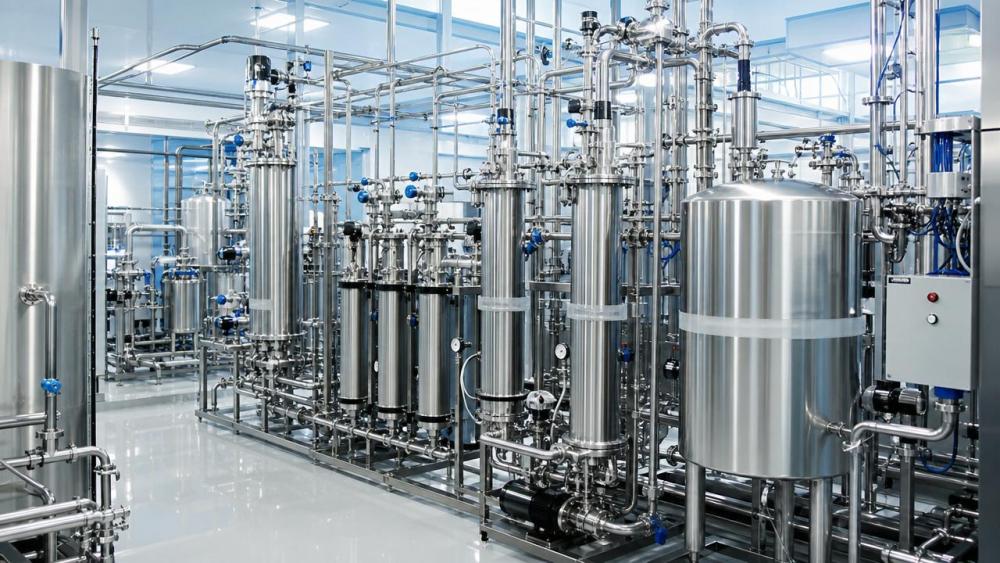
The market is revaluing downstream purification technology because purification often consumes a major share of biologics production cost. In many programs, the bottleneck sits after upstream success, not before it.
Higher titers can even intensify pressure downstream. More product entering harvest means more stress on clarification, chromatography, filtration, buffer preparation, hold steps, and final release timelines.
At the same time, CGT, recombinant proteins, and complex biologics require tighter impurity control. That raises the economic importance of yield retention, resin lifetime, and validation-ready process consistency.
Several trend signals show why cost drivers are under closer review
Three signals stand out across the comprehensive industry environment. First, capital discipline is stronger. Second, batch diversity is increasing. Third, regulatory expectations around traceability remain unforgiving.
These signals push organizations to compare downstream purification technology choices by total cost of ownership, not only by nominal throughput or equipment list price.
- Funding conditions reward faster payback and lower process risk.
- Flexible facilities need rapid product changeover without excessive cleaning burden.
- Data integrity expectations increase the cost of poorly integrated systems.
- Scale-up failures now carry larger commercial opportunity losses.
The main cost drivers behind downstream purification technology are becoming clearer
The most useful cost view separates direct consumables, equipment efficiency, quality burden, and hidden yield erosion. This approach makes downstream purification technology easier to evaluate across process stages.
Resin strategy often decides whether economics improve or deteriorate
In downstream purification technology, resin is frequently the largest single consumable cost. Selection errors appear small early, then expand through cycle count, cleaning needs, and binding capacity decline.
A cheaper resin may not be cheaper after lower lifetime utilization. A premium resin may still fail financially if process control cannot preserve performance over repeated campaigns.
Buffer volume is no longer a background utility issue
Buffer preparation affects raw materials, tanks, floor space, water systems, labor scheduling, and cleaning validation. In large-scale operations, buffer logistics can become a hidden facility design problem.
This is why intensified downstream purification technology increasingly favors inline conditioning and smarter recipe control. The gain is not only chemical savings, but also operational simplification.
Yield loss has a larger financial impact than many budget models show
When capture, polishing, and filtration each lose a small fraction, the compounded effect becomes significant. Lost yield increases cost per gram and may force additional upstream production runs.
That creates a cross-functional burden. More batches affect bioreactors, centrifuges, analytics, release timelines, and inventory planning across the full BLES process perspective.
Why these downstream purification technology trends are forming now
The current pattern is driven by both science and economics. Molecules are more sensitive, investors are more selective, and digital quality expectations are much higher than before.
- Biologics pipelines include more complex modalities with narrower process windows.
- Single-use adoption changes cleaning economics and facility flexibility.
- Automation exposes inefficient manual handoffs previously accepted as routine.
- Regulators expect stronger data integrity, traceability, and reproducibility evidence.
- Scale-up mistakes are more expensive because launch windows are strategically critical.
As a result, downstream purification technology is judged by integration quality. Equipment, software, analytical verification, and GMP documentation must now support one economic story.
The impact extends across equipment planning, compliance, and commercial readiness
Cost pressure in downstream purification technology does not stay inside purification suites. It influences plant layout, staffing models, maintenance strategy, batch scheduling, and tech transfer confidence.
For facilities using bioreactors, centrifuges, LC-MS, biosafety systems, and automated liquid handling, purification efficiency also determines how smoothly upstream and analytical assets deliver actual business value.
The smartest focus areas are the ones that improve both cost and control
Not every optimization matters equally. The most valuable priorities in downstream purification technology reduce cost while improving reproducibility and scale-up confidence.
- Track resin cost by usable cycle, not by purchase price alone.
- Quantify buffer cost including storage, labor, and WFI demand.
- Model yield loss cumulatively across the whole purification train.
- Measure asset utilization against realistic batch scheduling.
- Include validation, CSV, and deviation handling in ROI decisions.
- Check whether automation reduces manual error or just adds interfaces.
A practical decision framework can improve downstream purification technology outcomes
A structured review helps separate attractive concepts from financially durable choices. This is especially important when scale-up, transfer, and compliance readiness must advance together.
- Map all direct and indirect purification costs by unit operation.
- Stress-test assumptions using best, base, and worst yield scenarios.
- Compare single-use and stainless paths over full lifecycle economics.
- Review digital records, alarm handling, and validation evidence early.
- Link analytical release capacity to purification throughput assumptions.
This framework aligns with the BLES view that successful scale-up depends on stitched intelligence. Process design, compliance architecture, and equipment economics must reinforce each other.
The next move is to benchmark downstream purification technology before costs become structural
Organizations that wait for visible budget overruns often discover the root cause too late. By then, resin waste, poor utilization, and validation gaps are already embedded into the operating model.
A better next step is a focused cost-driver review covering resin strategy, buffer intensity, filtration performance, digital compliance readiness, and scale-up assumptions for downstream purification technology.
In a market defined by precision, traceability, and speed, the strongest advantage comes from seeing purification not as a support step, but as a central economic control point.
Related News
- What to compare when sourcing protein purification equipment in the USAOct 01, 2026Downstream Purification Fellow
- How to size downstream purification systems for batch capacitySep 13, 2026Downstream Purification Fellow
- How to Evaluate GMP Protein Purification Systems for Scale and ComplianceJul 19, 2026Downstream Purification Fellow
- Protein Polishing Systems: How to Compare Yield, Purity, and ThroughputJul 13, 2026Downstream Purification Fellow
Related News
- 00
0000-00
What CSV documentation should a laboratory systems supplier provide? - 00
0000-00
SCIEX Begins Construction of High-End Mass Spectrometer Plant in Beijing - 00
0000-00
Which design features make cleanroom benches easier to clean? - 00
0000-00
IndexBox Forecasts 12% CAGR for Global Microbioreactor Market Through 2035 - 00
0000-00
When do hazardous compound labs need isolators for containment?
Downstream Purification Fellow
Weekly Insights
Stay ahead with our curated technology reports delivered every Monday.