





Scaling pharmaceutical downstream purification from pilot to commercial production often reveals risks that remain invisible in development. Small deviations in resin behavior, flow distribution, buffer logistics, and validation planning can quickly become major delays.
In biopharma operations, pharmaceutical downstream purification is not only a technical transfer. It is a cross-functional scale-up challenge involving process science, facility fit, automation, data integrity, and GMP execution.
For organizations tracking commercialization readiness, the most useful question is not whether a process works at pilot scale. The better question is which scale-up scenario will fail first under real manufacturing constraints.
When pilot success hides commercial risk in pharmaceutical downstream purification
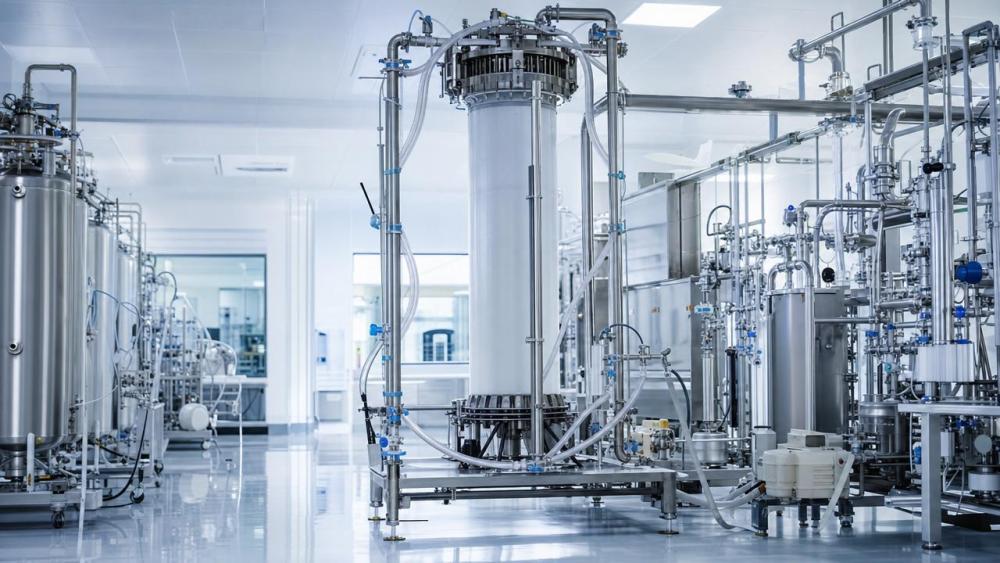
A pilot campaign may show acceptable yield, purity, and cycle time. Yet commercial pharmaceutical downstream purification adds longer hold times, larger columns, broader feed variability, and stricter cleaning expectations.
This scenario matters because process robustness at small scale does not guarantee hydraulic, chemical, or operational stability at production scale. Hidden bottlenecks usually appear at interfaces, not at isolated unit operations.
Typical signs that scale-up risk already exists
- Load material varies more than development models assumed.
- Column pressure rises faster during longer campaigns.
- Buffer preparation depends on manual timing.
- Hold steps were never challenged at realistic durations.
- Critical process parameters lack validated control logic.
In many facilities, these signs are dismissed as manageable exceptions. During transfer, they often become repeatability failures, batch release delays, or deviations affecting regulatory confidence.
Which scale-up scenarios create the highest purification transfer risk
Different scale-up paths create different failure modes in pharmaceutical downstream purification. The right mitigation strategy depends on process type, molecule sensitivity, facility design, and digital maturity.
Scenario 1: Monoclonal antibody platforms moving to larger chromatography trains
Platform processes appear predictable, but large Protein A and polishing columns introduce bed compression, maldistribution, and residence time shifts. Small changes can reduce impurity clearance consistency.
The key judgment point is whether scale-up preserves mass transfer and pressure behavior across realistic feed loads. Resin lifetime assumptions should also be tested against commercial cleaning cycles.
Scenario 2: Recombinant proteins with variable feed streams
For recombinant proteins, upstream variability often reaches downstream faster than expected. Viscosity, host cell protein burden, and aggregate levels can change filterability and chromatography capacity.
The core judgment point is feed characterization depth. If load conditioning windows are too narrow, pharmaceutical downstream purification becomes operationally fragile during campaign-scale execution.
Scenario 3: CGT and high-value small-batch purification environments
Cell and gene therapy processes often involve lower volumes but much higher sensitivity. Product loss during intermediate holds, membrane adsorption, or manual transfer can have disproportionate impact.
The main judgment point is not throughput alone. It is whether the process protects identity, chain of custody, and aseptic control while maintaining acceptable recovery.
Scenario 4: Single-use expansion in flexible facilities
Single-use systems improve agility, but they can introduce extractables concerns, sensor drift, tubing routing limits, and inconsistent operator setup. These issues frequently affect transfer timing.
The practical judgment point is whether disposables were selected as a process system, not as individual components. Integration matters more than nominal compatibility.
How risk priorities change across pharmaceutical downstream purification scenarios
The table below shows how risk emphasis shifts by scenario. This helps teams focus mitigation on the most likely failure points instead of overcontrolling lower-impact areas.
What usually gets overlooked before commercial pharmaceutical downstream purification starts
Many scale-up programs focus heavily on yield and purity targets. However, commercialization failures in pharmaceutical downstream purification often begin with supporting systems that were treated as secondary.
Buffer strategy is often underdesigned
At larger scale, buffer demand can overwhelm tank capacity, transfer timing, and conductivity adjustment accuracy. Late-stage workarounds create schedule compression and documentation complexity.
Inline dilution may help, but only if pump accuracy, mixing response, and automation logic are fully challenged under dynamic operating conditions.
Facility fit is assumed instead of proven
Large skid placement, drain routing, utility stability, and operator access can all affect process consistency. A technically sound recipe may still fail inside a constrained manufacturing footprint.
Validation planning starts too late
If automation, historian data, alarms, and electronic records are not aligned early, execution teams face rework during qualification. GMP readiness then becomes a critical path issue.
Scale-down models are too simple
A useful scale-down model should mimic shear exposure, hold duration, loading variability, and cleaning effects. If it only reproduces nominal output, risk prediction remains weak.
How to adapt mitigation plans to each purification scale-up scenario
A practical mitigation plan for pharmaceutical downstream purification should connect process science with equipment, controls, and compliance. The following actions are typically high value.
- Map every unit operation against worst-case feed and scheduling conditions.
- Run pressure, flow, and breakthrough studies at relevant commercial boundaries.
- Build a full buffer mass balance before final equipment lock.
- Challenge hold times using representative intermediates and temperatures.
- Verify cleaning, sanitization, or disposable changeover under routine staffing conditions.
- Align CSV, alarm strategy, and batch record design before qualification begins.
For intelligence-driven organizations, these steps are stronger when paired with equipment data, process analytics, and compliance review in one decision loop.
Common misjudgments that delay pharmaceutical downstream purification scale-up
Several repeated misjudgments appear across biopharma programs. Each seems minor early, but together they create expensive delay during engineering runs or PPQ preparation.
- Assuming linear scale-up from column diameter alone.
- Treating clarification as a solved upstream handoff.
- Ignoring operator variability in semi-manual steps.
- Underestimating data review burden for GMP release.
- Selecting equipment on nameplate capacity, not process fit.
In pharmaceutical downstream purification, delays rarely come from one dramatic failure. They usually result from multiple moderate mismatches left unresolved until commercial execution.
What to do next before scale-up risk becomes a manufacturing bottleneck
The best next step is a structured scale-up review covering process transfer, facility fit, buffer architecture, automation readiness, and validation sequencing. This review should be evidence-based and scenario-specific.
BLES supports this approach by connecting bioprocess equipment intelligence, GMP interpretation, and scale-up analysis across chromatography, separation systems, automation, and laboratory workflows.
When pharmaceutical downstream purification is assessed through real operational scenarios, organizations can reduce rework, improve batch consistency, and reach commercial readiness with stronger technical confidence.
Related News
- What to compare when sourcing protein purification equipment in the USAOct 01, 2026Downstream Purification Fellow
- How to size downstream purification systems for batch capacitySep 13, 2026Downstream Purification Fellow
- How to Evaluate GMP Protein Purification Systems for Scale and ComplianceJul 19, 2026Downstream Purification Fellow
- Protein Polishing Systems: How to Compare Yield, Purity, and ThroughputJul 13, 2026Downstream Purification Fellow
Related News
- 00
0000-00
What CSV documentation should a laboratory systems supplier provide? - 00
0000-00
SCIEX Begins Construction of High-End Mass Spectrometer Plant in Beijing - 00
0000-00
Which design features make cleanroom benches easier to clean? - 00
0000-00
IndexBox Forecasts 12% CAGR for Global Microbioreactor Market Through 2035 - 00
0000-00
When do hazardous compound labs need isolators for containment?
Downstream Purification Fellow
Weekly Insights
Stay ahead with our curated technology reports delivered every Monday.