





Selecting the right biotech equipment can make or break a successful tech transfer. For technical evaluators, the challenge is not only matching process requirements, but also ensuring scalability, data integrity, GMP readiness, and operational efficiency across development and commercial stages. This guide explores how to assess critical systems with greater precision, reduce transfer risk, and accelerate the path from lab innovation to reliable production.
Why biotech equipment selection becomes critical during tech transfer
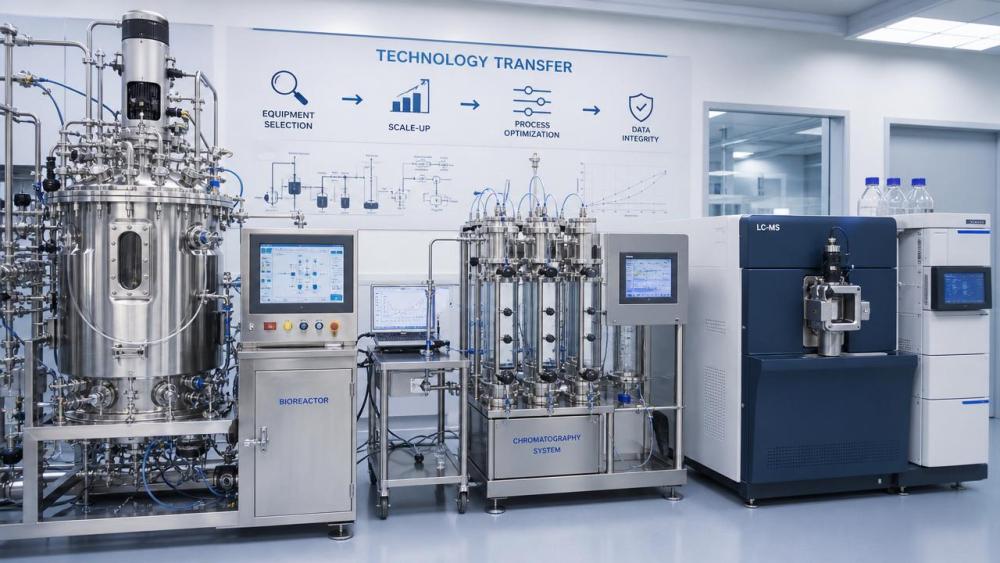
Tech transfer is rarely a simple equipment handoff. It is a controlled transition of process knowledge, analytical methods, operating logic, and compliance expectations from one site, scale, or team to another.
For technical evaluators, biotech equipment decisions affect yield, contamination risk, batch reproducibility, data traceability, and validation workload. A poor match between process needs and installed systems often creates hidden delays long after factory acceptance.
This is especially true in biopharma, where upstream culture conditions, downstream separation windows, analytical sensitivity, and cleanroom behavior are tightly connected. Changing one piece of biotech equipment can alter the entire transfer path.
- A bioreactor with different gas transfer behavior may change cell growth kinetics and product quality attributes.
- A centrifuge or filtration setup with altered shear profile may reduce recovery during downstream purification.
- An LC-MS platform with different software architecture may add major CSV and data integrity review work.
- A liquid handling workstation with poor deck flexibility may slow assay transfer and increase method redevelopment.
BLES addresses these issues through process-centered intelligence. Instead of viewing biotech equipment as isolated assets, the platform connects scale-up science, GMP audit logic, automation maturity, and return on investment into one evaluation framework.
What technical evaluators should assess before approving biotech equipment
Before comparing brands or requesting quotations, technical evaluators need a decision structure. The goal is not to buy the most advanced machine, but to select biotech equipment that fits the transfer stage, quality target, and future production plan.
Core evaluation dimensions
The table below organizes the most relevant biotech equipment criteria for tech transfer projects involving upstream processing, purification, analytical control, biosafety, and lab automation.
A structured review like this prevents one common mistake: selecting biotech equipment based only on brochure performance while underestimating qualification, integration, and lifecycle support.
A practical pre-approval checklist
- Confirm critical quality attributes and critical process parameters before asking vendors for technical proposals.
- Map each equipment function to the transfer protocol, not just to a departmental wishlist.
- Request software architecture details early when computerized systems are involved.
- Check whether consumables, single-use assemblies, or columns are regionally available with stable lead times.
- Assess how quickly the system can move from FAT and SAT to IQ, OQ, and routine operation.
How to compare key biotech equipment across the transfer chain
Technical evaluators often review several equipment categories at once. The challenge is to compare them through a transfer lens rather than through isolated specifications.
The following table summarizes what matters most when selecting biotech equipment across the five core process pillars highlighted by BLES.
This cross-category view helps evaluators prioritize decision points. A system with excellent peak specifications may still be a weak choice if it complicates scale-up, software validation, or consumable supply.
Where BLES adds practical value
BLES is especially useful when equipment selection spans science and compliance. Its focus on bioprocessing, downstream purification, analytical metrology, and lab automation allows technical teams to evaluate biotech equipment as part of one connected manufacturing reality.
- For GMP-focused reviews, the Strategic Intelligence Center helps translate CSV and audit expectations into equipment screening criteria.
- For scale-up projects, engineering analysis supports better judgment on gas-liquid transfer, process similarity, and production readiness.
- For capital planning, ROI thinking supports decisions between stainless systems, SUT adoption, and staged automation investment.
Which application scenarios require different biotech equipment choices?
The best biotech equipment choice depends on the transfer scenario. A platform suited for early discovery may be inefficient in GMP manufacturing. Likewise, a production-grade system may be too rigid for fast process iteration.
Scenario-based selection logic
- R&D to pilot transfer: prioritize flexibility, broad parameter ranges, and method comparability. Systems should support frequent recipe changes and fast troubleshooting.
- Pilot to GMP manufacturing: prioritize documentation quality, alarm history, access control, batch record compatibility, and qualification support.
- Multi-product facilities: prioritize changeover efficiency, contamination control, disposable flow paths, and scheduling integration.
- CGT and advanced therapies: prioritize closed processing, low hold-up volume, sample integrity, and precise environmental control.
- Global transfer between regions: prioritize service availability, standardized documentation packages, and consistent software support across sites.
In practice, technical evaluators should avoid copying the original site configuration without testing whether the receiving site has the same utilities, digital infrastructure, operator skill level, and quality documentation discipline.
Single-use versus stainless: a frequent transfer decision
One of the most common biotech equipment questions during transfer is whether to move toward SUT or remain with stainless systems. There is no universal answer.
Single-use platforms may reduce cleaning validation burden and improve changeover speed. Stainless systems may still offer stronger economics for stable, large-volume, long-run production. The right choice depends on campaign frequency, utility infrastructure, supply security, and process sensitivity.
What standards and compliance points should not be missed?
Biotech equipment for tech transfer must be assessed not only for process fit, but also for regulatory readiness. Technical evaluators often underestimate how much time software, documentation, and traceability issues can consume.
Compliance topics that affect transfer speed
The table below outlines common compliance checkpoints that should be reviewed before final biotech equipment approval in regulated environments.
BLES brings unusual strength here because its intelligence model links equipment performance with GMP logic. That is valuable when a technical evaluator must justify not only what a system can do, but whether it can stand up to audit and long-term lifecycle control.
Common mistakes when selecting biotech equipment for transfer
Mistakes that create avoidable delays
- Choosing biotech equipment based on headline capacity while ignoring actual operating range at target process conditions.
- Treating software as a minor accessory instead of a major validation and data integrity component.
- Assuming scale-up is linear, especially for oxygen transfer, shear, residence time, or membrane fouling behavior.
- Underestimating consumable dependency in single-use or automated systems.
- Reviewing upstream, downstream, and analytics separately without checking end-to-end process coherence.
Most of these mistakes come from fragmented decision-making. One team focuses on performance, another on compliance, another on budget. A better approach is to define a common transfer scorecard before vendor engagement begins.
FAQ: practical biotech equipment questions from technical evaluators
How do I know whether biotech equipment is truly scalable?
Look beyond nominal volume. Review mixing behavior, gas transfer, control responsiveness, hold-up volume, and process geometry. Ask for evidence that the operating window matches your process, not just the supplier’s standard demonstration setup.
What should be prioritized when budget is limited?
Prioritize biotech equipment that protects critical quality and reduces transfer risk first. In many projects, reliable control systems, compliant software, and stable consumable supply matter more than premium optional features.
How important is service support during tech transfer?
It is often decisive. Slow spare part access, weak commissioning support, or incomplete training can disrupt the transfer timeline. Ask about regional support coverage, preventive maintenance, and escalation paths before approval.
When should CSV be discussed for analytical or automated biotech equipment?
At the beginning, not after purchase. Systems such as LC-MS platforms and liquid handling workstations can introduce major computerized system validation effort. Early review of software architecture prevents late-stage qualification surprises.
Why choose us for biotech equipment evaluation and transfer planning
BLES supports technical evaluators who need more than product catalogs. Our strength lies in connecting biotech equipment selection with process science, GMP expectations, and commercialization reality.
If you are evaluating systems for cell culture, downstream separation, LC-MS analytics, biosafety workflows, or automated liquid handling, we can help you clarify the decision logic before costly commitments are made.
- Confirm key parameters for scale-up, throughput, containment, and analytical sensitivity.
- Compare equipment routes for single-use, stainless, manual, or automated process designs.
- Review documentation expectations for GMP, IQ/OQ support, and computerized system validation readiness.
- Discuss delivery planning, consumable continuity, and implementation priorities for receiving sites.
- Explore tailored selection support for transfer risk reduction, quotation alignment, and technical communication with suppliers.
If your team is preparing a transfer package or screening biotech equipment for upcoming expansion, contact us to discuss parameter confirmation, product selection, compliance requirements, delivery timing, sample workflow support, and solution customization in a more structured way.
Related News
- Zylidac Bio and Prolific Machines Partner to Scale Optogenetics for GMP ProductionOct 23, 2026Prof. Alistair Thorne
- How to prevent oxygen limitation in process scale-up for biologicsOct 18, 2026Prof. Alistair Thorne
- How to maintain product quality when scaling up a bioprocessOct 09, 2026Prof. Alistair Thorne
- What should you verify before choosing a bioprocessing equipment exporter?Oct 08, 2026Prof. Alistair Thorne
Related News
- 00
0000-00
What CSV documentation should a laboratory systems supplier provide? - 00
0000-00
SCIEX Begins Construction of High-End Mass Spectrometer Plant in Beijing - 00
0000-00
Which design features make cleanroom benches easier to clean? - 00
0000-00
IndexBox Forecasts 12% CAGR for Global Microbioreactor Market Through 2035 - 00
0000-00
When do hazardous compound labs need isolators for containment?
Prof. Alistair Thorne
Weekly Insights
Stay ahead with our curated technology reports delivered every Monday.